VCF East: [Bil Herd] And System Architecture

Last Friday the Vintage Computer Festival was filled up with more than a dozen talks, too many for any one person to attend. We did, however, check out [Bil Herd]’s talk on system architecture, or as he likes to call it, the art and science of performance through balance. That’s an hour and fifteen minute talk there; coffee and popcorn protocols apply.

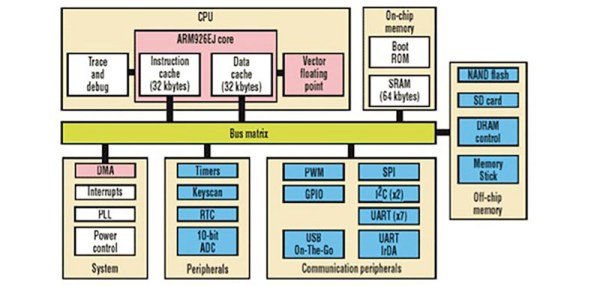
The main focus of this talk is how to design a system from the ground up, without any assumed hardware, or any specific peripherals. It all starts out with a CPU, some memory (it doesn’t matter which type), and some I/O. That’s all you need, whether you’re designing a microwave oven or a supercomputer.

The CPU for a system can be anything from a 6502 for something simple, a vector processor for doing loads of math, or have a RISC, streaming, pipelined, SIMD architecture. This choice will influence the decision of what kind of memory to use, whether it’s static or dynamic, and whether it’s big or little endian. Yes, even [Bil] is still trying to wrap his head around endianness.

MMUs, I/O chips, teletypes, character displays like the 6845, and the ANTIC, VIC, and GTIA make the cut before [Bil] mentions putting the entire system together. It’s not just a matter of connecting address and data pins and seeing the entire system run. There’s interrupts, RTCs, bus arbitration, DTACK, RAS, and CAS to take care of that. That will take several more talks to cover, but you can see the one last Friday below.

Continue reading “VCF East: [Bil Herd] And System Architecture”

VCF East X: Minicomputing With The Raspberry Pi

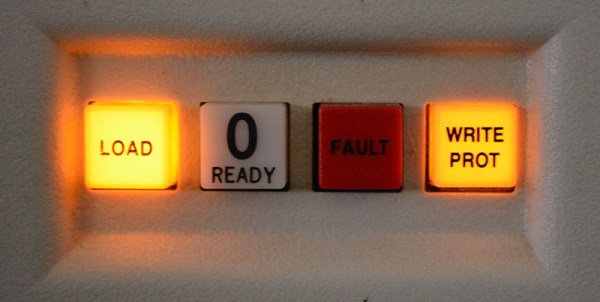
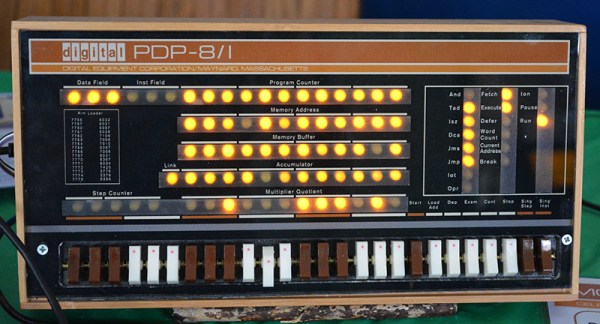
The Vintage Computer Festival in Wall, New Jersey doesn’t just attract locals; [Oscar] came all the way from Switzerland to show off his PiDP-8/I. It’s a miniature minicomputer, emulated in SimH, with blinkenlights and toggle switches mounted to a Raspberry Pi Hat.

Although the PiDP-8 is emulating a machine with thousands of discrete transistors, the design is exceptionally simple. On the board is 92 LEDs, a bunch of diodes, 26 toggle switches, a driver chip, and that’s about it. All the multiplexing for the switches and LEDs is taken care of in software. On the Raspberry Pi side, [Oscar] is able to run FOCAL, OS/8, and, like a normal-sized PDP-8, can toggle in programs manually.

Instead of having connecting to the ribbon cables coming out of RK01 disk drives and DECtapes, [Oscar] is emulating those too. All the files that would reside on old Digital storage mediums are now stuffed into USB thumb drives. A USB hub is plugged into the Pi, and when one of these USB disk packs is plugged into the hub, loading an operating system or a program is just a matter of flicking a few toggle switches.

[Oscar] has been working hard to turn the PiDP-8 into a kit, and the word around the booths is that this will happen sometime this summer. The expected price for this kit is very interesting: somewhere between $100 and $150 USD. For that price, we’d expect someone to rig up an Arduino-based paper tape reader very quickly, perhaps this afternoon.

More pics and a video of the PiDP-8/I below.
Continue reading “VCF East X: Minicomputing With The Raspberry Pi”

F.A.T. GOLD San Francisco: May 21-31

Two of the ideas we keep at our core here at Hackaday: the free and open exchange of information and ideas; and “why” is the wrong question. These concepts are fully in line with the F.A.T. Lab. The Free Art and Technology Lab lives at the intersection of Open Source and Pop Culture and they’re inviting you to jump into the pool of awesome by joining them for the F.A.T. Gold Show in San Francisco May 21-31.

If you’re unfamiliar with the group, take a look at the video after the break and you’ll easily confirm that you need to check this out. We’ve enjoyed the work of F.A.T. Lab members for years now. [Brian] pointed out part of the importance of the “Open” aspect the group in this post on universal connectors for popular toy blocks. We also covered their collaboration on EyeWriter which shows how to build IR eye tracking for the disabled. The group hosts the Graffiti Research Labs (also a collaborator on EyeWriter); we built their Laser Graffiti project as part of a live Hackaday event in January of last year thanks to the open source code they published.

What will you see at this year’s show? The best work the group has to offer from the last eight years plus some debut exhibits. We wish we could be there but we’re planning to be in LA that weekend for the LayerOne conference.

Continue reading “F.A.T. GOLD San Francisco: May 21-31”

VCF East X: The Not Trashy Eighty

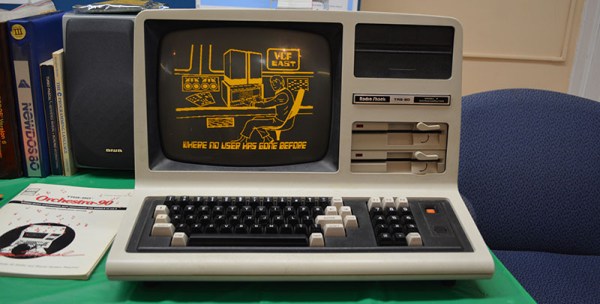
The lowly TRS-80 doesn’t get much love in most circles; it’s constantly overshadowed by the popularity of the Apple II or computers that had graphics that weren’t terrible. For [Mike Loewen]’s VCF exhibit, he’s turning his TRS-80 into something good with SD card disk drives and custom graphics adapters.

The -80 in question is a Model 4, the fancy all-in-one version that could run CP/M. The disk drives in this computer were replaced with half-height 5 1/4″ drives, the 200ns RAM was replaced with 100ns RAM and modified to get rid of the wait states, and a hard drive is emulated on a SD card adapter thanks to an add-on from [Ian Mavric].

[Ian] is somewhat prolific in the world of TRS-80s; he reverse engineered the original hi-res graphics board and reimplemented it with video RAM chips of a more modern vintage.

Continue reading “VCF East X: The Not Trashy Eighty”

VCF East X: Virtual Reality With PETSCII

What would happen if Oculus-quality virtual reality was created in the 80s on the Commodore PET? [Michael Hill] knows, because he created a stereoscopic video headset using a PET.

This build is an extension of [Michael]’s exhibit last year at VCF East where he displayed a video feed with PETSCII. Yes, that means displaying video with characters, not pixels.

This year, he’s doubling the number of screens, and sending everything to two iPhones in a Google Cardboard-like VR headset. Apart from the optics, the setup is pretty simple: cameras get image data, it’s sent over to a PET, and a stream of characters are sent back.

It’s impossible to film, and using it is interesting, to say the least. Video below.

Continue reading “VCF East X: Virtual Reality With PETSCII”

VCF East X: The Quarternet Steering Committee

Today was the first day of the Vintage Computer Festival East X. As is the tradition, the first day was packed with talks and classes about various retrocomputing ephemera, with this year featuring a great talk from [David Riley] about 8-bit computer music, a class on system architecture from our own [Bil Herd] (video coming soon), and a talk about vintage teletypes. One of these talks was about creating new hardware: [Jim Brain]’s steering committee on a networking solution for vintage microcontrollers. It’s called Quarternet: a two-bit solution for an eight bit world.

While minicomputers are easily networkable, designed around multi-user operating systems, and have the hardware for a lot of networking hardware, 8-bit micros are the exact opposite. That doesn’t mean 8-bitters don’t have networking; you can get an Ethernet cart for a C64, and just about everything can connect to a BBS. [Jim]’s talk was about whittling down the use cases for the Quarternet to something that could be implemented easily, but still give the most capability.

During the talk, the audience settled on using a serial connection from the micro to the outside world; this makes sense, as everything has a serial port. A ‘lightweight API’ was suggested to take up the software side of the problem, but there wasn’t much agreement over what that API would actually do.

[Jim]’s idea is for a box that plugs into the serial port of any old microcomputer and would connect to the Internet somehow. Ethernet, WiFi, or even a modem isn’t out of the question here. That takes care of connecting to the Internet, but there’s also the question of the cooler side of networking – network drives, file sharing, and the like.

For this, [Jim] is imagining a box with a serial port on one end, and a network port on the other. In the middle would be a cartridge slot for any hardware imaginable. If you want to plug in an Apple II disk drive, just insert the right cartridge and you’re good to go. If you need network access to a Commodore 1541 drive, just insert another cartridge, and it’ll just work.

It’s an interesting idea, but [Jim] is really interested in getting even more feedback for a networking system for old microcomputers. If you have any ideas, leave a note for him in the comments.

RadioShack Demise Could Signal The Rise Of Mom-and-Pop

No matter how you feel about RadioShack, for many hackers it was the one place that components could be sourced locally. Upon hearing that the stores are being shuttered (at least for those seeking non-cellphone items) we wondered if someone would rise to meet the maker market. The answer may actually be mom-and-pops — independent stores owned by people passionate about hacking and making.

tinker-and-twist-boothAt SXSW Create in March the Hackaday booth was right next door one such establishment. [Martin Bogomolni] is hard at work launching his brick and mortar store called Tinker & Twist. In the video below he speaks briefly about the concept of the store, which focuses on curating the best products and tools available and stocking them locally.

The store will be located in a shopping mall in Austin, Texas. But it takes about 100 days launch a storefront considering the permits and build-out. [Martin] decided to take the store to the hackers by exhibiting (and selling products) at SXSW Create. How else would you do this than by building a store-front as your booth? The store’s sign was CNC routed from rigid foam, and combined with a set of columns and storefront window. We stopped by late on the last day of the event and they had been having a great weekend. What started as a very well stocked set of shelves looked nearly bare.

Tinker & Twist is just the most recent in a growing trend of standalone stores focusing on hackers and makers. Our friends at Deezmaker in Pasadena, CA gave us tour last year. They’ve married the concepts of hackerspace, small-run manufacturer (in the form of their 3D printers), and retail store all-in-one. These types of examples make us quite happy — it’s been years since RadioShack was tightly focused on those actually building things. We hope to see more stores like Tinker & Twist up and running to support and enhance hacker communities everywhere.