Winners Of Hackaday’s Earth Day Contest: Solar LIC, Auto-Return Parafoil, & Water Flowmeter

Winners have just been announced for Hackaday’s Earth Day Challenge. We were on the lookout for projects that raise awareness of environmental issues and are happy to celebrate three top winners. Each have won a $200 shopping spree from Digi-Key who sponsored this contest.

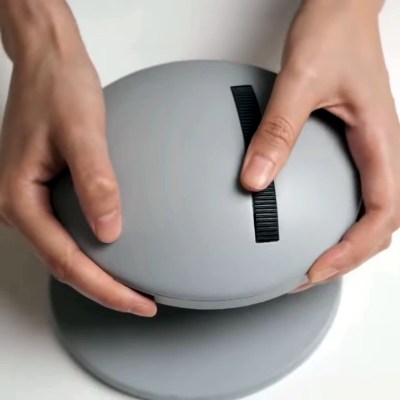
Pictured above is the Open Flow Meter by [Eben]. The build includes sensors that are submerged into a river or stream to gauge the speed at which the water is moving. It uses a commodity plumbing flow volume sensor to help reduce costs, adding an Arduino and touch screen for reading the sensors and providing a UI to the user.

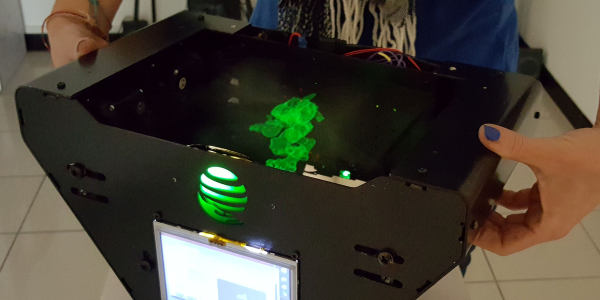
High-altitude balloons are used for air quality and weather sensing. To make those sensor packages more reusable, [Hadji Yohan] has been working on a parachute recovery system that automatically returns to a set GPS point. It’s a parafoil with auto-pilot!

Power harvesting is a fascinating and tricky game. To help ease the transition away from batteries, [Jasper Sikken] developed a solar harvesting module that charges a Lithium Ion Capacitor (LIC) from a very small solar panel. Based around a 100 uF 30 F capacitor, it uses an AEM10941 energy harvesting chip which includes Maximum Power Point Tracking (MPPT) to utilize the solar panel as efficiently as possible. The fully charged module can output regulated 2.2 V and is aimed at distributed sensor packages that can be run without any battery at all.

Congratulations to these three top finishers, as well as the b-parasite capacitive soil moisture sensor which was named as a runner up in the contest. There were 72 entries in this challenge so don’t forget to take a look at the entire field, and leave a comment on the ones that catch your eye to let them know we all love seeing details of great builds!

Continue reading “Winners Of Hackaday’s Earth Day Contest: Solar LIC, Auto-Return Parafoil, & Water Flowmeter”

Earth Day Challenge: A Better Way To Wrangle Water

How far do you have to go for a glass of clean water? Not very? Just go to a sink and turn on the faucet? We would venture to guess that is the case for most Hackaday readers. Maybe you even have a water softener, or a filter on your tap to make your drinking water even more palatable and free of heavy metal.

In Ethiopia and many other countries, people do not have access to clean, flowing water and must walk several kilometers to fetch it from somewhere that does. And they’re not doing this on paved roads, either — these women are cutting treacherous paths across mountains and through muddy, rocky terrain that make wheeled transport nearly impossible. How do you comfortably lug around 25 kg (~55 lbs) worth of sloshing water? You don’t, unless you have [Anteneh Gashaw]’s ingenious jerrycan.

As you can see in the video below, the current crop of jerrycans are just big plastic jugs that have to be carried on top of the head or the shoulder, both of which are bad for bodies. [Anteneh]’s can evenly distributes the weight by wrapping it completely around the person carrying it and suspending it from both shoulders like a beer-and-peanuts vendor’s carrying case. Basically, it’s a PVC inner tube with shoulder straps. Simple, cheap, and effective = absolute genius in our book. Ideally, everyone would have free access to clean water, both cold and hot. Until that time, [Anteneh]’s entry into our Earth Day Challenge is a great workaround that will no doubt save a lot of spines.

Potable water may be closer than you think. Build a portable potability predictor and you might not have to travel so far.

Continue reading “Earth Day Challenge: A Better Way To Wrangle Water”

New Contest: Data Loggin’

What are we gonna’ do with all this data? Let’s make it something fun! That’s the point of the just-launched Data Loggin’ contest. Do something clever to automatically log a data set and display it in an interesting way. Three winners will each receive a $100 Tindie gift certificate for showing off an awesome project.

One year of baby sleep patterns encoded by @Lagomorpho in a knitted blanket.

Data logging is often an afterthought when working on a project, but the way you collect and store data can have a big effect on the end project. Just ask Tesla who are looking at a multi-thousand-dollar repair process for failing eMMC from too much logging. Oops. Should you log to an SD card? Internet? Stone tablets? (Yes please, we actually really want to see that for this contest.) Make sure to share those details so your project can be a template for others to learn from in the future.

Next, consider Schrodinger’s dataset: if the data is never used does it actually exist? Grab some attention with how you use this data. That automatic donut slicer you built can be used to slice up a tasty pie-chart of the minutes you spent on the elliptical this week. Your energy consumption can be plotted if you connect that OpenCV meter reader up to your favorite cloud service to visualize the data or a NodeRED dashboard if you’d rather keep things local. You could also make some of that data permanent, like this blanket that encoded baby’s sleep patterns in the colors.

You probably already have something harvesting data. Here’s the excuse you need to do something silly (or serious) with that data. Tells us about it by publishing a project page on Hackaday.io and don’t forget to use that “Submit Project To” menu to add it to the Data Loggin’ contest.

New Contest: Earth Day Challenge

The Earth Day Challenge is now under way! Spin up your take on an Earth-Day-themed electronics project and you’ll be in the running for one of the three $200 shopping sprees at Digi-Key, who are sponsoring this contest.

Gutters to Gardens is a great project example; using a rain barrel and solar panel for off-grid automation.

This is all about raising awareness for environmental protection. You might considered something as direct as measuring and plotting air quality data, or as abstract as weighing your home’s recycling bin and garbage bin and making a game out of generating less waste in general, and boosting your recycling-to-landfill ratio. Find an application that can be moved from grid-power to solar power, or build a carbon-savings counter that calculates the impact you have when choosing your bike over a car. The coolest projects are the ones that make us all think in new ways.

In addition to those $200 prizes for the top three projects, there are $50 Tindie gift cards for the twelve most artistically presented projects. Digi-Key is looking for great images to include in a wall calendar for 2022.

Pop over to Hackaday.io to start your entry today. Don’t forget to use the “Submit project to:” drop-down box on the left sidebar of your project page to make sure it’s considered in the contest. You must have your entry in by April 19th!

Goodbye 2020 Contest Winners Announced

The Goodbye 2020 contest asked you to turn out the lights on an objectively crappy year in an interesting way. Four winners have been announced, and we have to tip the hat to [Becky Stern] for both creativity and execution on the 2020 candle seen above. Three wicks burn the candle down, revealing a metalwork dumpster fire along the way. It’s not just a performance piece but also an interesting look into candle making with 3D printed molds and insight on specifics like pour-temperature for best results. [Becky] entered as a group with a few other YouTube channels that included gags like [TechnoChic’s] knitted 2020 mask that is unraveled to count down the to the end.

[Marius Taciuc] spun up a clock to count down his year. The custom PCB uses a set of 7-segment displays to show the time (and some custom messages), along with a battery-backed RTC for precision. The aesthetic is a PC overclocker’s dream as the timepiece lives inside of a mason jar filled with baby oil.

You certainly can’t go out to a rave during these pandemic times. [George Cave] brought the party to his face with a set of shades that blast RGB light into your eyeballs. A pair of ultasonic distance sensors shut the party down if anyone breaks social distancing guidelines.

And [Scott Clandinin] picked up an honorable mention with a Christmas-themed countdown. A color LCD takes the place of a from/to card on a gift wrapped package, displaying the number of days using candy cane font.

Congratulations to each of the winners who received a $25 Tindie gift card for showing off their whimsical work.

SMD Challenge Extreme Edition Gets Our Flux Flowing

Skills challenges have become a fun way to facilitate friendly competition amongst anyone who appreciates a fine solder joint. If you’ve seen any Supercon / Remoticon coverage there’s surely been a mention of the infamous soldering skills challenge, where competitors test their mettle against surface mount components sized to be challenging but fair. What if there was a less friendly SMD challenge designed to make you hold your breath lest you blow the components away? Well now there is, the SMD Challenge Extreme Edition by friend-of-the-Hackaday and winner of the 2019 Supercon soldering challenge [Freddie].

When assembled the SMD Extreme Edition uses a 555 timer and a 74HC4017 decade counter to light a ring of 10 LEDs lights around its perimeter, powered by a coin cell. However the  Extreme Edition deviates from the typical SMD Challenge format. Instead of ramping up in difficulty with ever-shrinking components, the Extreme Edition only has one size: torturous. See those gray blobs in the title image? Those are grains of rice.

The Extreme Edition’s 0201-sized LEDs aren’t the absolute smallest components around, but to minimize enjoyment all passives are 01005. (Check out the SMD Challange Misery Edition for even 01005 LED action.)

The Extreme Edition has other tricks up its sleeve, too. That 555 may be venerable in age, but this version is in an iron-frustrating 1.41 x 1.43 mm BGA package, which pairs nicely with that decade counter in 2.5 mm x 3.5 mm QFN.

Despite the wordwide pandemic locking down travel and conferences, a few brave challengers have already taken up their iron and succeeded at Extreme SMD. Want to see it in action? Check out the original Tweets after the break.

Continue reading “SMD Challenge Extreme Edition Gets Our Flux Flowing”

No Wonder These Projects Won The Circuit Sculpture Contest

There are five winners of the Hackaday Circuit Sculpture contest, and every one of them comes as no surprise, even in a tightly packed race to the top.

Beginning with the gorgeous photo above, we have [Eirik Brandal’s] waldian being named the most beautiful. Imagine this hanging on your living room wall, then head over and listen to the video demo as it’s light-actuated synthesizer chimes like distant (or maybe not so distant) church bells. This isn’t a one-off dip into circuit sculpture for [Eirik], we featured his broader body of work back in 2018, all of it worth checking out in more depth.

The glowing mask is actually made of PCB. The seams are secured with super glue bolstered with baking soda. The labor behind this one is intense. As we mention back in September, the project took place over about two years, mostly due to the sheer volume of cutting and sanding [Stephen Hawes] needed to do to bring together so many pieces. This one grabbed him the most artistic award.

[Jiří Praus] takes the top spot for best video with his luminescent RGB LED sphere. We swooned over this one when it first dropped back in December. [Jiří] shows off a combination of patience and ingenuity by using a 3D-printed mold to hold each LED while he soldered brass rod in place to serve as both electrical and mechanical support.

Speaking of molds, one of the challenges was to show off the best jig for creating a circuit sculpture. [Inne’s] Soft Soldering Jig provides the channels needed to keep crisp right angles on the brass rod as you work, with voids to position components at intersections for soldering. Drawing on the advice of numerous circuit sculpture success from people like [Mohit Bohite] and [Jiří Praus], he was looking for a way to easily position everything on a surface that would not be burnt by the soldering iron. The answer comes in the form of Silicone jigs made with 3D-printed molds.

Finally we have the Binary Calculator project which won the most functional award. While it does operate as a binary calculator, the beauty of it is not to be overlooked. Among its many attributes are a set of cherry-wood keycaps that were milled for the project and a bell-jar display stand where the calculator rests and serves as a binary clock when not in use. You may remember seeing our feature of this project last week.

As prizes, the binary calculator, orb, and wall sculpture creators will each be receiving $200 in goodies from Digi-Key who sponsored the contest and will be featuring entries in a 2021 wall calendar. Creators of the soldering jig and the PCB mask will receive a $100 Tindie gift card.