Building A Coal Forge

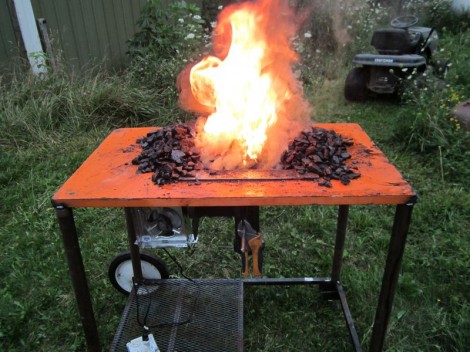
We don’t get to see Blacksmith hacks around here too often. But even if they were rolling in on a weekly basis we think this one would be considered the special expanded edition with full-color centerfold. The sixty-five images in this coal forge build log are all commented and just begging to steal your attention for part of the afternoon.

The build mostly involves fabricating a system for injecting air into the forge and providing a mechanism for evacuating the waste ash. [BillDaCat] starts with a 3″ pipe as the ash dump, adding a latching door used to empty it when full. He then welds together a metal trough with a slotted bottom to hold the fiery fury, attaching the ash dump below. He uses a plasma cutter to add an opening in the upper portion of the ash dump for a blast gate.

If you’re excited about his build you should also check out the metal pour and the induction furnace.

[via Reddit]
How Not To Dim EL Panels, TRIACs!

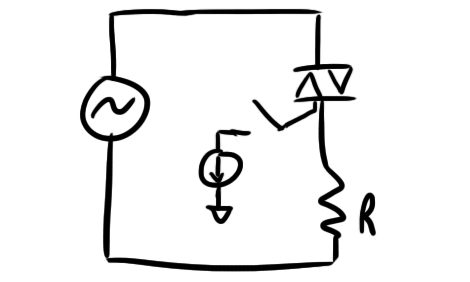
We’ve all been there: an exciting brilliant idea, scratched onto a napkin, hastily plugged into a breadboard, all for naught.  Even the best ideas sometimes suffer from a heavy dose of reality.  [Ch00f] over at ch00ftech recently had a similar experience dimming an EL panel of his using a TRIAC and some clever waveform manipulation. Instead of tossing the parts across the room in a fit aside and moving on he goes into a detailed analysis of what went wrong.

This method differs from the way most EL drivers dim output loads, instead of chopping the output like a PWM controlled LED the TRIAC snips the ends of the waveform and makes an ugly but less powerful output. The issue with this method is that when you cut the waveform during non-zero crossings it causes massive current spikes. These can wreak havoc on a cheap EL inverter and generally cause headaches all around.  [Ch00f ] speculates that his woes may be due to the fact that EL wire is a capacitive load, causing voltage to fall out of phase with the current. This is one of those engineering problems with a thousand and one answers, we can’t wait to see what he comes up with.

Check out the writeup for all the “deets” (as [ch00f] would say) as it is a pretty good primer on TRIAC operation. If there isn’t enough glowy wire in this post you can also check out this sound reactive panel or an informative guide on EL or even more from [ch00f] in general.

Fuse Making Machine

This is a fuse making machine that operates nearly as well as a factory machine would. Have you figured out what exactly this is yet? It’s not an electrical fuse, it’s a Visco Fuse. Still not totally clear? Don’t worry, we had to look it up too. Visco Fuse is a high-quality safety fuse used in fireworks.

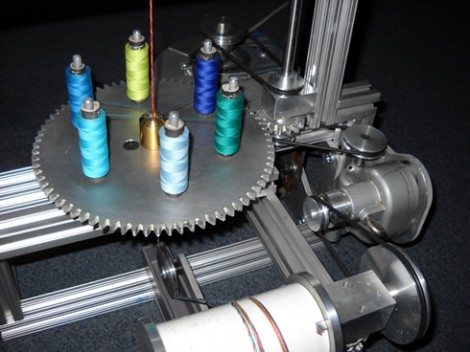
[Robert McMullen] built the machine as part of his degree in Mechanical Engineering at Olin College. But there’s a hobby twist behind its genesis. When he has free time he participates in Olin’s Fire Arts Club and we’re sure this stuff comes in handy. The fuse is made by encapsulating a stream of gunpowder in a tube of woven thread. Twenty spools of thread wrap their way around the nozzle of a fine funnel. Once the casing is in place the machine coats it in a waterproof lacquer.

The image above only shows the base of the machine. All the fun parts (and test burns including one underwater) can be seen in the video after the break. Continue reading “Fuse Making Machine”

Edison’s Cradle Is A Bright Idea

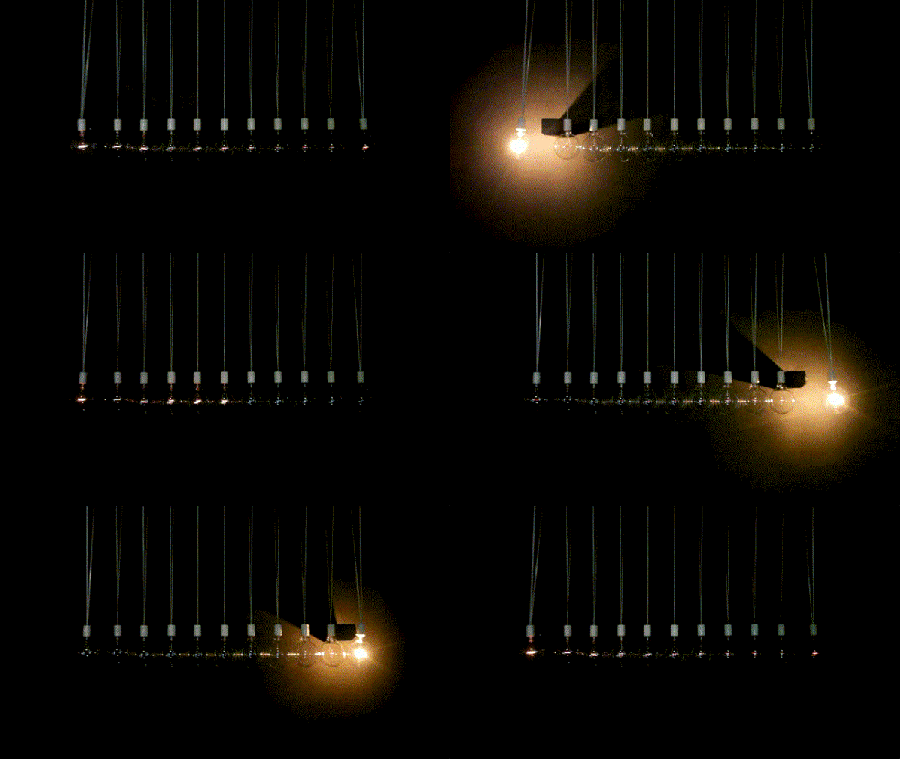
This interesting take on Newton’s Cradle is called “Asobi” and was created by [Yasutoki Kariya]. However, [Johnny] at Spoon and Tamago dubbed it “Edison’s Cradle”, which we think is a great name.

As you can make out in the video, it isn’t really a Newton’s Cradle. There is a solenoid pushing the bulbs at the end out at the correct time, but that’s fine. The overall result is quite brilliant. Unfortunately, we don’t know much about the setup. Anyone have more information? Anyone want to take a stab at making “Tesla’s cradle”?

[via Make]

Continue reading “Edison’s Cradle Is A Bright Idea”

Control Giant Fireballs With Your Mind

[Matt Oehrlein] and [Ed Platt] from the i3 Detroit hackerspace created the Mind Flame project. The project uses Electroencephalography (EEG) sensors from NeuroSky to measure the user’s concentration level. When you’re concentrating hard enough, the Mind Flame launches a giant fireball, which probably breaks your concentration pretty quickly.

Propane is accumulated in tanks, and then released past a hot surface carbide igniter. It looks like an Arduino is used to open the valve, and the result is a massive fireball controlled by your brainwaves.

The Mind Flame was demoed at the Detroit Maker Faire as a competition. Two participants face off to see who can concentrate the hardest and make the device launch three fireballs first. In the future, they want to incorporate new competitive elements. One example is placing wooden houses in the line of fire, and letting opponents try to burn down their adversary’s house before their’s is set ablaze.

You can check out an interview about the project here.

[Via Make]

[Woz] Prints And Spends His Own $2 Bills

[Steve Wozniak’s] damn the man, devil may care attitude continues to show with this recent interview. Here he shows off the pad of $2 bills he had made up. He’ll sell one sheet of them to you for $5. Do you think that’s a scam? He say’s “you’d be an idiot not to buy it for five bucks” and after we dug a little deeper, he’s right.

Now, you really need to watch the video after the break before you read the rest of this feature. Trust us, it’s extremely entertaining. [Woz] mentions that he hired a local printer to make the pads for him, but he got the paper from a high-quality print shop. They meet the specs of the federal government and by law they’re legal tender. Each pad has a page of four bills which can be torn off of the gummed top, and there are perforations between each bill for easy separation.

Nothing illegal is going on here. We followed one of the YouTube commentor’s links to this article [Woz] wrote about his $2 bill exploits. The high-quality printer he buys the paper from is the Bureau of Printing and Engraving. He buys the bills in sheets and pays a premium for that option. Each $2 bill costs him $3. But the fun he’s had over the years is probably worth it.

Continue reading “[Woz] Prints And Spends His Own $2 Bills”

Genezap Improves Your Video Game Skills Using Corporal Punishment

genezap

As if getting your ass handed to you while playing video games wasn’t annoying enough, [furrtek] decided that the best way to help improve his skills was by inflicting physical pain each time his on-screen character died.

While perusing the Internet looking for something to break through the doldrums of the day, he came upon a video in which someone decided to try on a dog shock collar just for kicks. This sparked [furrtek’s] imagination, and he started to think that it would be pretty cool to use the same sort of device to make dying in a video game that much more unpleasant.

After ordering a set of collars online, he tore them apart to see how they functioned, and to measure just how big of a jolt they were able to deliver. [furrtek] then modified two Genesis controllers with a pair of ATtiny 25s, which let him send the fire signal to the collars. Unfortunately, stock Genesis games don’t allow you to send signals to the controllers, so [furrtek] had to spend some time hacking ROM images to trigger events when players are injured or lose a life.

We think the project is pretty slick, and if you don’t mind fiddling with your old controllers, you too can have a merciless trainer strapped around your neck. For those slightly more averse to pain, you can watch [furrtek] and his friend [Dyak] suffer the consequences of poor gameplay for your amusement.

Continue reading “Genezap Improves Your Video Game Skills Using Corporal Punishment”