It’s that excellent time of year in which one slowly comes to the realisation that the summer’s eagerly anticipated events are now no longer at some impossibly distant point in the future, but in fact only a matter of a few months or even weeks away. For our European readers, this means that August’s SHA2017 hacker camp is appearing on the horizon, four days of outdoor technological indulgence for our community in a scout camp on the Dutch polders.
As it is a tradition of such events to have an electronic badge incorporating ever more impressive levels of computing power, it follows that the pre-production announcement of an event badge has become an important milestone in the countdown to the day. SHA2017 is no exception, and thus today we see the announcement of their take on the essentials for a hacker camp badge in 2017.
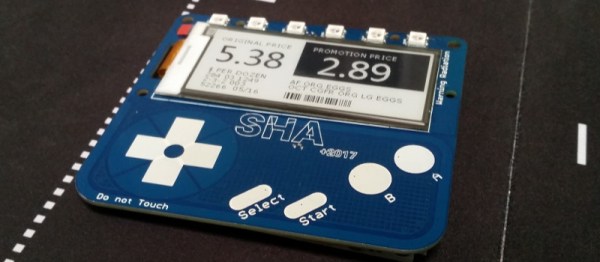
The most immediately obvious thing about the badge is its 296×128 pixel e-ink display, which should provide an immediate benefit in terms of battery life. There are the usual plethora of interfaces, GPIOs, USB, and Neopixels, and the user input is via a set of capacitive buttons. Powering the device is an ESP32, and a key design goal was to have a network for the badges that does not put pressure on the 2.4GHz infrastructure. We’re guessing they’re doing this using raw WiFi packets in the same way as the MAGfest swadge. On the software front it will provide a straightforward development route via MicroPython, and there will be an app library for those without the inclination to code their own. You can get an early look at the schematic from the project repo (PDF).
Their target is to have the badge ready and with stable software on day 1 of the event, a laudable aim if they can manage it.
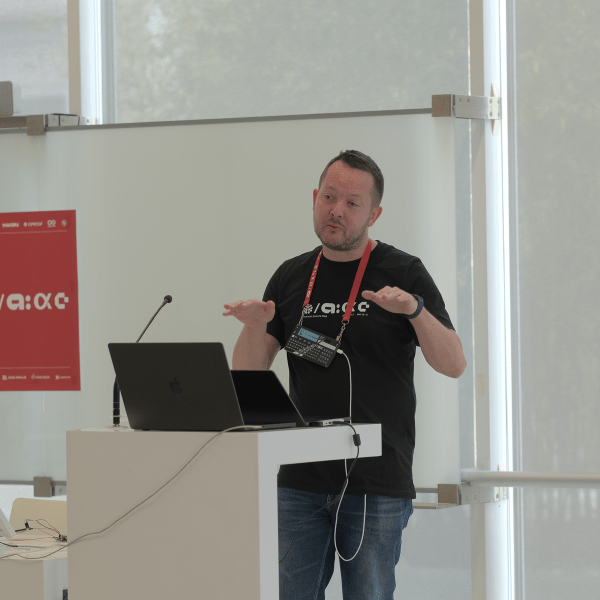
Members of the Hackaday team will be making the trip to the Netherlands for SHA2017, we look forward to seeing you if you attend too, and please show us anything interesting you do with your badges! Keep your eyes peeled for the Jolly Wrench, and come say hello. You’ll find me with the OxHack contingent and giving a talk on the kit biz which I have also published in the Project to Kit series of articles.
We’ve covered so many badges here at Hackaday that we could almost serve of a retrospective exhibition of the art form. Of particular interest to us though is our own [Voja Antonic]’s badge for last year’s Hackaday SuperConference.
Citizen engineers, beware the Beaver State. If you want to discuss engineering in a public setting, you’d better have a license. If you don’t, you could end up like Oregon resident Mats Järlström — paying a $500 fine and being threatened with even larger civil penalties and jail time.
The story of how Järlström became ensnared in this unfortunate series of events begins innocently enough, and it’s a story that any Hackaday reader can probably relate to. After his wife received a traffic ticket in the mail from a red-light camera in the town of Beaverton, Järlström began pondering the math of traffic signal timing. After a little digging, he found the formula used for calculating the time traffic signals stay in the yellow stage. Moreover, he found a flaw in the formula, which dates back to 1959, that could lead to incorrect violations issued by automated traffic cameras.
So [DARPA] wants to start hacking human brains, With the help of the biomedical device center at the university of Texas in Dallas. This does sound a bit crazy but DARPA does crazy. Conspiracy theorists are going to have a field day with this one.
The initial plans to turn us all into mindless zombies seem to be shelved for now, however they are working on what they call Targeted Neuroplasticity Training (TNT), which they explain means using the body’s nervous system to enhance and speed up the learning process. This could be achieved by using a process known as ‘synaptic plasticity‘ which opens and closes the brains synapses with electrical stimulation. They hope that by tuning the neural networks responsible for cognitive function it will enhance learning. Let’s just hope they don’t turn any humans into DARPA falling robots.
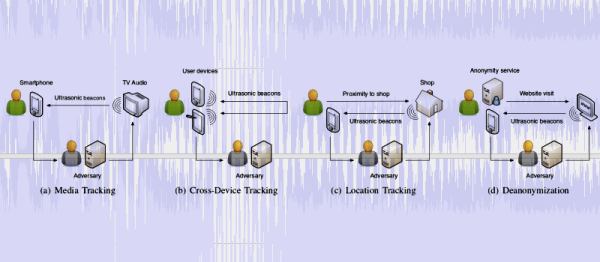
An ultrasonic beacon is an inaudible sound with encoded data that can be used by a listening device to receive information on just about anything. Beacons can be used, for example, inside a shop to highlight a particular promotion or on a museum for guided tours where the ultrasonic beacons can encode the location. Or they can be used to track people consumers. Imagine if Google find outs… oh, wait… they already did, some years ago. As with almost any technology, it can be used to ‘do no harm’ or to serve other purposes.
Researchers from the Technische Universitat Braunschweig in Germany presented a paper about Ultrasonic Side Channels on Mobile Devices and how can they be abused in a variety of scenarios , ranging from simple consumer tracking to deanonymization. These types of ultrasonic beacons work in the 18 kHz – 20 kHz range, which the human being doesn’t have the ability to hear, unless you are under twenty years old, due to presbycusis. Yes, presbycusis. This frequency range can played via almost any speaker and can be picked up easily by most mobile device microphones, so no special hardware is needed. Speakers and mics are almost ubiquitous nowadays, so there is a real appeal to the technology.
When Amazon released the API to their voice service Alexa, they basically forced any serious players in this domain to bring their offerings out into the hacker/maker market as well. Now Google and Raspberry Pi have come together to bring us ‘Artificial Intelligence Yourself’ or AIY.
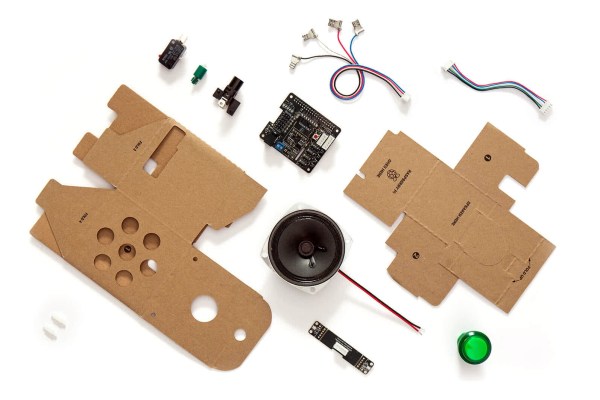
A free hardware kit made by Google was distributed with Issue 57 of the MagPi Magazine which is targeted at makers and hobbyists which you can see in the video after the break. The kit contains a Raspberry Pi Voice Hat, a microphone board, a speaker and a number of small bits to mount the kit on a Raspberry Pi 3. Putting all of it together and following the instruction on the official site gets you a Google Voice Interaction Kit with a bunch of IOs just screaming to be put to good use.
The source code for the python app can be downloaded from GitHub and consists of a loop that awaits a trigger. This trigger can be a press of a button or a clap near the microphones. When a trigger is detected, the recorder function takes over sending the stream to the Google Cloud. Speech-to-Text conversion happens there and the result is returned via a Text-To-Speech engine that helps the system talk back. The repository suggests that the official Voice Kit SD Image (893 MB download) is based on Raspbian so don’t go reflashing a memory card right away, you should be able to add this to an existing install.
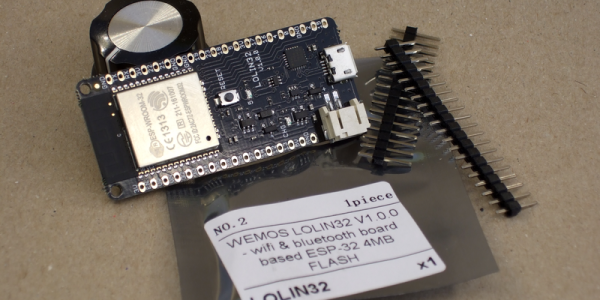
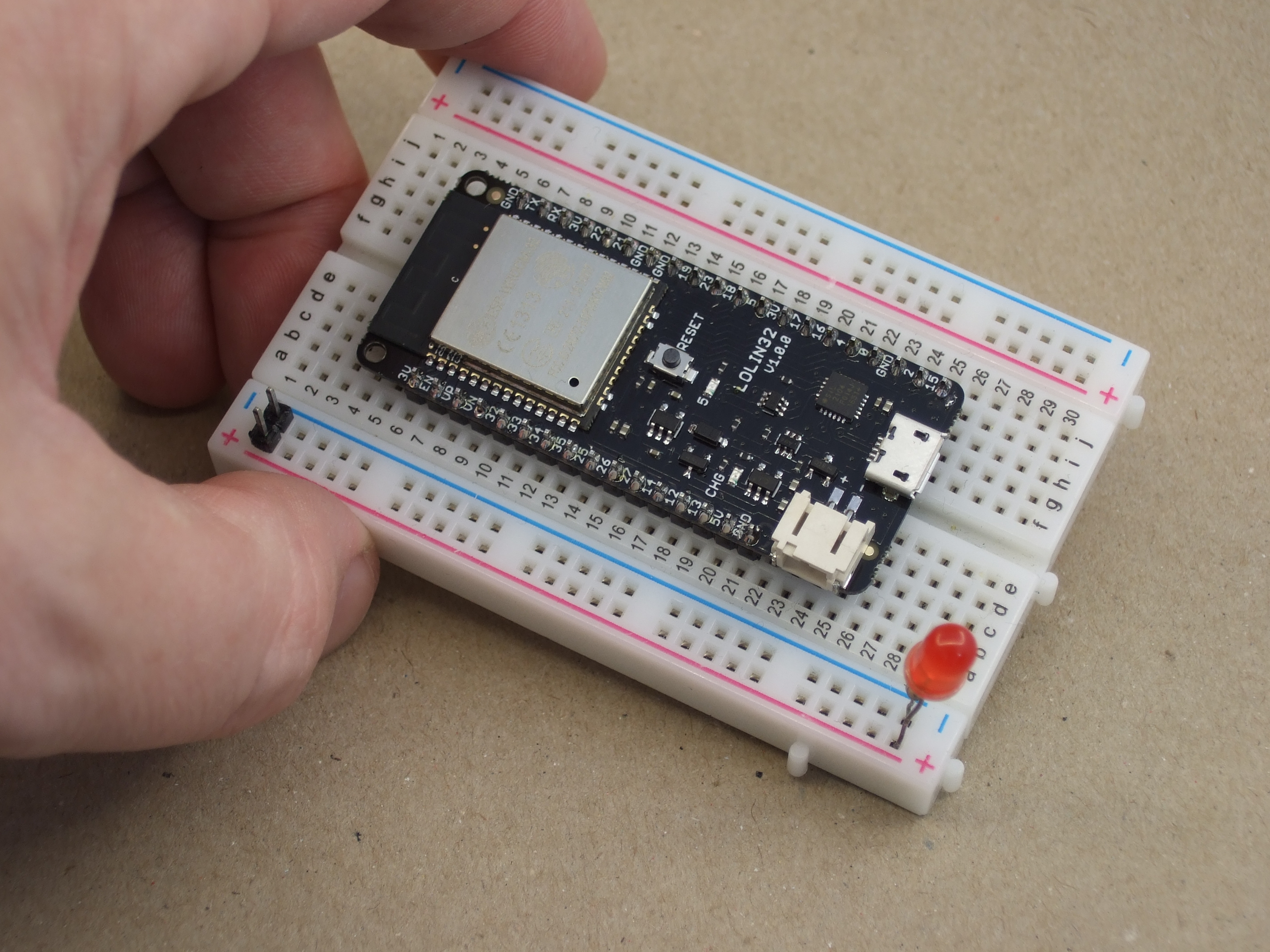
Just two weeks ago our favorite supplier of cheap ESP8266 boards, WeMos, released the long-awaited LOLIN32 ESP-32 board, and it’s almost a killer. Hackaday regular [deshipu] tipped us off, and we placed an order within minutes; if WeMos is making a dirt-cheap ESP32 development board, we’re on board! It came in the mail yesterday. (They’re out of stock now, more expected soon.)
If you’ve been following the chip’s development, you’ll know that the first spin of ESP-32s had some silicon bugs (PDF) that might matter to you if you’re working with deep sleep modes, switching between particular clock frequencies, or using the brown-out-reset function. Do the snazzy new, $8, development boards include silicon version 0 or 1? Read on to find out!
Betteridge’s Law of Headlines states, “Any headline that ends in a question mark can be answered by the word no.” This law remains unassailable. However, recent claims have called into question a black box hidden deep inside every Intel chipset produced in the last decade.
Yesterday, on the Semiaccurate blog, [Charlie Demerjian] announced a remote exploit for the Intel Management Engine (ME). This exploit covers every Intel platform with Active Management Technology (AMT) shipped since 2008. This is a small percentage of all systems running Intel chipsets, and even then the remote exploit will only work if AMT is enabled. [Demerjian] also announced the existence of a local exploit.
Intel’s ME and AMT Explained
Beginning in 2005, Intel began including Active Management Technology in Ethernet controllers. This system is effectively a firewall and a tool used for provisioning laptops and desktops in a corporate environment. In 2008, a new coprocessor — the Management Engine — was added. This management engine is a processor connected to every peripheral in a system. The ME has complete access to all of a computer’s memory, network connections, and every peripheral connected to a computer. The ME runs when the computer is hibernating and can intercept TCP/IP traffic. Management Engine can be used to boot a computer over a network, install a new OS, and can disable a PC if it fails to check into a server at some predetermined interval. From a security standpoint, if you own the Management Engine, you own the computer and all data contained within.
The Management Engine and Active Management Technolgy has become a focus of security researchers. The researcher who finds an exploit allowing an attacker access to the ME will become the greatest researcher of the decade. When this exploit is discovered, a billion dollars in Intel stock will evaporate. Fortunately, or unfortunately, depending on how you look at it, the Managment Engine is a closely guarded secret, it’s based on a strange architecture, and the on-chip ROM for the ME is a black box. Nothing short of corporate espionage or looking at the pattern of bits in the silicon will tell you anything. Intel’s Management Engine and Active Management Technolgy is secure through obscurity, yes, but so far it’s been secure for a decade while being a target for the best researchers on the planet.
Semiaccurate’s Claim
In yesterday’s blog post, [Demerjian] reported the existence of two exploits. The first is a remotely exploitable security hole in the ME firmware. This exploit affects every Intel chipset made in the last ten years with Active Management Technology on board and enabled. It is important to note this remote exploit only affects a small percentage of total systems.
The second exploit reported by the Semiaccurate blog is a local exploit that does not require AMT to be active but does require Intel’s Local Manageability Service (LMS) to be running. This is simply another way that physical access equals root access. From the few details [Demerjian] shared, the local exploit affects a decade’s worth of Intel chipsets, but not remotely. This is simply another evil maid scenario.
Should You Worry?
This hacker is unable to exploit Intel’s ME, even though he’s using a three-hole balaclava.
The biggest network security threat today is a remote code execution exploit for Intel’s Management Engine. Every computer with an Intel chipset produced in the last decade would be vulnerable to this exploit, and RCE would give an attacker full control over every aspect of a system. If you want a metaphor, we are dinosaurs and an Intel ME exploit is an asteroid hurtling towards the Yucatán peninsula.
However, [Demerjian] gives no details of the exploit (rightly so), and Intel has released an advisory stating, “This vulnerability does not exist on Intel-based consumer PCs.” According to Intel, this exploit will only affect Intel systems that ship with AMT, and have AMT enabled. The local exploit only works if a system is running Intel’s LMS.
This exploit — no matter what it may be, as there is no proof of concept yet — only works if you’re using Intel’s Management Engine and Active Management Technology as intended. That is, if an IT guru can reinstall Windows on your laptop remotely, this exploit applies to you. If you’ve never heard of this capability, you’re probably fine.
Still, with an exploit of such magnitude, it’s wise to check for patches for your system. If your system does not have Active Management Technology, you’re fine. If your system does have AMT, but you’ve never turned it on, you’re fine. If you’re not running LMT, you’re fine. Intel’s ME can be neutralized if you’re using a sufficiently old chipset. This isn’t the end of the world, but it does give security experts panning Intel’s technology for the last few years the opportunity to say, ‘told ‘ya so’.