If you’re blessed enough that you haven’t had blood drawn in a while, you might not have thought much about the process. You might imagine that a needle goes in, a syringe is drawn back, and the venous blood is thusly collected. Indeed, it can be done that way.
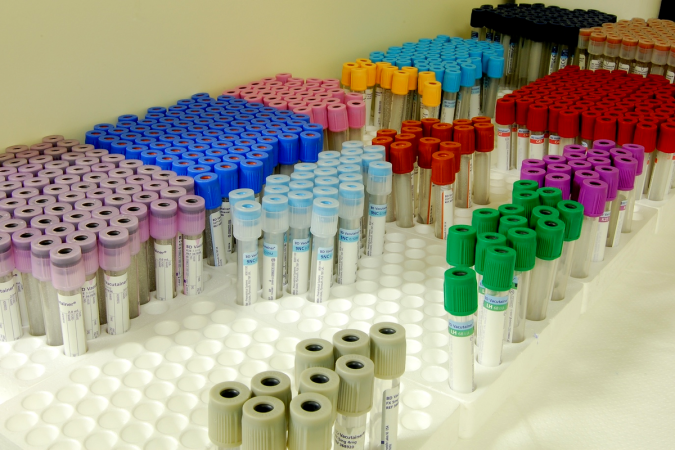
However, there is an altogether niftier and more efficient method of fast blood collection for pathology testing. It’s all about using vacuum and smart design to ease the work of phlebotomists, while maintaining a sterile and safe environment.
Even before 3D graphics and advanced shaders became common in the gaming world, there were concerns that virtual violence looked too realistic. Fighting games in the 1990s were routinely toned-down by having gratuitous displays of blood removed, which was often seen as disappointing by dedicated fans. [Raphaël Boichot] has been working to right this wrong in one obscure case, by rectifying the lack of blood in Sengoku 2.
Sengoku 2 was a title released in 1993 for the Neo Geo AES/MVS and the Neo Geo CD. It hit the market with relatively tame graphics that didn’t reflect the realistic amount of blood that should be released when an enemy was chopped in half with a sword. Noting that there was no simple DIP switch configuration or bit to flip to enable a more adult version of the game, [Raphaël] decided to create a custom blood hack the hard way. What ensued was a heavy-duty reverse engineering effort, swapping out palettes, and carefully editing tilesets in order to turn the censored graphics into something more lurid. A lot of artistic decisions had to be made to manipulate things just so in order to create a pleasing effect that didn’t mess up other aspects of the graphics at the same time.
If you’re a big Sengoku 2 fan, or you just want to learn more about reverse engineering and hacking on an obscure platform, dive into the project and enjoy the learnings. Otherwise, dive into the entirely different sorts of blood-related hacks we’ve featured over the years.
If you’ve ever had a medical team investigating cardiac issues, you’ve probably had a bunch of electrodes stuck all over your chest and been hooked up to an electrocardiogram. This is the gold standard when it comes to understanding electrical activity in the heart and can diagnose a great many conditions. However, sometimes doctors just need the basic information—your pulse rate, and whether or not there’s actually any oxygen in your blood.
Thankfully, there’s a cheap and simple device that can offer that exact information. It’s the pulse oximeter, and it’s a key piece of equipment that’s just about vital for monitoring vitals. Let’s learn how it works!
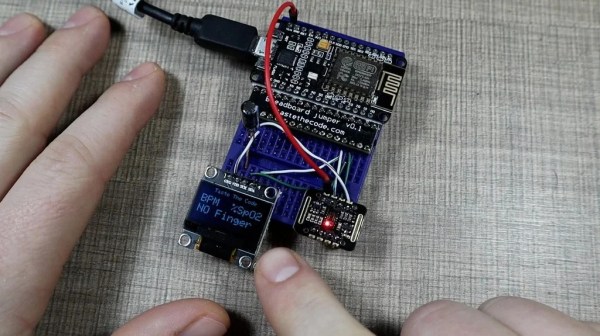
The MAX30105 is an optical sensor capable of a great many things. It can sense particulate matter in the air, or pick up the blinking of an eye. Or, you can use it as a rudimentary way to measure your heart rate and blood oxygen levels. It’s by no means a medical grade tool, but this build from [Taste The Code] is still quite impressive.
The MAX30105 contains red, green, and infrared LEDs, and a very sensitive light detector. The way it works is by turning on its different LEDs, and then carefully measuring what gets reflected back. In this way it can measure particles in the air, such as smoke, which is actually what it was designed for originally. Or, if you press your finger up against it, it can measure the light coming back from your blood and determine its oxygenation level. By detecting the variation in the light over time, it’s possible to pick up your pulse, too.
Getting this data out of the sensor is remarkably easy. One need only hook it up to a suitable microcontroller like the ESP8266 and use the MAX3010X library to talk to it. [Taste The Code] did exactly that, and also hooked up a screen for displaying the captured data. Alternatively, if you want the raw data from the sensor, you can get that too.
There were news stories afoot this week with somewhat breathless headlines that suggested a medical breakthrough was at hand: “In a 1st, two people receive transfusions of lab-grown blood cells.” A headline like that certainly catches the eye, especially as the holidays approach and the inevitable calls for increased blood donations that always seem to happen this time of year as the supply gets pinched. Does a headline like that mean that someone is working on completely artificial blood?
As always with this sort of thing, the answer is a mixed bag. Yes, a team in the UK has transfused two patients with a small amount of lab-grown red blood cells, and it’s the first time that particular procedure has been performed. But while the headline is technically correct, the amount transfused was very small, so the day when lab-grown whole blood transfusions replace donated blood isn’t exactly here yet. But the details of what was done and why it was attempted are the really interesting part here, and it’s worth a deep dive because it does potentially point the way to a future where totally synthetic blood may be a real thing.
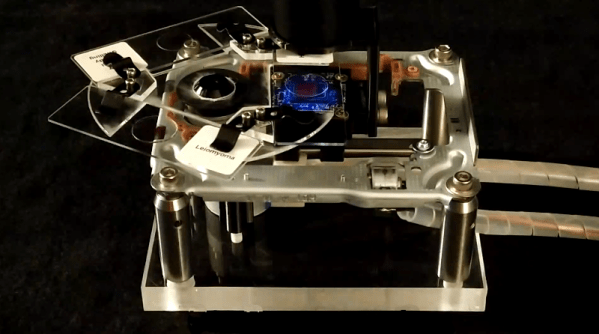
When you think of high-throughput ptychographic cytometry (wait, you do think about high throughput ptychographic cytometry, right?) does it bring to mind something you can hack together from an old Blu-ray player, an Arduino, and, er, some blood? Apparently so for [Shaowei Jiang] and some of his buddies in this ACS Sensors Article.
For those of you who haven’t had a paper accepted by the American Chemical Society, we should probably clarify things a bit. Ptychography is a computational method of microscopic imaging, and cytometry has to do with measuring the characteristics of cells. Obviously.
This is definitely what science looks like.
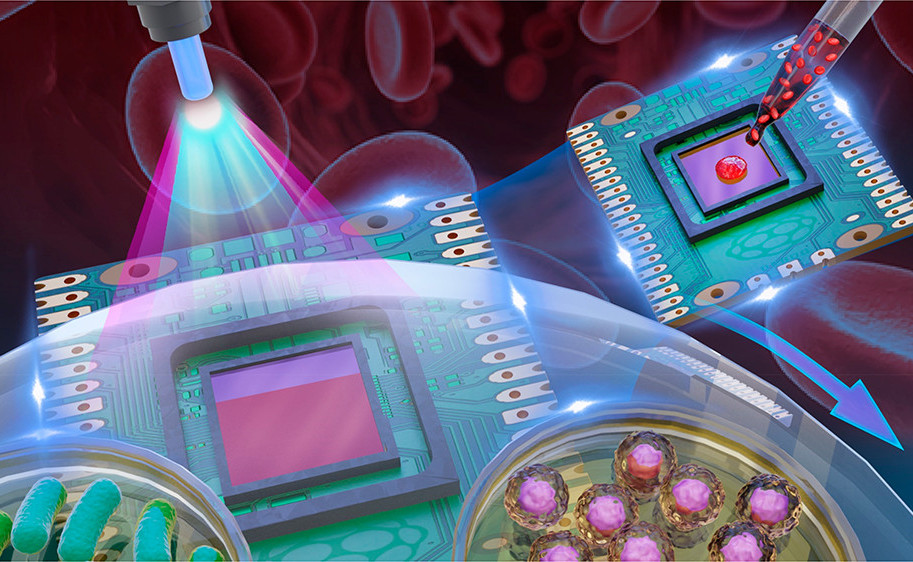
Anyway, if you shoot a laser through a sample, it diffracts. If you then move the sample slightly, the diffraction pattern shifts. If you capture the diffraction pattern in each position with a CCD sensor, you can reconstruct the shape of the sample using breathtaking amounts of math.
One hitch – the CCD sensor needs a bunch of tiny lenses, and by tiny we mean six to eight microns. Red blood cells are just that size, and they’re lens shaped. So the researcher puts a drop of their own blood on the surface of the CCD and covers it with a bit of polyvinyl film, leaving a bit of CCD bloodless for reference. There’s an absolutely wild video of it in action here.
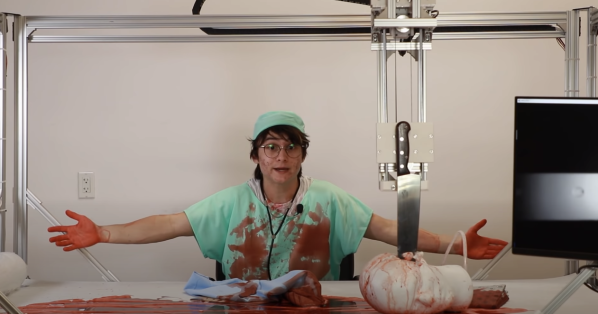
A robot that performs surgery is a serious thing. One bug in the control system could end with disaster. Unless of course, you’re [Michael Reeves], in which case disaster is all part of the fun. (Video, embedded below.)
Taking inspiration from The da Vinci Surgical System, [Michael] set out to build a system that was faster, while still maintaining precision. He created a belt drive gantry system, not unlike many 3D printers, laser cutters, or woodworking CNC machines. Machines like this often use stepper motors. [Michael] decided to go with [Oskar Weigl’s] ODrive and brushless motors instead. The ODrive is on open source controller which turns off the shelf brushless motors — such as those found in R/C planes or hoverboards, into precision industrial servos. Sound familiar? ODrive was an entrant in the 2016 Hackaday Prize. [Michael] was even able to do away the ubiquitous limit switch by monitoring current draw with the ODrive.
It all adds up to a serious build. But this is [Michael “laser eye” Reeves] after all. The video is meant to be entertaining, with a hidden payload of education and inspiration. The fun starts when he arms the robot with a giant kitchen knife and performs “surgery” on a pineapple. If you want to know what happens when mannequins and fake blood enter the picture, then watch the video after the break.