Knockoff Game Controller Makes A Fine Remote Shutter Release

remote-shutter-release

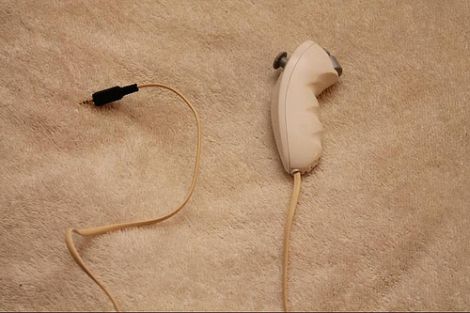
[Duncan Murdock] received a Canon DSLR camera for Christmas and wanted a remote shutter release to go along with it. Since nary a store was open on Christmas, he was pretty much out of luck. Scrounging around in his parts drawer, he found all sorts of goodies waiting to be reused, including a knockoff Wii nunchuck.

He pulled the original cable from the nunchuck and replaced it with an old telephone wire, attaching a 2.5mm plug to the end. The plug goes directly into his camera’s control port, allowing him to trigger the auto focus and shutter mechanisms with the push of a button.

We like the idea of a junk controller being recycled for use in a camera, though we think it has far more potential than being used as a simple wired trigger. If both the nunchuck and camera were fitted with some sort of wireless interface (Bluetooth, IR, etc), we think it would make a great addition to any hobby photographer’s kit.

Video Series Shows How To Build Your Own Solar-charged R/C Lawnmower

rc-solar-lawnmower

As winter is officially upon us, we’re pretty sure that the last thing most of you are thinking about is mowing your lawn. We would argue that it’s actually the ideal time to do so – that is, if you are interested in automating the process a bit.

[Robert Smith] has spent a lot of time thinking about his lawn, wanting a way to sit back and relax while doing his weekly trimming. He set off for the workshop to build an R/C electric lawnmower, and thoroughly documented the process in order to help you do the same.

On his web site, you will find a series of videos detailing every bit of the solar charged R/C lawnmower’s construction, taking you through the planning phases all the way to completion. [Robert] has provided just about anything you could possibly need including parts lists, schematics, code, and more.

If the short introductory video below has you interested, be sure to swing by his site for everything you need to build one of your own.

Continue reading “Video Series Shows How To Build Your Own Solar-charged R/C Lawnmower”

GE Color Effects Hacking For The Nautically Inclined

ge-color-effects-controller

[Jim] wrote in to share some work he did with GE Color Effects LED lights in an effort to create a light display for his boat. He saw our coverage of the Color Effects G-35 hacking efforts by DeepDarc last year, and knew that they would be prefect for the boat. He did some careful scouring of eBay to score 8 strings of lights at bargain basement pricing, then he got down to the business of hacking them.

He originally built a control circuit using a single PIC18F, but just before he started to put everything together, he realized that wiring everything up would be a huge undertaking. Going back to the drawing board, he decided it would be best to replace the lights’ stock board with one of his own. Now, he uses a single master controller board to send messages to his slave “pods”, significantly cutting down the amount of wiring required for the project.

The display looks great as you can see in the video below, though as many do, [Jim] has plenty of improvements in mind for the future.

Continue reading “GE Color Effects Hacking For The Nautically Inclined”

Nokia N900 Control Pad Is Perfect For Gaming On The Go

nokia-n900-gamepad

[Andrzej] loves his Nokia N900, noting that it makes a great portable gaming device. Since it supports a wide array of emulators, it’s perfect for indulging his gaming nostalgia on the go. He says that the one downside to the N900 is that its keyboard doesn’t make gaming easy, nor comfortable.

To make gaming a big more fun, he built himself an add-on gamepad that fits perfectly over the phone’s keyboard. Connected via the phone’s USB port, it features 8 push buttons along with a PSP joystick. He used an ATmega8A as the brains of the controller, communicating with the phone as a USB keyboard. He says that this sort of configuration makes it extremely easy to do all sorts of custom button mapping on a per-game basis.

As you can see in the picture above the controller is currently lacking a case, but we think that with a bit of clever packaging, it could look as nice as a retail add-on.

Check out the short video below to see his gamepad in action.

Continue reading “Nokia N900 Control Pad Is Perfect For Gaming On The Go”

Hackaday Merit Badges Now Available At Adafruit!

The folks over at Adafruit had this idea to make “merit badges” for different achievements. One of the major achievements they mentioned was having your project posted to Hackaday. They asked our approval and got it. The badges have finally come in, so we are happy to announce them. You can purchase them directly from Adafruit, along with a plethora of other badges to adorn your projects.

[Phil Torrone] had a great idea though. To celebrate this, they are going to give away 10 badges to the projects that you, our readers, choose to be the top 10. Go on, dig back through the ranks and post links in the comments. We’ll dig through them and try to compile a list. We will then try to contact those people to send them a free badge.

An EEWeb Interview With Todd Harrison

Although Todd Harrison could be one of many of our readers (and most of our writers), it was nice to see one of “us” featured in [EEWeb]. [HAD] has featured him before in posts such as this recent one about replacing solder tab batteries.

What may be interesting to many is that soon after [Todd] graduated he took a job as a computer programmer, but like many other part-time makers, he still had the need to physically create and modify things. This article goes over some of his preferred tools, as well as some of the various projects that he’s done or is working on now.

In the article, [Todd] goes over what he sees as the biggest challenges to inspiring new generations of engineers. One of these is that circuitry is increasingly locked down and are not easily tinkered with. Without exploring how things work, his view is that fewer will be inspired to go into engineering. Although there is certainly some validity to his point, as some doors close, others hopefully will open. The accessible learning environment of the Internet, open source resources, and many maker-friendly materials like the Arduino should help to fill in the gaps.

For more information, [Todd] also has his own blog, Toddfun.com, which features his projects.

Weekly Roundup 12/3/11

In case you missed them the first time around, here are our most popular posts from the past week.

In first place was a repeat from last week of how you can make a privacy screen from an old LCD display. We want to serve up fresh stuff in this post though so we’ll add one to our top five this week.

Coming in at second place is a post about [Alex’s] real-life Star Trek door that opens and closes pneumatically. Live long and Prosper [Alex]!

Following up in third place is a post about a proposal to build 100 government-run hackerspaces in China. Surely there will be bureaucracy and red tape involved involved with such a thing but maybe the U.S. could take a note about this and help us stay competitive with the rest of the world.

Next we have a post about a project where [Brainiac27] built a 1300 lumen bike light. For those of you who don’t follow the latest in lighting trends, that is like having a 100 Watt spot light mounted to the front of your bike!

Following that, take a look at this post about [FXI Technologies]’ new dongle that lets you run android on any computer or HDMI television. This thing is the size of a thumb drive and yet packs some pretty serious fire power.

Finally, if you are looking for an interesting way to work with plastic, take a look at this post where you are shown how to make prosthetic parts using old soda (or pop if you are one of THOSE people :) ) bottles.