Raspberry Pi Might Not Be Vaporware

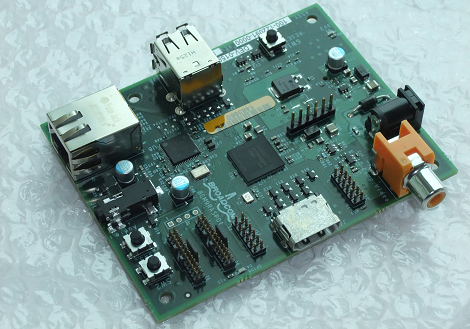
When we first covered the Raspberry Pi, we secretly wondered if the project might become vaporware. It looks like the tiny, full-fledged computer might actually be produced with the announcement of alpha boards in the Raspberry Pi HQ.

In the announcement of the Raspberry Pi last May, the board was about the size of a USB thumb drive and would cost $25. It looks like the board will be a little larger in the final revision – about the size of a business card – and production of the alpha boards were a bit over cost. That being said, these boards seem a lot more capable than what we’ve seen before. The Raspberry Pi now has 10/100 ethernet, and analog audio and video while keeping the HDMI, USB, and SD card support we saw in the original.

The Raspberry Pi team already has Debian running on these boards, so right now we’re wondering when gumstix boards will come down in price. Of course, this project is intended for use in education, but we can’t wait to see what can be done with this hardware. If you already know what you would do with this, tell us in the comments.


A Design Contest With High Odds Of Winning!

[John] wrote in to tell us about this contest hosted by Avnet. All one has to do is upload a video of their design to Avnet’s Youtube page.  There are four categories to choose from including: Solar, Communications, Transportation, and Entertainment. Four contestants can win an iPad2.

The only catch, if you can call it that, is that one would have to use at least one component from their “more than five million SKUs available.”  The thing that makes this contest more interesting than it usually would be is that there appears to be no contest entries as of August 24th. Official rules can be found on their site here.

The contest runs through the end of August, so there isn’t a lot of time to get a design together. However, it’s possible that you have something already built that fits into their product catalog. Make a 30-90 second video of it in action and you’ve got a (very good apparently) chance of winning an iPad2! Check out the contest video after the break. Continue reading “A Design Contest With High Odds Of Winning!”

Vintage Phone Has A Dirty Android Secret

android_based_vintage_phone

Instructables user [apple_fan] likes vintage telephones from the early 1900s, but while they are nice to look at, they’re clearly not too useful nowadays. He decided to change that, and retrofitted an old operator-dialed telephone with some modern amenities.

He gutted the phone, stripping out the large electromagnets and capacitor that were once used to facilitate placing and receiving calls. He added an Archos 28 tablet to the box, wiring it an IOIO board, allowing him to interface it with his Android phone. The old microphone and speaker were swapped out for updated components, and a new ringer actuator was built to replace the bulky old unit. The tablet and ringer, along with the rest of the components were then carefully hidden away inside the box as not to alter the aesthetics.

To place and receive calls, he installed CMU Sphinx on the Archos tablet, allowing him to interact with the phone using voice recognition, as if he was talking to a live operator.

It’s a pretty neat project, and while we might have opted for a small micro combined with a Bluetooth headset, [apple_fan] makes it clear why he made the hardware decisions he did. We’re always up for letting people show us a different way to get a job done, so we’re down with that.

Check out a short video demo of the phone in action after the jump.

Continue reading “Vintage Phone Has A Dirty Android Secret”

The Scariest Hacks From Black Hat And Defcon

Although [HAD] is generally all about legal hacking, this list of demonstrated hacks could be used for the dark side as well. Hopefully by demonstrating hacks like this, most people can be more aware of how they use their information. Computer security experts also have a chance to hone their skills and see where potential vulnerabilities lie.

Some of the highlights from this article include hacking a Siemens S7 PLC, which can be used for factory automation, a “hacker drone” that we’ve featured before, and a method to deduce someone’s social security number from personal photos on social networking sites.  Also scary is a method to shut down certain personal insulin pumps.  Although serious in itself, one would hope that other life preserving devices would be adequately protected against intrusion.

One hack that seems like it could have interesting uses in the legal-hacking world is the idea of VoIP botnet control. Although “botnet control” obviously implies illegal use, controlling a computer with voice or touchtones can and does have many legal uses.

High Voltage: Lightning Simulator Can’t Send You Back To The Future

Continuing on with our high-voltage theme, today we have a page describing Marx generators by [Grenadier]. Marx generators are devices that produce pulses of very high voltage with fast rise times. For most of us, that means that they can make neat sparks. For the more serious types out there, that also means that they are great for driving some high-powered lasers, simulating lightning strikes, and even igniting the conventional explosives surrounding the core of a nuclear weapon! His page includes a video of his Marx generator producing some pretty sparks for those of us who aren’t so serious.

We have featured several of [Grenadier’s] projects in the past. This one doesn’t deviate from his normal style of taking a subject and clearly describing it with lots of well-taken pictures.

Recently, he has been working on improving one of his projects that deviates from what he normally does. He is calling it “The Junkbox”. The Junkbox is something like a free online swap meet where you can sell your electronic parts.

Jack’s Video Has Been Fixed.

Earlier today, [Jack] posted his latest video. He then promptly ran off to the secret Hackaday headquarters to begin work on the next one. Unfortunately there was a weird problem with Youtube which left the video un-viewable. We’ve fixed it now and wanted to let everyone know.

We’ve also been getting lots of questions about the videos, mainly about what future content we’ll cover.  Obviously, we’ve only done some very simple and goofy things so far.  We wanted to start simple to get the hang of everything. [Jack] has let us know that the upcoming videos are going to be a little bit more serious and deal with some different aspects of pcb design. We can’t wait to see what he comes up with.

Bounty For An HP Touchpad Android Port

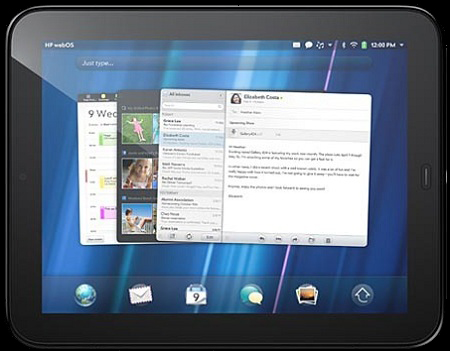
If you spent your weekend outside and away from the Internet, you might have missed the massive liquidation of HP TouchPads on Amazon, woot.com, WalMart, and the HP online store. Normally a $100 fully featured tablet is nothing to scoff at, but there is a catch: The HP TouchPad runs WebOS. WebOS is a fine operating system for a tablet, but it’s not Android. The folks at HacknMod.com posted a bounty for the first person to port Android to the HP TouchPad.

HacknMod is offering up $450 for a basic Android port and is looking for sponsors for the WiFi, Audio, Camera, and MultiTouch bounties. There’s a lot of discussion about the port on the XDA Developers and the RootsWiki forums if you’d like to get a bearing on how far along the project is. The TouchPad has already been rooted so there’s your starting point.

We’d like to throw our hat into the ring, but we missed out on the TouchPad fire sale. If anyone knows of an online shop where they’re still available, leave a message in the comments.

via HacknMod.com