Starting next Monday we be adding some themed posts into the mix. Every couple of weeks we will pick a new theme. Our first theme will be about hacks and projects involving high voltage. Each day we will have a new post based on the current theme. To make this happen though, we need your help. If you have been working on something that involves high voltage or you know someone who has, hit us up on the tip line. If you have a cool high-voltage project but haven’t posted it online yet, take a look at this link where we show you some options.
News3657 Articles
1 Chip USB AVR Development

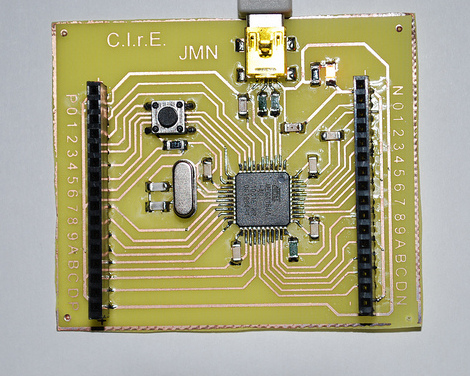
Wouldn’t it be nice if there was an AVR microcontroller with USB device support built in so you would not need a separate programmer or serial link? Well in fact there are quite a few of them, and this awesome tutorial (google translate) is a quick and easy crash course in using the ATMega 16/32U4 micro controllers.
These 8 bit AVR’s (16k and 32k) have the usual list of features you would expect in a Mega AVR. 26 GPIO pins and a pretty easy to solder 44 pin surface mount package, the micro controller also has a USB 2.0 Full-speed/Low Speed Device Module and allows programming though a standard bootloader.
Once you have a pretty standard board assembled you need Atmel’s FLIP RS232, USB, or CAN device programming software (Windows or Linux) and your favorite AVR IDE setup, you’re good to go!
Join us after the break for a quick video.
RC Car Hack Saves Lives In War Zone

R.I.P sand-colored radio-controlled truck. Your life ended with a bang and in doing so, saved some lives. This little work-horse is a hack that [Ernie Fessenden] put together and sent to his brother [Sergeant Chris Fessenden] who is on a tour of duty in Afghanistan.
[Chris’] team is trained to be on the lookout for roadside bombs, but [Ernie] wanted to sent him something cool that could also keep him safe. By adding a camera to the hood of the Traxxis Stampede and using a gun-mountable LCD screen, the soldiers now have a way to see what’s on the road ahead from their armored Humvee. Sounds like it would work just fine right? Well the hack just got a big endorsement when it tripped an IED made of around 500 pounds of explosives. [Chris] and five other soldiers on patrol were unharmed in the event, and [Ernie] already has a replacement model on the way.
[Thanks Rioexxo and Alex]
More proof that battlefield hacks deserve a place next to some of the high-ticket items you’d usually associate with weapons of war.
Instructables Joins Autodesk

Everyones favorite site, Instructables.com, has announced a big move. They have joined Autodesk along with the same team that is doing Autodesk 123D,
Autodesk is a great cultural fit for Instructables. They make tools for creative people: they’re the world leader in 3D design, engineering, and entertainment software. Even if you don’t recognize the name Autodesk, their software has powered the movies you watch, and designed the cars you drive and the buildings you work in. Instructables will be the community arm of the same team that makes 123D, SketchBook, Homestyler, and Pixlr, which will help provide creative tools, inspiration, and services for all types of creative people. Here’s Carl Bass, Autodesk’s CEO, talking more about his vision for the future of DIY.
Sofar the overall reaction on the site thread is tame, but many comments lean to skeptical, though typical with any transition to “The man” as one commenter called them.
Meanwhile MAKE has posted a in depth article “Autodesk Acquires Instructables: What It Means for Makers” in their usual (long) format. What’s your thoughts?
The DIY Nuclear Reactor
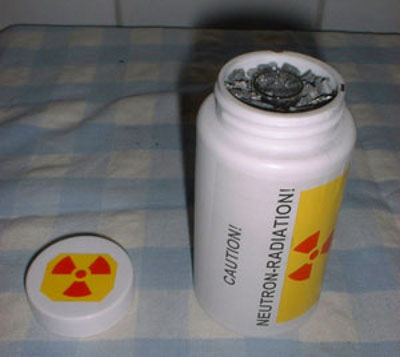
“Wednesday, I was arrested and sent to jail,” is what your blog might say if you decide to try and duplicate this project. You may, however, be fortunate to be still writing your blog, as ATTEMPTING TO BUILD YOUR OWN REACTOR can be quite dangerous. That’s what [Richard] did using household items such as clock fingers for Radium, and smoke detectors for Americium. After the radioactive elements were separated from their household “containers” and melted down, they created a small explosion on his stove.
This attempted experiment is based on one that was done by [David Hahn], AKA, “The Nuclear Boyscout”, in order to obtain his nuclear energy badge. For what it’s worth, [David] did attain the rank of Eagle Scout, however, he turned his parent’s house into a Superfund EPA cleanup site in the process.
The video after the break describes the process of making a reactor from household materials. This video may be entertaining, but duplicating it is not recommended (and would be somewhat expensive). Continue reading “The DIY Nuclear Reactor”
The Lego Synchro Drive
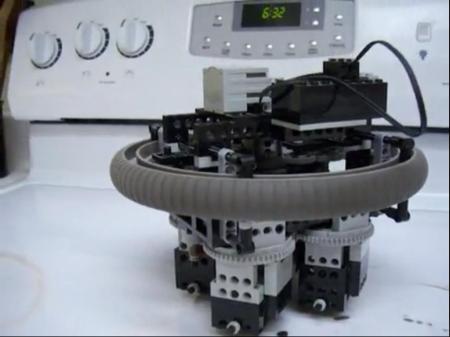
[M-byte] wrote in to tell us about the Lego Synchro Drive. Although not a new hack, this autonomous vehicle is quite amazing in it’s simplicity. Using only one motor turning at a constant speed, this device is able to navigate obstacles by simply turning.
As [m-byte] was quick to point out, this is a simple task using modern electronics, but this drive is made using only Lego Technic parts. The machine’s motion is quite pleasing. When it hits an obstacle, the outer rotating ring stops, allowing the casters on the bottom to switch direction. One could see this invention coming out of Leonardo da Vinci’s notebook (minus the Legos).
Check out either of the embedded videos after the break to see this device in action. If you’d like to build one yourself, follow this link for very well illustrated directions. Continue reading “The Lego Synchro Drive”
Come See What’s Cooking In The Arduino Kitchen

The crew that brought you the Arduino is always hard at work trying to bring the community closer together and to foster collaborative development. They recently rolled out a new feature on their site that is sure to be of interest to Arduino veterans and neophytes alike.
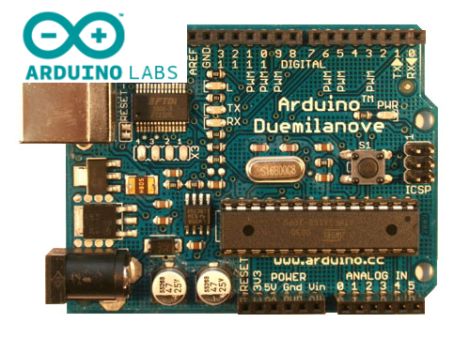
Arduino Labs is a platform which the team plans on using as an incubator of sorts, for projects that are underway, but not fully baked. Currently, they have highlighted two in-progress initiatives, including the Arduino Mega ADK, as well as a GSM/GPRS shield that the team has been developing in collaboration with Telefonica I+D.
As of right now, the site looks to be a one-way information outlet for the Arduino team to the community, but they stress that their aim is to create a more open development process within the Arduino project. While there is no official statement on the matter, we hope that the site will eventually allow members of the community to offer both their feedback and lend manpower to forthcoming projects.
[via Adafruit blog]