Alert Tube Monitors All Aspects Of Your Digital Life

alert-tube

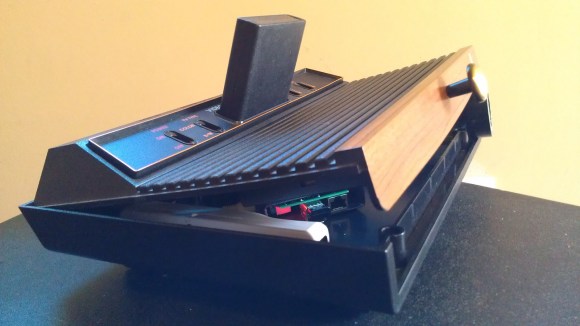
This futuristic appliance can keep you apprised of all you social network goings on and much more. [Mike Watson] calls the device the Alert Tube because of its functionality and shape. The hardware depends primarily on a Raspberry Pi board which seems tailor-made for this type of use. The information gathering side of this shows off the power of a fledgling services called If This Then That.

We’ve heard of IFTTT only because [Chris Gammel] and [Dave Jones] covered it on an episode of The Amp Hour. [Dave] dismissed it as have little to no practical use. But this project shows how it can be leveraged to make quick work of pulling your desired data from the Internet. Think of it as a collection of APIs for many sites like Twitter, Facebook, as well as local weather, etc. This project sets up IFTTT to monitor your accounts, alerting you with colors of like, sound, and even text-to-speech.

The project explanation is several pages long but you can get a quick look at it by watching the demo video.
Continue reading “Alert Tube Monitors All Aspects Of Your Digital Life”

RPi Control Your Server PSU Over The Internet

remote-server-psu-control-via-RPi

Here’s an interesting use of a Raspberry Pi to control the PSU on a server. [Martin Peres] is going to be away for a few months and still wants access to his PC. This isn’t really all that tough… it’s what SSH is made for. But he also wants lower-level access to the hardware. Specifically he needs to control and get feedback on what the PSU is doing, and even wanted to have access to the serial console without having to go through the computer’s NIC.

The image above shows one part of his solution. This is a custom Ethernet port that connects to his Rasberry Pi header breakout board. Inside the computer the jack is wired to the motherboard power LED to give feedback about the current state of the power supply. It also patches into the green wire on the PSU, which lets him turn on the power by pulling it to ground. After working out the cable routing he developed a web interface that makes it easy to interact with the setup.

As with other hacks along these lines letting an embedded computer run 24/7 is a lot less wasteful than leaving a PC on. That’s a concept we can really get behind.

Continue reading “RPi Control Your Server PSU Over The Internet”

Listening To Aircraft Transponders With A Raspberry Pi

Last year’s big hack was software-defined radio; a small USB TV tuner that could listen in on radio broadcasts anywhere between 64 and 1200 MHz. This year, it’s all about the Raspberry Pi, so it’s surprising we’re only just now seeing a mashup of these two pieces of hardware. [Corq] is using a Raspi and RTLSDR TV tuner to listen in on aircraft transponders, and getting a whole bunch of data from aircraft flying overhead.

Even though the ADS-B decoder [Corq] is using is written for OS X, he’s reading the data coming from the USB TV tuner over the network with a program called Dump1090. This program allows [Corq] to attach his SDR to a Raspbery Pi and put it somewhere the antenna will get good reception – an attic, or an outdoor weatherproof case – and stream data to his desktop over a WiFi or network connection.

With a USB TV tuner and a Raspberry Pi, [Corq] is able read the tail numbers, altitude, latitude, longitude, speed, heading, and even the type of aircraft currently flying over his house. That’s cool enough, but the fact that he can effectively do this over the Internet makes it a brilliant hardware mashup.

Submersible Camera Snaps Pics Of Ocean Going Predators

RPi-submersible-camera-rig
This camera rig uses a Raspberry Pi to send a camera down fifty meters (mirror on RPi blog) in order to spy on sharks. We got really excited at first thinking that it might be using the camera module from the Raspberry Pi Foundation but that isn’t the case. Do keep reading though, there’s a lot of cool stuff involved in this one.

The project used a collection of camera units spread over a large area to monitor shark activity. Each is mounted on an anchored buoy, using solar panels and a lead acid gel battery for power. The RPi itself remains topside in a waterproof box. It connects to the camera using a 50-foot Ethernet patch cable.

We figure the challenge of building the hardware parallels that of designing an underwater ROV. The camera needs an enclosure that can stand up to the pressure at that depth while allowing the cable to pass through it. There is also an interesting note in the project log about getting the camera exposure settings to behave.

33 Node Beowulf Cluster Built With Raspberry Pi

Not only did [Josh Kiepert] build a 33 Node Beowulf Cluster, but he made sure it looks impressive even if you don’t know what it is. That’s thanks to the power distribution PCBs he designed and etched. In addition to injecting power through each of the RPi GPIO headers they host an RGB LED which is illuminated in blue in the images above.

Quite some time ago we saw a 64-node RPi cluster. That one used LEGO pieces as a rack system to hold all of the boards. But [Josh] used stand-offs to create the columns of hardware which are suspended between top and bottom plates made out of acrylic. The only thing that’s unique about each board is the SD card and that’s why each has a label on it that identifies the node. These have been flashed with almost identical images; the host name and IP address are the only thing that changes from one to the next. They’ve been put in order physically so that you can quickly find your way through the rack. But functionally this doesn’t matter… put the card in any RPi and it will automatically identify itself on the network no matter where it’s located in the rack.

Don’t miss the demo video where [Josh] explains the entire setup.

Continue reading “33 Node Beowulf Cluster Built With Raspberry Pi”

Turning A Phone Into A Media Center Remote

IMG_2061

[Kees] wanted a remote for an XBMC audio system. He had a classic T65 Dutch telephone in one of his project boxes and thought this phone with the addition of a Raspberry Pi he could have a functional media remote with classic lines and 70s styling.

Each of the digits on the phone were wired up to a small solderless breadboard. With a handful of resistors, [Kees] set up a simple pull up/pull down circuit feeding in to his Raspi’s GPIO input.

With a short Python script, [Kees] managed to map the buttons to XMBC’s play/pause, volume up/down, next, and previous commands. There were a few buttons left over, so those were mapped to online radio stations, playlists, and a strange setting known only as ‘moo’. We’re not sure what that button does, but you can see the other functions of this XMBC phone remote in action in the video below.

Continue reading “Turning A Phone Into A Media Center Remote”

ATX Raspi Is A Smart Power Source For Raspberry Pi

One aspect of the Raspberry Pi that has always challenged us is the power supply. It was a great idea to power the board from a standard micro-USB port because economy of scale makes phone chargers (even in the 1A range necessary for stable operation of the RPi) cheap and easy to acquire. The thing we miss is the ability to power the device on and off using the built-in hardware. The quandary has given rise to many different solutions, and the ATX Raspbi smart PSU is one of the better ones we’ve come across. It’s a nicely packaged take on the PIC-based version we saw earlier in the year.

The device is a small PCB that acts bridge between the micro-USB power supply and the RPi board. It offers several breakout headers, one of which is used for a power button. The button is monitored by a microcontroller that switches the on-board relay accordingly. But it won’t just kill the power when you want to shut down. It first signals one of the RPi GPIO pins, causing the OS to execute a shutdown script. It then monitors the RPi for the shutdown tasks to finish before cutting the power.

Continue reading “ATX Raspi Is A Smart Power Source For Raspberry Pi”