3D Printing With Chemicals

From the horse’s mouth,

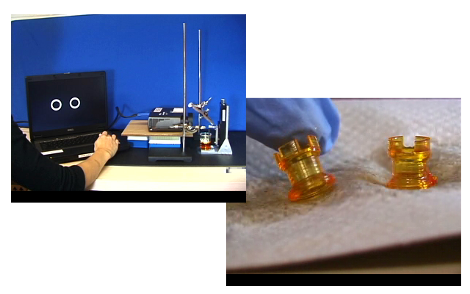
“In this lithography experiment light creates free radicals from phenylbis(2,4,6-trimethylbenzoyl)phosphine oxide which induce polymerization of 1,6-hexanediol diacrylate.”

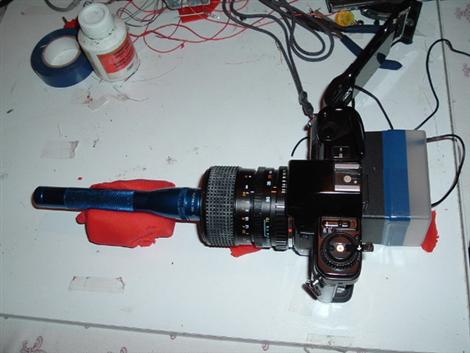
Or for those without a Chemical Engineering degree, light from a (high resolution) projector interacts with a special liquid, producing a hard polymer on the surface. A platform within the liquid is lowered, taking the layer of polymer with it. Shine the projector again to produce another layer: lather, rinse, repeat. Long story short, an atypical 3D printer using light on a very small scale.

You get the chemicals and lab equipment, we’ll get the laptop and projector, and for goodness sake [Jimmie] stop bumping the table.

[Thanks Tomas]
Open Source Logic Analyzer Software

[Christian Weichel] has been hard at work developing LogicAnalyzer, an open source tool that may interest you. It is designed with SUMP Logic Analyzers in mind but a main goal is expandability. What this means is that it plays nicely with things like the Open Workbench Logic Sniffer or you can do a bit of fiddling to get it to work with your own designs. The program is based on Eclipse so you should be familiar with how it works and you can get it running easily on multiple platforms. Take a look at the wiki for a quick start.

How To Design Your Gears

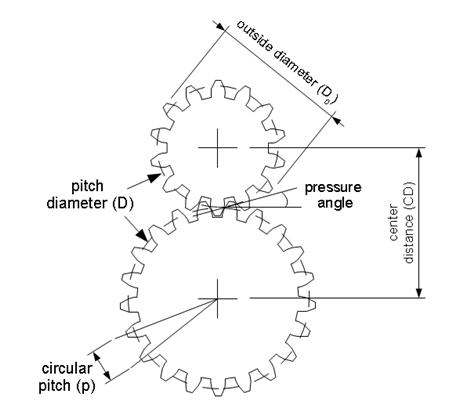
[Dustyn Roberts] takes us through the process of designing gears for a specific application. Using Inkscape and Ponoko.com [Dustyn] takes us from equation to physical gear. While there is a plugin for Inkscape that allows you to basically drag and drop gears, this writeup will take you through the math to get exactly what you need. Those laser cut wooden gears are pretty cool looking too.

Electro Luminescent Fun With Jeri Ellsworth

[youtube=http://www.youtube.com/watch?v=ZuDZnJX5kqw]

[Jeri] got her hands on some of the DuPont Luxprint EL ink and had some fun conducting experiments. She tried different materials for the base and the display itself.  Not only does she just play with materials, she also tears apart a VFD and an LCD to see if she could use them for parts. The LCD turned out to be the most successful. We saw this stuff show up at the Bay Area Maker Faire and we’re excited to see it become more accessible.

[via Makezine]