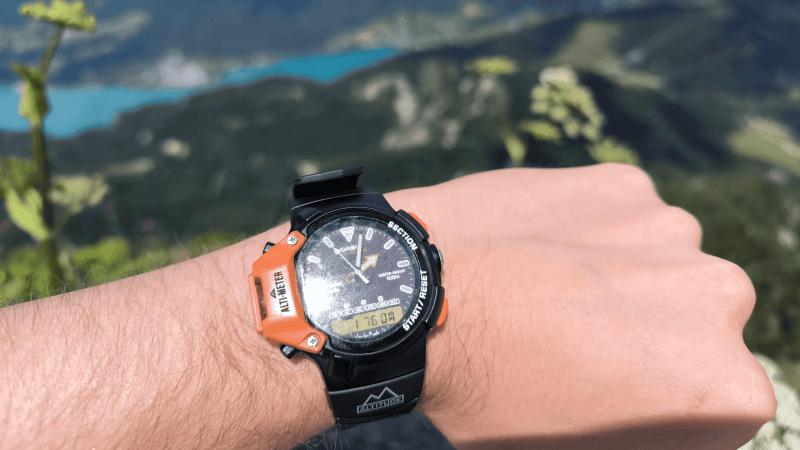
Finding inexpensive broken hardware for sale, buying it, and restoring it to working condition is a long-standing tradition for hackers on a limited budge. But there are some devices that are so difficult to repair that it’s usually not worth the trouble. [Vintage560] is braver than most, though, and restored an internally-damaged Casio AW-330-AT altimeter watch.
The exterior of the watch was in good condition, other than missing a readily-replaced strap, but the battery had leaked into the interior, and the watch didn’t respond in any way to new batteries. Cleaning out the guts with isopropyl alcohol, repositioning a plastic insulator, and bending some contacts back into shape at least got some segments of the LCD display to activate, while over two days of turning the crown smoothed out resistance in the analog train.
Actually getting the LCD to work properly required disassembling the watch, taking particular care with the altitude sensor. It wasn’t clear what was wrong with the LCD — the controller seemed to be working properly, and several rounds of cleaning and adjusting the ZEBRA connector didn’t make any difference.
Eventually, [Vintage560] simply purchased a new screen. On close inspection, it looked as though chemicals from the leaking battery might have dissolved some of the transparent indium tin oxide contacts on the old display. With the watch now working [Vintage560] tested it on a trip to the Alps, and with a few periodic calibrations, it remained quite accurate.
Usually when we see Casio watch hacks, the watch in question is the F91W, whether it’s being used for contactless payments, being retrofitted as a smartwatch, or going 5,000 meters underwater.