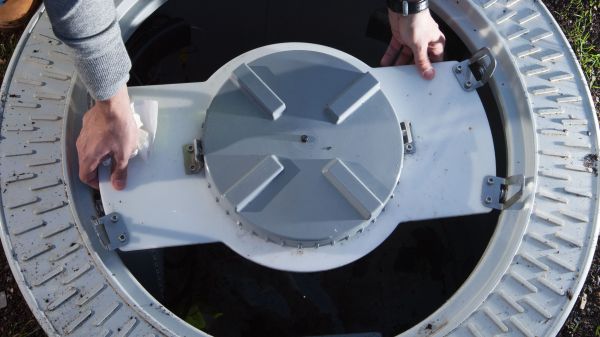
Manhole Covers Hide Antennas

5G is gearing up to be the most extensive implementation of mesh networking ever, and that could mean antennas will not need to broadcast for miles, just far enough to reach some devices. That unsightly cell infrastructure stuck on water towers and church steeples could soon be hidden under low-profile hunks of metal we are already used to seeing; manhole covers. This makes sense because 5G’s millimeter radio waves are more or less line-of-sight, and cell users probably wouldn’t want to lose connectivity every time they walk behind a building.

At the moment, Vodafone in the UK is testing similar 4G antennas and reaching 195 megabits/sec download speeds. Each antenna covers a 200-meter radius and uses a fiber network because, courtesy of existing underground infrastructure. There is some signal loss from transmitting and receiving beneath a slab of metal, but that will be taken into account when designing the network. The inevitable shift to 5G will then be a relatively straightforward matter of lifting the old antennas out and laying the new hardware inside, requiring only a worker and a van instead of a construction crew.

We want to help you find all the hidden cell phone antennas and pick your own cell module.

Via IEEE Spectrum.
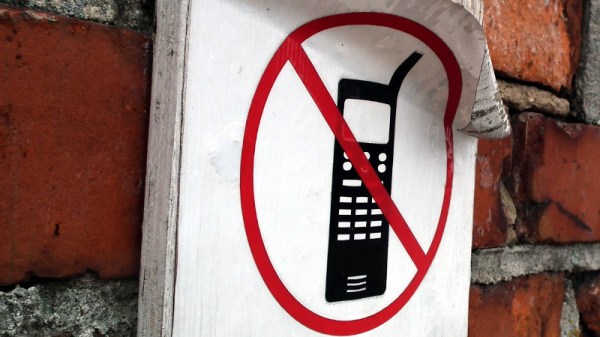
5G Cellphone’s Location Privacy Broken Before It’s Even Implemented

Although hard to believe in the age of cheap IMSI-catchers, “subscriber location privacy” is supposed to be protected by mobile phone protocols. The Authentication and Key Agreement (AKA) protocol provides location privacy for 3G, 4G, and 5G connections, and it’s been broken at a basic enough level that three successive generations of a technology have had some of their secrets laid bare in one fell swoop.

When 3G was developed, long ago now, spoofing cell towers was expensive and difficult enough that the phone’s International Mobile Subscriber Identity (IMSI) was transmitted unencrypted. For 5G, a more secure version based on a asymmetric encryption and a challenge-reponse protocol that uses sequential numbers (SQNs) to prevent replay attacks. This hack against the AKA protocol sidesteps the IMSI, which remains encrypted and secure under 5G, and tracks you using the SQN.

The vulnerability exploits the AKA’s use of XOR to learn something about the SQN by repeating a challenge. Since the SQNs increment by one each time you use the phone, the authors can assume that if they see an SQN higher than a previous one by a reasonable number when you re-attach to their rogue cell tower, that it’s the same phone again. Since the SQNs are 48-bit numbers, their guess is very likely to be correct. What’s more, the difference in the SQN will reveal something about your phone usage while you’re away from the evil cell.

A sign of the times, the authors propose that this exploit could be used by repressive governments to track journalists, or by advertisers to better target ads. Which of these two dystopian nightmares is worse is left as comment fodder. Either way, it looks like 5G networks aren’t going to provide the location privacy that they promise.

Via [The Register]

Header image: MOs810 [CC BY-SA 4.0].