In the US, among other places, housing costs are skyrocketing. It can sometimes be difficult to get a feel for the scale of the issue and how it hits neighborhoods differently. [Justin Blinder] has designed a device to help people get a more visceral understanding of the problem.
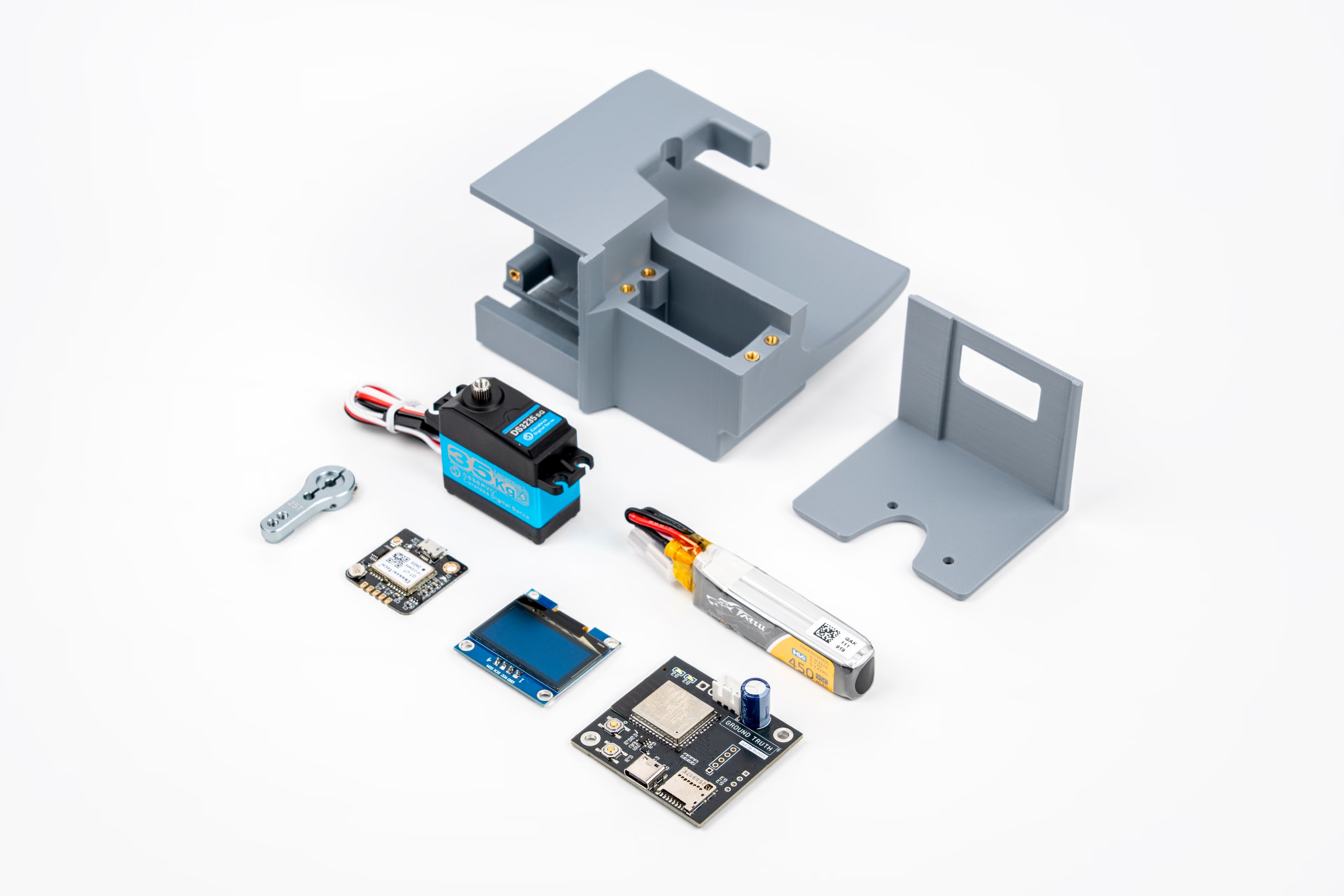
In New York City, Citi Bikes are everywhere in the city’s transportation landscape. [Blinder] used a GPS module plugged into an ESP32S3 to vary the amount of resistance on one of these bikes by actuating the front brake with a servo. As a rider takes the bike through different neighborhoods, the resistance varies in proportion to the rent burden experienced there.
[Blinder] explains, “One of the main technical challenges was calibrating this relationship so that the changes were physically noticeable without feeling abrupt or unsafe.” As rent burden is merely the percentage of income taken up by rent in an area (by the block in this dataset), it is only one indicator of the additional friction a family might feel in an area, but a useful one to at least begin to convey the disparities in the urban environment. We really like how this connects abstract statistics to something more experiential.
If you’re looking for some other bike hacks, how about wireless brakes or a sleeper e-bike with a solenoid display?
via Next City
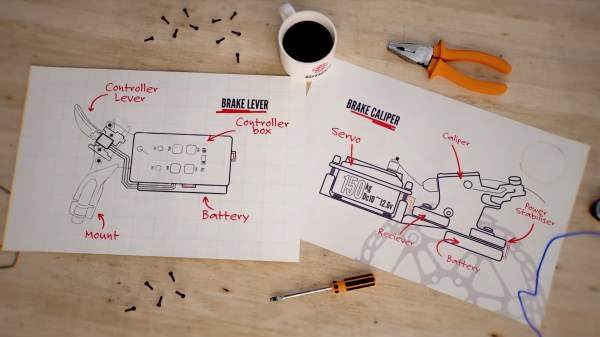
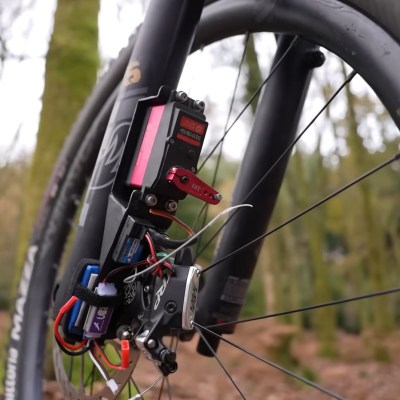 Inspired by the controller for an RC car, [Blake] picked a 150 kg servo attached to a cable-actuated hydraulic disc caliper to apply the braking force. The servo, receiver, power stabilizer, and batteries were all mounted on a custom steel plate fabricated to mount under the caliper. [Blake] cut up an old set of mountain bike brake levers to reuse the handlebar mounts and then put the batteries, controller, and finger triggers on them.