Guitar Hero Controller Built From Toy Guitar And Keyboard

frets-on-fire-custom-controller

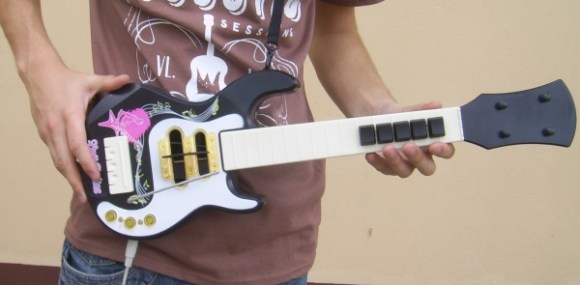
[Heinrich Laue] was kind of a latecomer to the fake guitar playing video game phenomenon. He played Frets on Fire — an open source clone of the game — on PC and eventually bought a copy of Guitar Hero World Tour. But playing on the keyboard was a drag. Instead of buying a controller he built his own hacked Guitar Hero controller from a scrapped keyboard and a toy guitar.

The plastic toy he started with was screwed together. This is a really nice since it’s almost impossible to open toys that have been welded together. There was plenty of room inside for all his components and even some space to run the wires.

He started the electronic portion of the build by tracing out the keyboard matrix to figure out which solder pads he could tap into. The strum bar uses a door hinge with buttons on either side of it. When you move it back and forth it hits the buttons, with the spring mechanism in each returning it back to center. The fret buttons are keys from the keyboard, but the switches uses were pulled from a few computer mice. But the real innovation comes into play when he added the Star Power tilt sensor and whammy bar. Follow the link above to find out how he did it.

Dead NES Controller Used As A Makey Makey Shield

[Guillermo Amaral’s] NES controller was in great shape. Well, except for the fact that it didn’t work. Upon closer inspection it seems the shift register — which is the only IC on these ancient peripherals — had given up the ghost. But he made it usable again by making the NES controller into a MaKey MaKey shield.

You should remember the MaKey MaKey. It’s a little board that lets you create controllers out of just about anything — bananas being one of the more popular examples. All he needed to do is wire up the controller’s buttons to the board. For the task he chose to use extra long pin headers. To find the location for holes in the case he applied red ink to the top of each pin, then held the PCB up to the outside of the controller. After drilling at each red mark he glued the pin headers in place and started in on the controller’s original circuit board. Once all the point-to-point wiring was done he had a working controller. See for yourself in the clip after the jump.

Continue reading “Dead NES Controller Used As A Makey Makey Shield”

Bust-a-Move Physical Controller

This set of PVC cranks make you work for your game of Puzzle Bobble, also known as Bust-a-Move. It uses a little cannon centered at the bottom of the screen to pop bubbles based on like colors. There is a cartoon character that cranks as hard as it can to aim that cannon, and this hack brings that effort into the real world.

The controllers are made from PVC. A bit of creative use of joints and different pipe diameters make for a freely rotating rig. Rotation is monitored via the optical encoder wheel from an old mouse. Above you can also see the plastic container that hosts the ‘fire’ button. Since the mouse is already an input device, there’s no other electronic work to be done. Just plug the controllers in and map the wheel/buttons to the game you want to play. Make sure to check out the demo video embedded after the break.

If Angry Birds is more of what you’re playing these days you should consider building your own slingshot controller.

Continue reading “Bust-a-Move Physical Controller”

The Smallest NES Controller Ever

A few months ago, [Ben] saw a video of the world’s largest NES controller. “I bet I could make the smallest,” he thought in a strange game of one-upmanship. Now [Ben] has the smallest fully functional NES compatible controller, a feat of engineering that can only end in very, very sore thumbs.

The old NES controller is a very simple device: eight buttons are connected directly to a 4021 shift register. Every time the NES is looking for a change in input, it reads out the data in the shift register and gets the status of all the buttons.

After finding the  smallest footprint 4021 shift register he thought he could solder, [Ben] found some very small SMD push buttons and a very tiny resistor network for the pull ups. The result is tiny, and thanks to the sacrifices of a few NES controller extension cables he found on Amazon, 100% compatible with his old NES.

You can grab all the schematics over on [Ben]’s git. Tip ‘o the hat to [Troy] for sending this one in.

Electric Vehicle Peripheral Controller For The Masses

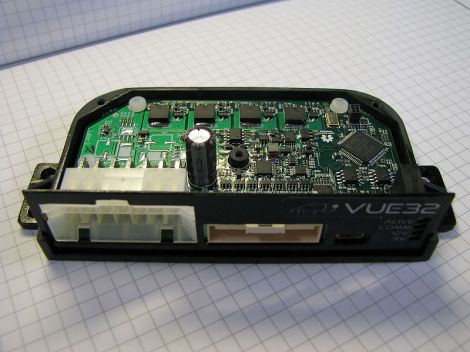
This juicy hunk of printed circuits is an open source controller for the peripherals of an electric car. It’s the product of a capstone project working on a vehicle aimed at urban commuting. There wasn’t a suitable non-proprietary module for controlling a car’s peripherals so the team built their own.

As far as we can tell this is not responsible for driving the vehicle itself. We assume there’s another piece of hardware which reads from the accelerator pedal, drives the motors accordingly, and handles things like regenerative braking. But there’s a lot of other things in a modern vehicle that need to be taken care of as well. Head, tail, and turn indicator lights must be switched. All of the dashboard controls (like the turn signal lever and the wiper blade speed settings) need to be monitored. Something needs to drive the door locks, and a system that reads the door ajar sensors and switches the dome light on and off must be handled. This is where the controller pictured above really shines.

The team has released all of the hardware information. The code is not yet available, but will be as soon as they’ve cleaned it up enough to package the first release candidate.

Automated Home Brewing System Has An Insanely Professional Controller

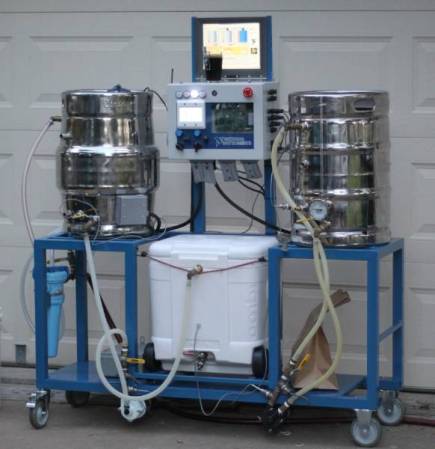
So you know how on Breaking Bad, the chemist [Gale Boetticher] sets up an impressive rig to brew the best cup of coffee? Well what do you think of a group of engineers taking on beer as their side project? This rig, which we do think is pretty insane, is the result of embedded system engineers developing an automated brewing system.

[Ben_B] started from humble beginnings. He built a PID controlled smoker much like the one we saw last Monday. From there he ground out several iterations of brewing hardware, adding a bit of automation at each step along the way. But things really took off when the events department at his company, National Instruments, took notice. They put the team on the task of assembling professional grade control hardware for the unit. And of course while we’re spending the company dime why not chrome those boiling vessels at the same time. The finished project was shown off at a trade show to help promote the company.

The post thread linked at the top has shots of the complicated mounting and wiring that went into the controller. We’re not sure how much intervention is actually necessary during a session. But with all the sensors, pumps, valves, filters, and whatnot we wouldn’t be surprised if all you need to do is pitch some yeast into what comes out of it.

Hackaday Links August 23, 2012

PS3 Controller Cell Phone Mount

PS3-controller-cellphone

Although the details of this build are quite scarce, not much is needed considering all that this cell phone/PS3 controller “mount” is made of is 3 binder clips and a few rubber bands. A very ingenious solution.

Overengineered Throwie

ping-pong-ball-throwie

On the other end of the spectrum, I’ve spent way too much time overengineering the throwie (eventually it ended up using a ping-pong ball). Be sure to watch the first video at 0:32 for an impressive horizontal placement, or check out the baloon throwies at the end of the post for even more fun!

Chinese Noodle Slicing Robot

robot-slicer

This robot may be appropriately engineered in function, but the form of this noodle-slicer has a distinctly Asian style. We think it may have been designed as a prop for a Godzilla movie originally.

2D Glasses

2D-glasses

3D glasses may have been all the rage in 2009, but it’s 2012 so you may want to get your hands on a pair of 2D glasses. These instructions will tell you how to make glasses to convert a 3D film into 2D if the third dimension annoys you or makes you dizzy. Thx [Brian] and [Victor]!

test-box

As seen in this post from the Bacteria forum, the test box originally featured at [HAD] has now been updated to include variable regulators, volt meters and an LED tester.  Check it out on it’s source, [Downing’s Basement]. Thx [Mike]!