Celebrating The Design Principles Behind Cellphones

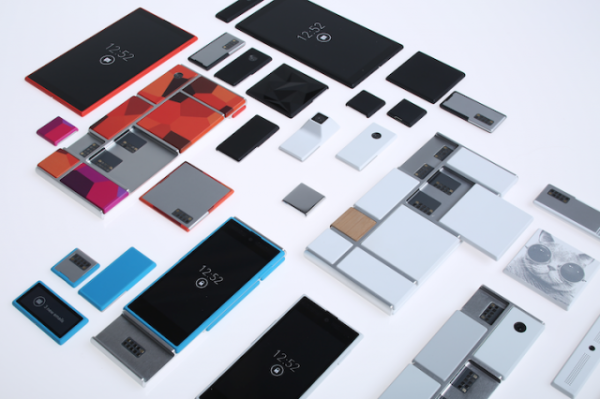
Want to improve the finished look of your projects? There’s a lot you can learn by looking at the choices made in consumer electronics. [Bill Hammack] explores what is perhaps the most refined electronic device out there, the cell phone. Specifically, he discusses the seven design constraints that face every cellphone maker. They are: compactness versus usability, consumer preference, availability of energy, economic resources and available infrastructure, knowledge of materials, societal needs, and cultural constraints.

Anyone who’s whipped out their hacked-together project in a public space understands cultural constraints. Especially when forgetting your backpack in a public place can put the bomb squad of full alert these days. But aside from the anecdotal issues, [Bill’s] look at now-and-then cellphones really shows off the smart design that we enjoy thanks to the evolutionary process that went into what has become the wristwatch of the 21st century. See what he has to say in the video after the break.

Continue reading “Celebrating The Design Principles Behind Cellphones”

A Briefing On Integrated Circuits

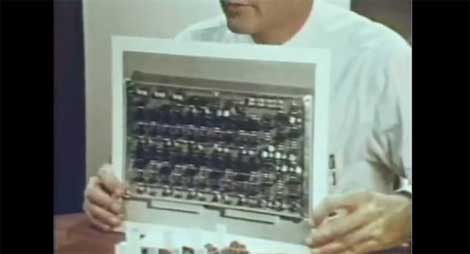
Although technology is constantly racing to faster / smaller / more, so many of the fundamentals of how it is made remains similar, if not the same. This interesting 30 minute video clip [thanks to The Computer History Museum] was made in 1967 by Fairchild Semiconductor as a briefing on integrated circuits, and shows the different steps to produce ICs including:

Design, making the photo masks, manufacturing the silicon ingots, preparing the wafers, building of the circuit and its components (like transistors, resistors, and capacitors), testing, and final packaging. Add in some other cool items of interest such as a 1960’s pick n place machine, wave soldering, an automatic wirewrap machine, and toss in some retro computer action and it’s surely a video worth watching, with something for everyone.

So join us after the break, kick back and enjoy the show!

Continue reading “A Briefing On Integrated Circuits”

Renesas RX Design Contest: $110K+ Of Cash And Prizes

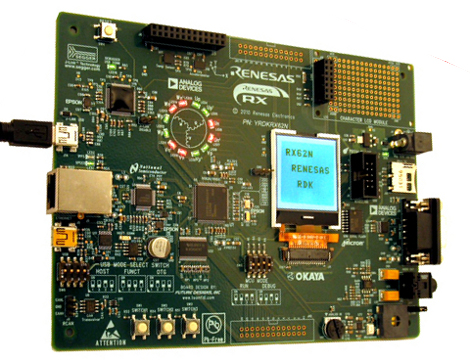
It seems that we have caught Design Contest Fever here at Hackaday. After covering some other design contests, and asking readers to send in more, we heard from a couple tippers about Renesas’ challenge. Like many of the other contests, entrants can submit their ideas, and possibly receive a free development board to get them started. Unlike the other contests though, Renesas board (possibly) free development board is everything but the kitchen sink. Designed with RTOS’s in mind, rather than the normal microcontroller tasks, this board has an astounding number of capabilities.

On top of the excellent development kit, the contest is also offering books, software, and cash prizes to the winners. So get out there, design something amazing, and make Hackaday proud.

Win Big: American Design Style

Last week we announced a Germany based design contest only accepting applicants from Europe, the Middle East, and Asia. Unfortunately, this left out one of the larger segments of our readers. After doing some scrounging around (and a helpful tip from [Flash Gordon]), we managed to find a similar contest run by STMicroelectronics, the makers of the Discovery board. This contest sounds familiar, with free Discovery Board for all approved applicants, and prizes for the most interesting and creative projects. Right now the official rules page seems to be missing, so you technically legally should probably wait to enter, but we can’t stop you. It looks like the official rules page is located here. Thanks to [Andee] for pointing that out. Also, it looks like if you live in Puerto Rico or Quebec, you are also out of this contest as well.

If you are from the EMEA area and missed the last contest, be sure to go back and check it out for your chance to win! Also, we love covering contests (especially ones that give out free kits to all contestants), are there any readers out there that know of a developer other than STM that is offering this kind of deal? We would love to hear from you!

PCB Trace Antenna

If you’re working on a device that includes RF wireless, [Colin’s] Guide to PCB Trace Antenna Design might clear some headaches when sending off for PCBs. While it is directed at devices transmitting at 2.4GHz, the techniques and recommended equipment (read: espresso smith charts and network analyzers) should work for almost any frequency. While trace antennas aren’t as easy to implement as a measured wire, the space benefits make up for the difficulty. Unless you don’t mind how larger your project is, did someone say cantenna?

Alzheimer’s Victims Fitted With LoJack

alzheimers-tracking-watch

First it was for finding stolen cars, then keeping track of criminals, now Alzheimer’s sufferers are being fitted with tracking devices. This has been going on for some time now, but unlike the old tracking devices we’re seeing an update in technology to take advantage of the cell network for communications. The person wearing the device can be located using Uplink Time Difference Of Arrival or U-TDOA. This is the same technology that is used by 911 services to calculate the location of a cell phone.

Alzheimer’s is a frightening disease. The thought of a loved one wandering off with nothing to identify them and no recollection of who they are is a fear of every family dealing with the illness. There’s no doubt that this is a cost-effective solution that really works.

But from our perspective, can someone hot-glue a $3 Seiko to this thing? If you were designing this, would you even consider something that straps to your wrist and doesn’t have a clock on its face?

Update: Andrew corrected an error in the original post.  This system uses U-TDOA for location, not GPS.

Update: Jeremy works for LoJack and has informed us that the product in the post and the technology used have nothing to do with the LoJack brand of products.

Fritzing, Go From Prototype To Product

fritzing

Fritzing is an open source project designed to help you move from a prototype to a finished project. Aimed at those basing their projects around Arduino, you start by building your physical prototype, then recreate it with Fritzing software’s graphical editor. From there you can generate a schematic, PCB artwork, and PCB production files.

[thanks CH]