
Tesla Recalls Cars With EMMC Failures, Calls Part A ‘Wear Item’

It’s a problem familiar to anyone who’s spent a decent amount of time playing with a Raspberry Pi – over time, the flash in the SD card reaches its write cycle limits, and causes a cavalcade of confusing errors before failing entirely. While flash storage is fast, compact, and mechanically reliable, it has always had a writeable lifespan much shorter than magnetic technologies.
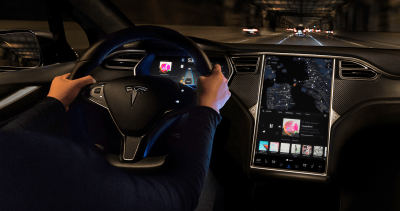
Flash storage failures in the computer behind Tesla’s famous touch screen are causing headaches for drivers.

Of course, with proper wear levelling techniques and careful use, these issues can be mitigated successfully. The surprising thing is when a major automaker fails to implement such basic features, as was the case with several Tesla models. Due to the car’s Linux operating system logging excessively to its 8 GB eMMC storage, the flash modules have been wearing out. This leads to widespread failures in the car, typically putting it into limp mode and disabling many features controlled via the touchscreen.

With the issue affecting important subsystems such as the heater, defroster, and warning systems, the NHTSA wrote to the automaker in January requesting a recall. Tesla’s response acquiesced to this request with some consternation, downplaying the severity of the issue. Now they are claiming that the eMMC chip, ball-grid soldered to the motherboard, inaccessible without disassembling the dash, and not specifically mentioned in the owner’s manual, should be considered a “wear item”, and thus should not be subject to such scrutiny. Continue reading “Tesla Recalls Cars With EMMC Failures, Calls Part A ‘Wear Item’”


Worn Out EMMC Chips Are Crippling Older Teslas

It should probably go without saying that the main reason most people buy an electric vehicle (EV) is because they want to reduce or eliminate their usage of gasoline. Even if you aren’t terribly concerned about your ecological footprint, the fact of the matter is that electricity prices are so low in many places that an electric vehicle is cheaper to operate than one which burns gas at $2.50+ USD a gallon.

Another advantage, at least in theory, is reduced overal maintenance cost. While a modern EV will of course be packed with sensors and complex onboard computer systems, the same could be said for nearly any internal combustion engine (ICE) car that rolled off the lot in the last decade as well. But mechanically, there’s a lot less that can go wrong on an EV. For the owner of an electric car, the days of oil changes, fouled spark plugs, and the looming threat of a blown head gasket are all in the rear-view mirror.

Unfortunately, it seems the rise of high-tech EVs is also ushering in a new era of unexpected failures and maintenance woes. Case in point, some owners of older model Teslas are finding they’re at risk of being stranded on the side of the road by a failure most of us would more likely associate with losing some documents or photos: a disk read error.

Continue reading “Worn Out EMMC Chips Are Crippling Older Teslas”







