Building An Airsoft Claymore Mine

The Claymore mine is a rather fearsome weapon of war, using explosives to blast a cone of shrapnel towards advancing enemies. It’s not really something you should try and build at home. An airsoft version, though, is altogether more appropriate. [RegiBlackwood] has developed a simple way to build exactly that.

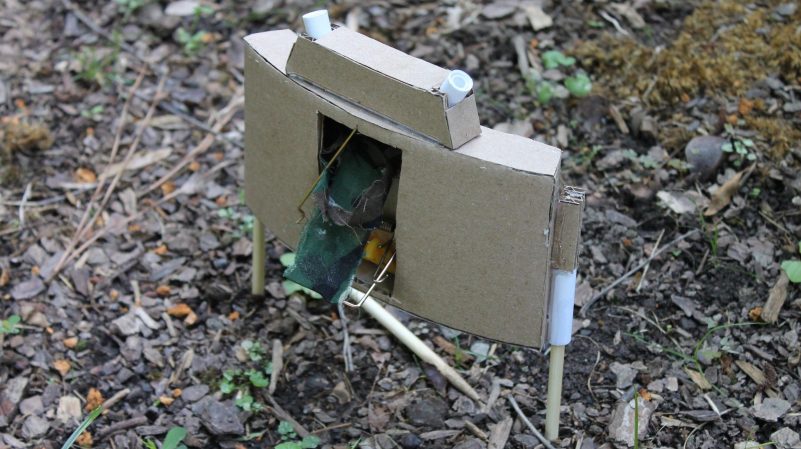
It’s a cheap and cheerful build, with the claymore housing itself built out of cardboard. Wooden dowels are used to stake it into the ground, just like the real thing. In the center of the housing sits a regular old mouse trap. Only, it’s been modified to hold a sling carrying a payload of BBs. The trap is also tweaked to make its spring more powerful, and to enable it to be triggered with the tug of a tripwire. When triggered, the mousetrap fires and hurls the sling forth, spewing a rain of BBs from the front of the device—ideally quelling the advance on your position.

Built properly, it’s a fun piece of airsoft hardware that could really change the dynamics of your regular game. If you’re looking to do point defence, you might also consider building yourself some automated turrets as well…

Arduino-Powered Trap Hopes To Catch Mice

The old adage that you’ll make a fortune by developing a better mouse trap is not super realistic, as the engineers behind Sony’s Betamax video tape standard could tell you. However, you can still learn a lot building your own, as this project from [ROBO HUB] demonstrates.

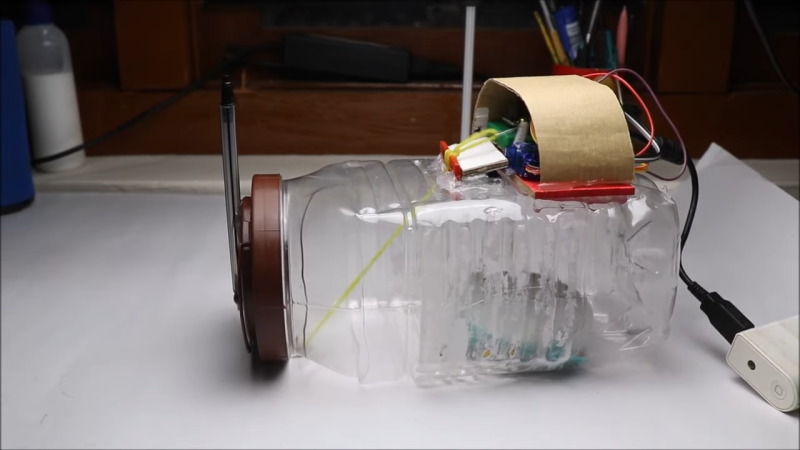
The trap is intended to catch mice in a humane fashion, without injury to the animal. To that end, it uses an Arduino Nano armed with an ultrasonic distance sensor  to detect when mice have entered a plastic container. The container’s hinged door is is held open with a servo. When a mouse is detected, the servo trips the door to snap shut under the power of an elastic band.

The key to making this design work well is ensuring that there are no gaps in the closed container that the mouse can use to escape. They’re wily creatures able to squeeze through positively tiny spaces, so it’s important to get this right. Besides that, you want to check the trap regularly, lest any caught mice simply claw and chew their way out.

We’ve seen a few mousetraps around these parts before, too. Video after the break.

Continue reading “Arduino-Powered Trap Hopes To Catch Mice”

Conflict Escalates Between Brilliant Rat And 555 Timer

After [Casey Connor] captured and relocated a number of unwanted rodents in his home using commercially available live traps, he was presented with a problem: a rat had learned to avoid them.

In an epic, and adorable, conflict caught on video (and embedded below),  he documents the  designs used and how the rat escaped them by either recognizing the trap, or sheer agility. We can only tip our hat to the determination of both parties.

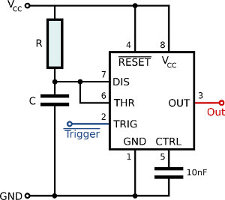
All the trap mechanisms are based on a 555 monostable solenoid triggering circuit that ensures that a pulse of sufficient duration is sent to the solenoid to trigger the trap correctly. This way even intermittent contacts will trigger the trap rather than just causing the solenoid to twitch without fully actuating. This is the same technique used to debounce a switch using a 555 timer.

A Raspberry Pi Zero detects motion using an IR camera to film the interesting parts. This is also a good indicator for when you’ve trapped your quarry – if you’re trying be humane then leaving it in a trap for days is counterproductive.

With the time and effort we spend building better and more complex rodent traps, we sometimes wonder who has cleverly trapped whom.

Continue reading “Conflict Escalates Between Brilliant Rat And 555 Timer”

A Better Mousetrap, At Least For The Mouse

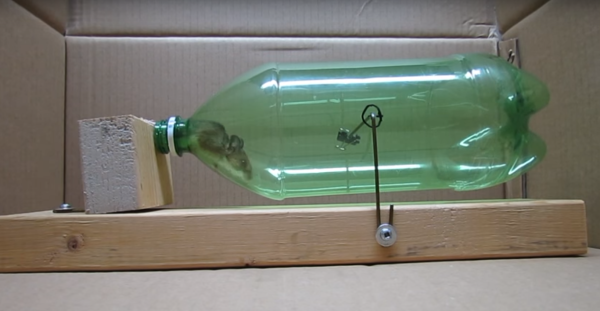
No mice were harmed in the making of this non-lethal soda bottle mousetrap.

Depending on your opinion of these little critters, that could be a good thing or a bad thing. We don’t deny that mice are cute as all get-out, but when they do damage to foodstuffs that you’ve put an entire summer’s effort into growing, harvesting and preserving, cute isn’t worth much.

Our preference for taking care of rodent problems is either bioremediation or rapid cervical dislocation, but if you’re more of the catch-and-release type, this trap is for you. It’s just a 2-liter soda bottle on a wire pivot and mounted to a scrap wood frame; when the offending critter unwisely enters the neck of the bottle, its weight flips the bottle down and blocks the exit. Release is as simple as removing the bottle from the frame and letting Monsieur Jingles wiggle free. The questions of where to release and how many times you’ll keep catching the same mouse are left as an exercise for the reader.

Remember – a live catch trap is only humane if it’s checked regularly. To that end, maybe something like das Katzetelegraf could be added to this trap.

Continue reading “A Better Mousetrap, At Least For The Mouse”