Replicating Connectors By Machining PVC

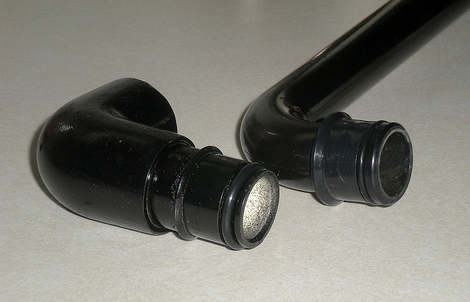
[Alex] bought a hang on tank filter for his aquarium. Unfortunately it was made for a different water level than he was using and didn’t have the ability to adjust that he needed. Add to that the non-standard pipe sizing which compounded the problem by making it difficult to extend the intake and output tubes. He overcame this by machining PVC pipe to match the stock connectors. After turning the PVC on a lathe he added a neoprene o-ring and painted the assembly black. The new connector allows standard size PVC fittings for easy changes in the future, and it keeps his turtles healthy and happy.

Theo Jansen: Like The Professor From Gilligan

[Theo Jansen] is building lifeforms that will live and thrive on the beach. He calls them StrandBeest and uses PVC electrical conduit, plastic tubing, and lemonade bottles as building material. The many-legged creations are amazingly advanced, able to count steps, sense and flee from the water’s edge, and protect themselves from high wind. He gave a TED talk back in 2007 that we’ve embedded after the break; it’s uncanny. See examples of his creations using fans and sails to store wind energy as compressed air in the lemonade bottles, then use that pressure for locomotion. He also demonstrates a binary step counter and water sensor. Continue reading “Theo Jansen: Like The Professor From Gilligan”

Adding An Automotive Cold Air Intake

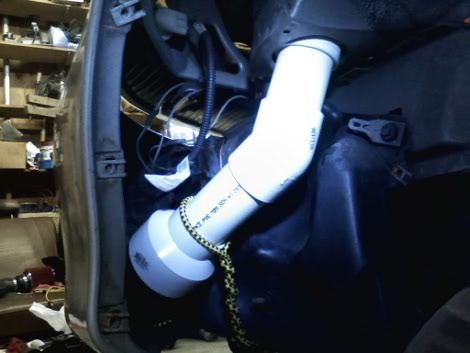
[Thomas] and a buddy were sucking down a few brews when they decided to hack their 2001 Chevy Cavalier for a bit better performance. If they could find a way to bring cooler air to the engine they speculated that they’d see an increase in efficiency. Instead of routing the air intake to a hood scoop, they took off the factory air filter and mounted a cold air filter in its place. PVC pipes were then used to create a delivery path from the front of the vehicle with the output in close proximity to the new filter. They tested their work and discovered a drop in intake temperature from 101 to 48 degrees Fahrenheit at 60 mph, and from 109 to 54 degrees Fahrenheit at 45 mph. Now the sedan runs better and generates more horsepower, all for around $35 in parts.

Building The Yellow Submarine

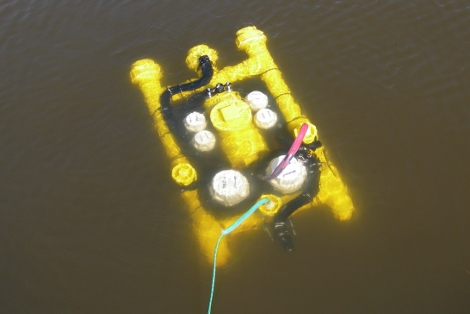
Submarine builds are always fun but frequently produce headaches when it comes to keeping the water out. [Jason Rollette] built this ROV to explore a shipwreck in Lake Michigan. The main structure is PVC and various bilge pumps are used for propulsion. An AVR ATmega32 controls the on board electronics with an Ethernet tether to the surface. He’s even got a visual basic program that displays system information and a video feed. It may not be as stylish as the last submarine we saw but it’s amazingly well thought out and well built.

[Thanks Daphreak]

Solar Water Heater

[Jake] built himself a solar water heater. The system has an 82 gallon insulated water tank and uses a solar collection grid made of PVC pipe. As the water heats, it rises to the top of the collector and runs into the tank while pulling colder water from the bottom of the tank back into the collector.

A sunny day yields temperatures around 130 degrees Fahrenheit. On a cloudy day the water can still be heated to about 90 Fahrenheit. This is about 19 degrees cooler that one might desire but the difference is made up by an electric shower head that heats as the water comes out. [Jake’s] system, seen in the video after the break, allows him to forgo the use of electricity on sunny days, and reduce its use by around half on cloudy days. Continue reading “Solar Water Heater”

Cheap Cup Holder Laptop Tray

bigfront

[Michael Davis] sent in his homemade laptop tray. He does a lot of traveling in his Toyota Tacoma and was looking for a good way to mount his laptop inside. Unfortunately, [Michael] soon discovered that commercial laptop trays can be very expensive and difficult to install. He saw an opportunity in the empty cup holder in his car. Fifteen dollars worth of PVC pipe fittings and a piece of plywood later he had a laptop tray.