Have you ever had a pair of ear buds fit perfectly out of the package? Probably not. Well, [Joe] decided to take matters into his own hands and cast his own silicone ear bud covers custom made for him.
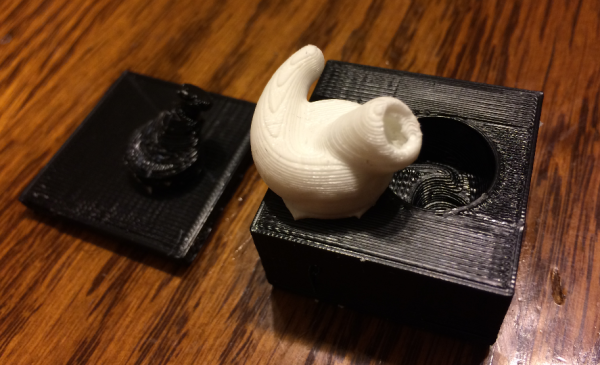
The traditional route would have been to make an ear bud model, make a mold from it, cast a copy from it… etc, etc. But [Joe] wanted to try something else — he designed and 3D printed the two-part mold, and used plain old silicone caulking to fill it.
First he 3D modeled the ear bud covers in SolidWorks, then he had to learn how to design the mold for it, but luckily, there’s a handy tutorial. After printing the mold he opted to use 100% silicone caulking in order to make the part since he had some lying around the house. The problem is, this stuff can take days to cure — unless you mix in some cornstarch.
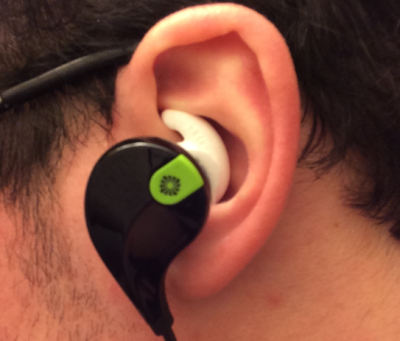
The golden ratio [Joe] found was about 5:1 silicone to cornstarch, which resulted in a cure time of about 20 minutes.
After curing you just need to trim off the excess silicone. In the molding process this is known as “flash”.
Since this is caulking he’s using, you’re going to want to wash off the part a few times because this type of silicone produces acetic acid as it cures.
The ear buds fit great and inspired [Joe] to try molding even more things, like a custom sleeping mask using the 3D scan of your own face!