
Why Solid State Batteries Short

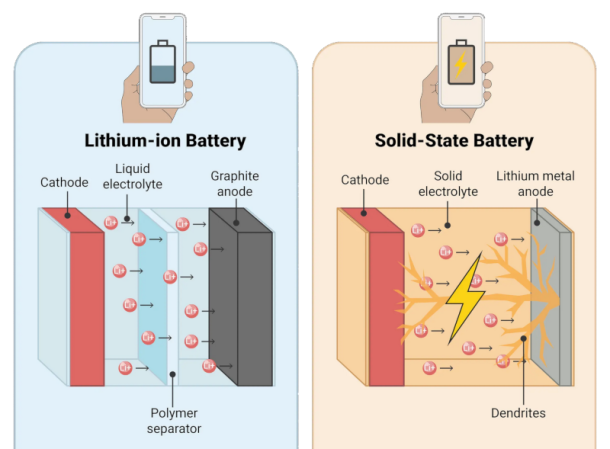
Solid state batteries, we are told, are the new hot battery technology that will replace lithium-ion batteries. Soon. Not that we haven’t heard that before. One reason it isn’t dominating the market today is that it’s prone to short circuits during charging. [Dr. Yuwei Zhang and others have published a paper detailing why the shorts happen, which could lead to strategies to improve the technology.

Solid state batteries employ a solid electrolyte and a lithium anode. It is known that, sometimes, lithium metal from the anode forms dendrites that penetrate the ceramic electrolyte and cause it to crack. This is somewhat of a mystery as the lithium is a soft metal: to quote [Zhang], “like a gummy bear”.

There were two leading hypotheses for the observations. [Zhang’s] team showed that hydrostatic stress made the lithium dendrites act like a water jet, enabling them to penetrate the hard ceramic.

There is still work to figure out what to do about it, but understanding the root cause is certainly a step in the right direction. We’ve looked at these batteries before. We’ve also seen how changing the anode construction might help with the problem.

TDK Claims Solid State Battery With 100X Energy Density

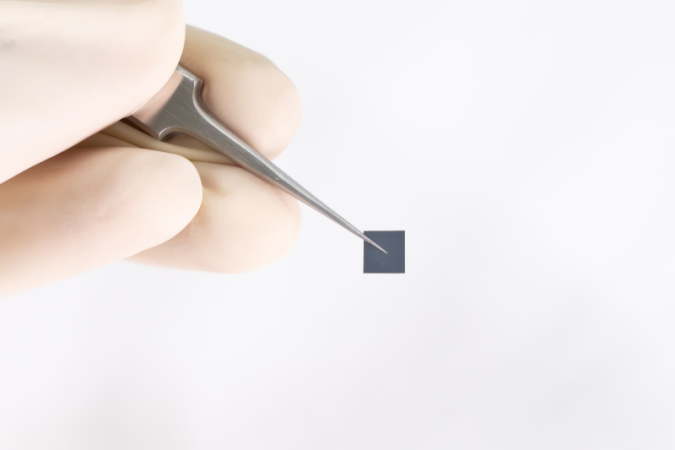
Regulations surrounding disposable batteries have accelerated a quiet race to replace coin cells, which on the whole are not readily rechargeable. TDK produces solid-state batteries and has announced a new material that claims an energy density of about 100 times that of their conventional batteries.

Energy density measures how much energy a system contains relative to its volume. The new battery has 1000 Wh/L. For comparison, old nickel-cadmium cells had about 150 Wh/L. A typical lithium-ion battery usually turns in about 200 – 250 Wh/L.

There aren’t many technical details, but a few things caught our interest. For one, it uses an oxide-based solid electrolyte and lithium alloy anodes. However, what really caught our eye was that it is “intended for use in wearables… that come in direct contact with the human body.” We don’t know if that means the material is safe for your skin or if it depends on being next to your body to operate.

While the energy density is high, keep in mind that the batteries of this type are usually tiny, so the total actual power available is probably not very high. Tiny batteries are definitely a thing. We are always hearing about breakthroughs, but we always wonder if and when we’ll see actual products.






