Pitting A CFD-Optimized Toroidal Propeller Against A Conventional One

Although we often think that we got certain aspects of aerodynamics pretty much licked at this point, details like the optimal shape of a propeller remains hotly debated, both in- and outside of academia. This also includes wilder designs like toroidal propellers that even after more than a hundred years are still mostly just being evaluated. Recently [Neuronautics] took a shot at figuring out whether toroidal propellers even make sense.
In order to do this, first an efficiency baseline was established using a conventional and highly optimized propeller. After scanning it in to get its exact geometry and running it through a computational fluid dynamics (CFD) simulation, the software spat out a number of about 73%.

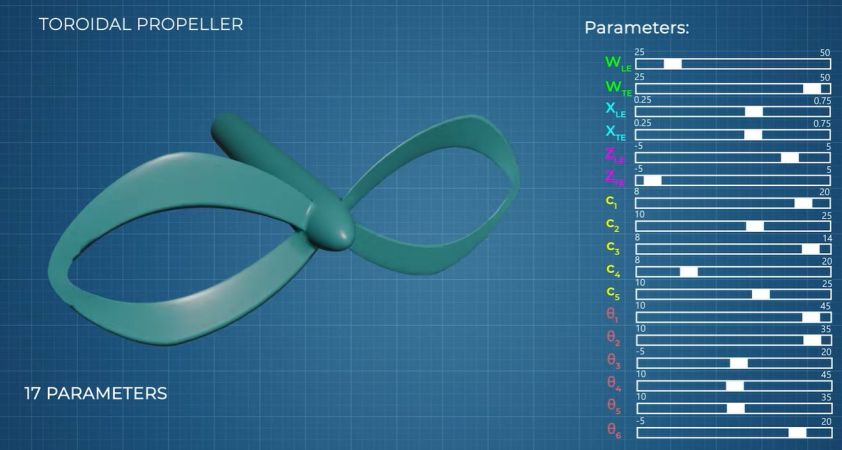
This left figuring out an optimized shape for the toroidal propeller to pit against it. While you can absolutely brute-force the seventeen shape parameters being considered here and test them in CFD, this would take insanely long. The hack here is to use multiple reference frame (MRF) to drastically speed up the selection process, though even then it still took two months. An example of using MRF with regular propellers is discussedĀ  in a 2019 paper by [Randi Franzke] et al. inĀ Energies.

Although MRF saves a lot of simulation time, you still end up with a lot of data that has to be analyzed for interesting patterns. For this [Neuronautics] trained a artificial neural network to automate filtering the many options for the most optimal ones, until converging onto a single design.

This G1401 design was the lucky winner, though with only a simulated 62.9% efficiency. Subsequently the one aspect that had been left unchanged was also iterated through, in the form of many different airfoil shapes until the final design appeared.

This design was then 3D printed in resin, which showed the first hurdle with the selection process, in that the printed versions were too thin and flexible to be usable as propellers. Cue many hours of manual tweaking of the design to make it actually printable.

Although the final design didn’t exceed 62% efficiency in a final test, the comment section to the video rightfully points out that the comparison was between a commercially made propeller and a DIY resin-printed one, which adds a whole other batch of variables. That said, it’s unlikely that there’d have been an obvious improvement either way, otherwise we’d already have seen toroidal propellers pop up everywhere on drones and aircraft.

Continue reading “Pitting A CFD-Optimized Toroidal Propeller Against A Conventional One” →
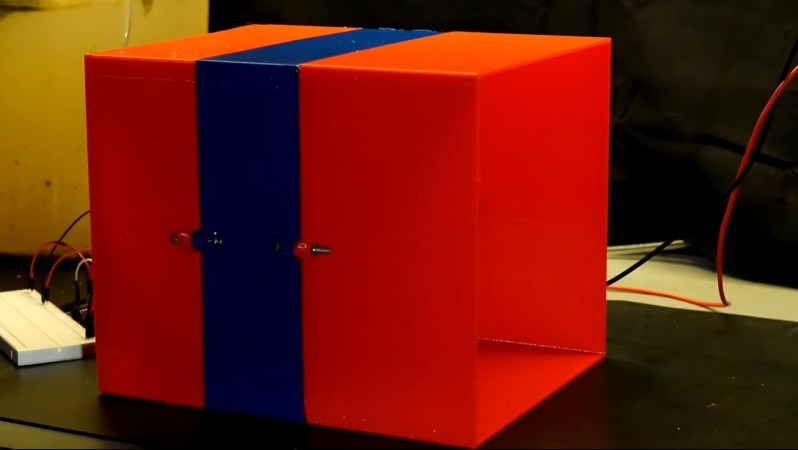
A rectangular box with a purple section sandwiched between two red sections sits on a black tabletop. The end of the box is open. Black and red wires run out of the back of the box to a breadboard.

Improving Wind Turbine Testing With A Better Air Source

When comparing the efficiency of different wind turbine blade designs, [AdamEnt] found using a hair dryer wasn’t the best tool for the job. Enter his new 3D-printed wind tunnel.

After several prototypes, [AdamEnt] decided on a design that exploits slicer infill to create a flow straightener without having to do any tedious modeling of a lattice. Combined with a box on both ends of the straightener to constrain the flow, he has a more controllable air source with laminar instead of turbulent flow for testing his wind turbines.

The BLDC motor driving the air is attached to a toroidal blade of MIT fame. We get a little bit of the math behind calculating wind turbine efficiency and see a quick test of a blade placed next to the outlet of the air source at the end of the video.

If you’re planning on building your own wind tunnel, we’ve covered a few. We’ve even seen one that goes up to Mach 20, although that probably wouldn’t be useful for wind turbine design!

Continue reading “Improving Wind Turbine Testing With A Better Air Source” →

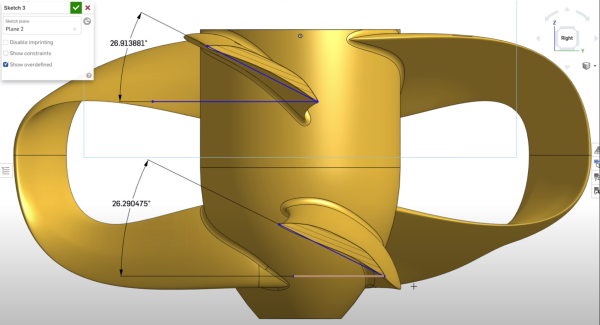
The toroidal propeller's details in the CAD software. (Credit: rctestflight))

Testing Futuristic Propeller Designs With A 3D Printer And A Solar-Powered Boat

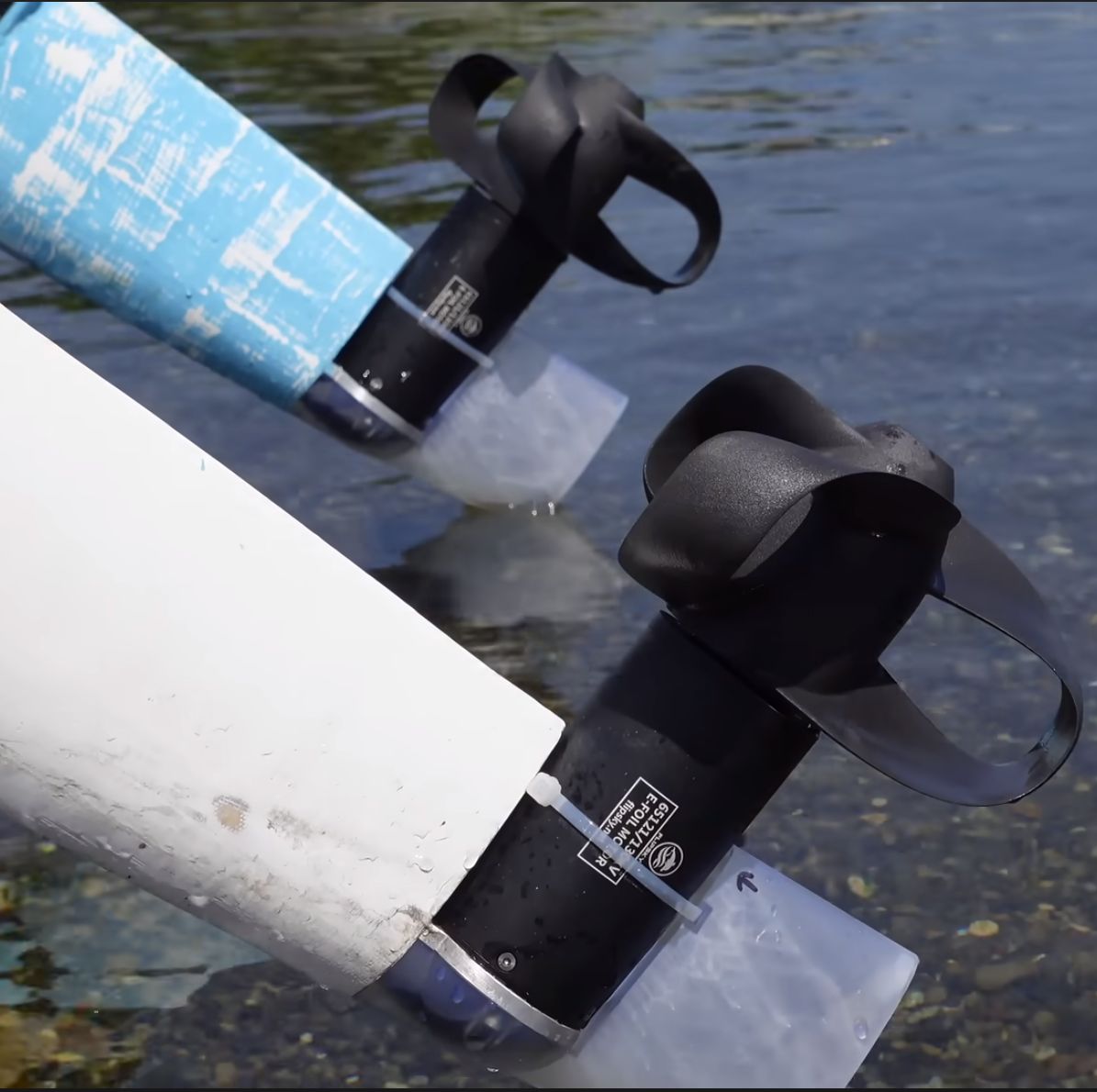
The toroidal boat propeller pair installed. (Credit: rctestflight)

As boring as propeller designs may seem to the average person, occasionally there’s a bit of a dust-up in the media about a ‘new’ design that promises at least a few percent improvement in performance, decreased noise profile, or any combination of such claims. Naturally, if you’re [Daniel Riley] of RCTestFlight, then you have to 3D print a few of them, and make a video covering a handful. Most famous of these is probably the toroidal propeller that made waves a while ago, mostly in the field of flying drones, but commercial toroidal boat props exist too.

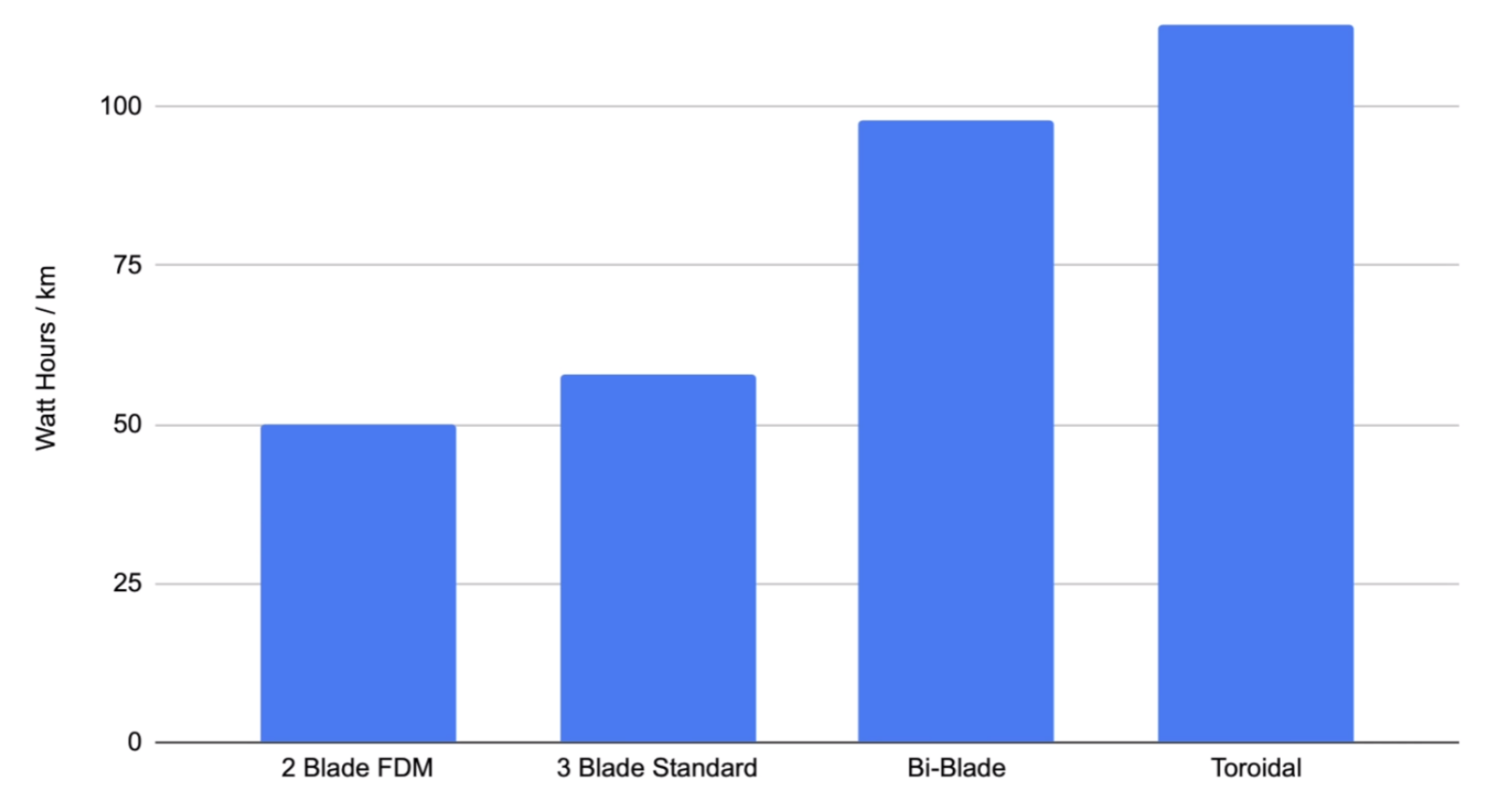
Test results of the different boat propeller designs. (Credit: rctestflight)

Interestingly, the 2-blade FDM-printed propeller ended up performing the best, while the bi-blade design (with two sets of blades positioned one after the other) performed worse — but better than the toroidal design. Here the last two designs were professionally printed in nylon, rather than printed at home in a standard FDM printer with all of the surface sanding and treatment required. Even so, the surface treatment did not seem to noticeably affect the results in further testing.

Hints at the root cause of the problem came from the bubble tests. In a bubble test, air is blown in front of the spinning propeller to visualize the flow of the water. This revealed some stalling on the bi-blade and the toroidal design too, which would explain some of the performance loss. Going back between the CAD model and the design in the patent by Sharrow Marine didn’t provide any obvious hints.

Considering that this latter company claims a performance uplift over regular boat propellers, the next steps for [Daniel] would appear to involve some careful navigating between fluid dynamic modeling and claims made in glossy marketing material to figure out exactly how close someone at home with a 3D printer and some spare time can get to those claimed numbers.

(Heading image: The toroidal propeller’s details in the CAD software. (Credit: rctestflight) )

Continue reading “Testing Futuristic Propeller Designs With A 3D Printer And A Solar-Powered Boat” →