
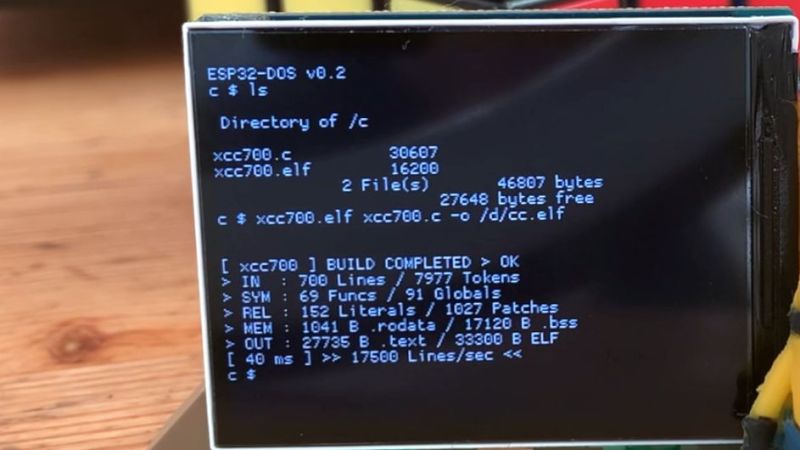
Xcc700: Self-Hosted C Compiler For The ESP32/Xtensa

With two cores at 240 MHz and about 8.5 MB of non-banked RAM if you’re using the right ESP32-S3 version, this MCU seems at least in terms of specifications to be quite the mini PC. Obviously this means that it should be capable of self-hosting its compiler, which is exactly what [Valentyn Danylchuk] did with the xcc700 C compiler project.

Targeting the Xtensa Lx7 ISA of the ESP32-S3, this is a minimal C compiler that outputs relocatable ELF binaries. These binaries can subsequently be run with for example the ESP-IDF-based elf_loader component. Obviously, this is best done on an ESP32 platform that has PSRAM, unless your binary fits within the few hundred kB that’s left after all the housekeeping and communication stacks are loaded.

The xcc700 compiler is currently very minimalistic, omitting more complex loop types as well as long and floating point types, for starters. There’s no optimization of the final code either, but considering that it’s 700 lines of code just for a PoC, there seems to be still plenty of room for improvement.
Bitluni Brings All The ESP-32 Multimedia Hacks To Supercon

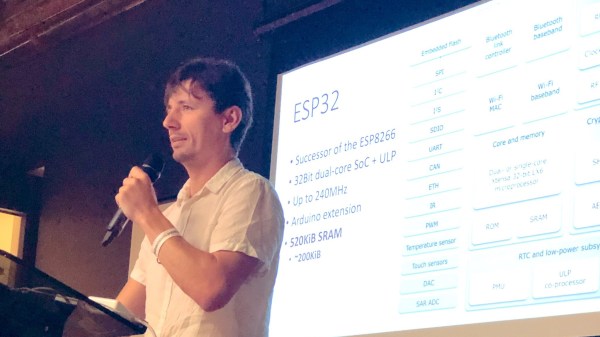
Of all the people I was looking forward to meeting at Supercon, aside from my Hackaday colleagues with whom I had worked for five years without ever meeting, was a fellow from Germany named Matthias Balwierz. The name might not ring a bell, but he’ll certainly be familiar to Hackaday readers as Bitluni, the sometimes goofy but always entertaining and enlightening face of “Bitluni’s Lab” on YouTube.

I’d been covering Bitluni’s many ESP32 hacks over the years, and had struck up a correspondence with him, swapping ideas and asking for advice on the many projects I start but somehow never finish. Luckily for us, Bitluni is far better on follow-through than I am, and he brought that breadth and depth of experience to the Design Lab stage for that venue’s last talk of the 2019 Superconference, before the party moved next door for the badge-hacking presentations.

Continue reading “Bitluni Brings All The ESP-32 Multimedia Hacks To Supercon”

How To Get Started With The ESP32

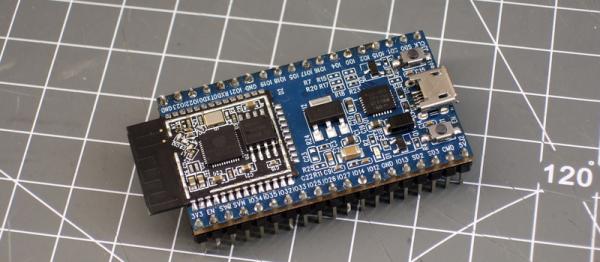
ESP32 is the hottest new wireless chip out there, offering both WiFi and Bluetooth Low Energy radios rolled up with a dual-core 32-bit processor and packed with peripherals of every kind. We got some review sample dev boards, Adafruit and Seeed Studio had them in stock for a while, and AI-Thinker — the company that makes the most popular ESP8266 modules — is starting up full-scale production on October 1st. This means that some of you have the new hotness in your hands right now, and the rest of you aren’t going to have to wait more than a few more weeks.

As we said in our first-look review of the new chip, many things are in a state of flux on the software side, but the basic process of writing, compiling, and flashing code to the chip is going to remain stable. It’s time to start up some tutorials!

Continue reading “How To Get Started With The ESP32”









