Retrocomputing: Simulacrum Or The Real Deal?

The holidays are rapidly approaching, and you probably already have a topic or two to argue with your family about. But what about with your hacker friends? We came upon an old favorite the other day: whether it “counts” as retrocomputing if you’re running a simulated version of the system or if it “needs” to run on old iron.

This lovely C64esque laptop sparked the controversy. It’s an absolute looker, with a custom keyboard and a retro-reimagining-period-correct flaptop design, but the beauty is only skin deep: the guts are a Raspberry Pi 5 running VICE. An emulator! Horrors!

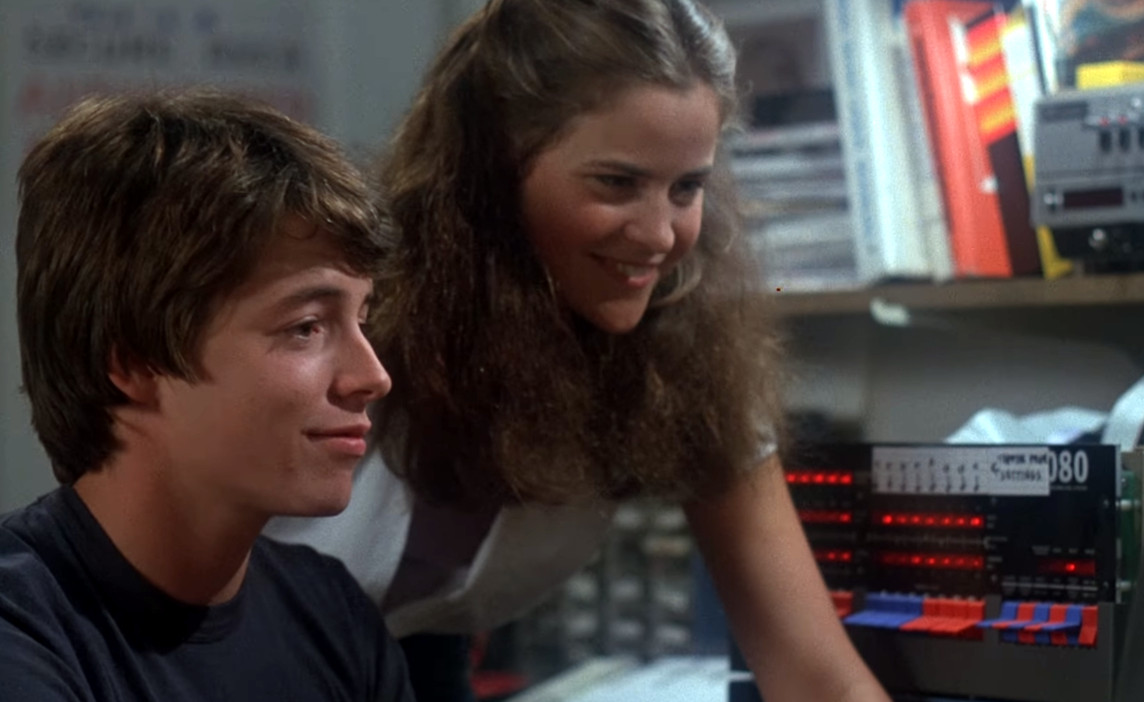
We’ll admit to being entirely torn. There’s something about the old computers that’s very nice to lay hands on, and we just don’t get the same feels from an emulator running on our desktop. But a physical reproduction like with many of the modern C64 recreations, or [Oscar Vermeulen]’s PiDP-8/I really floats our boat in a way that an in-the-browser emulation experience simply doesn’t.

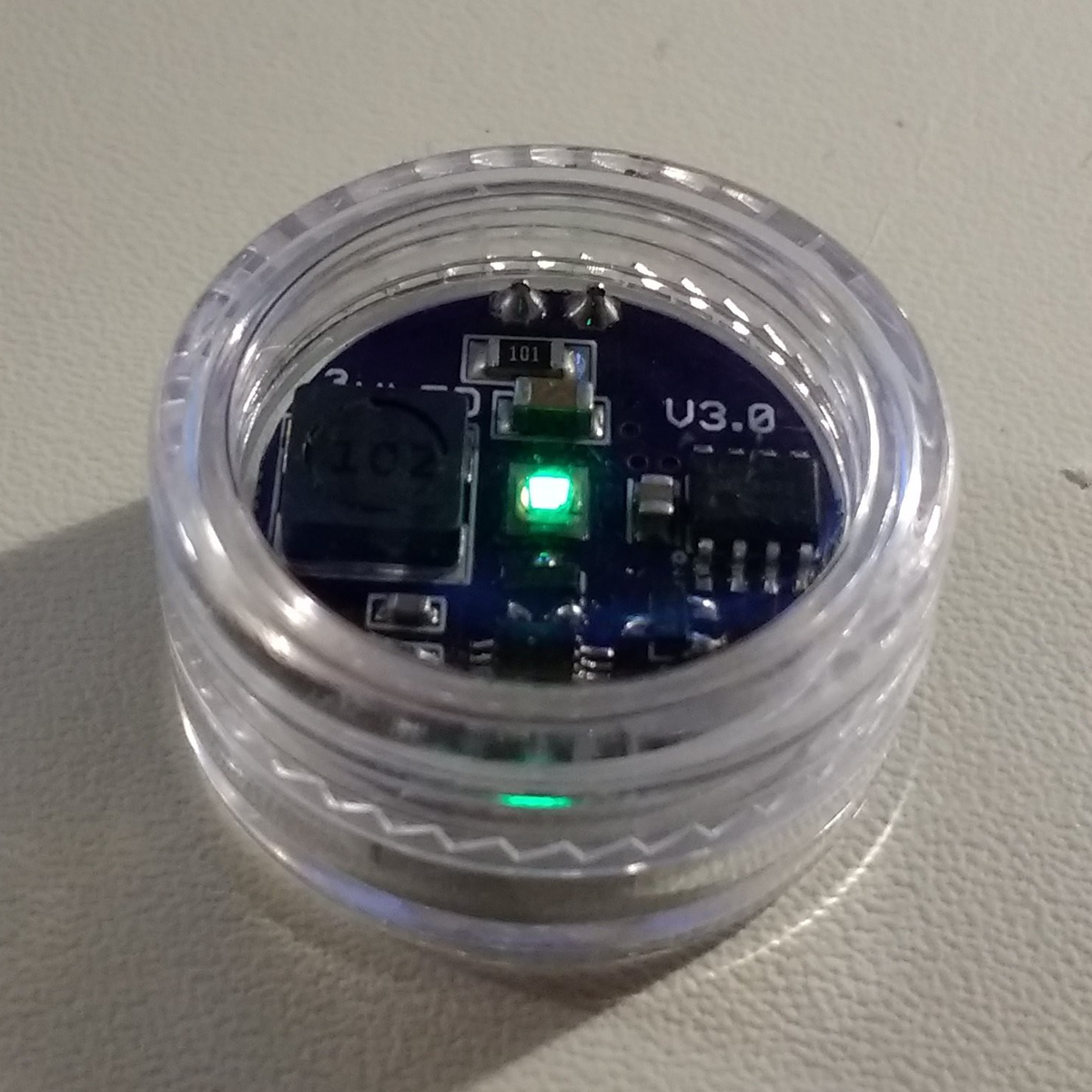
Another example was the Voja 4, the Supercon 2022 badge based on a CPU that never existed. It’s not literally retro, because [Voja Antonics] designed it during the COVID quarantines, so there’s no “old iron” at all. Worse, it’s emulated; the whole thing exists as a virtual machine inside the onboard PIC.

But we’d argue that this badge brought more people something very much like the authentic PDP-8 experience, or whatever. We saw people teaching themselves to do something functional in an imaginary 4-bit machine language over a weekend, and we know folks who’ve kept at it in the intervening years. Part of the appeal was that it reflected nearly everything about the machine state in myriad blinking lights. Or rather, it reflected the VM running on the PIC, because remember, it’s all just a trick.

So we’ll fittingly close this newsletter with a holiday message of peace to the two retrocomputing camps: Maybe you’re both right. Maybe the physical device and its human interfaces do matter – emulation sucks – but maybe it’s not entirely relevant what’s on the inside of the box if the outside is convincing enough. After all, if we hadn’t done [Kevin Noki] dirty by showing the insides of his C64 laptop, maybe nobody would ever have known.

User Serviceable Parts

Al and I were talking on the podcast about the Home Assistant home automation hub software. In particular, about how devilishly well designed it is for extensibility. It’s designed to be added on to, and that makes all of the difference.
That doesn’t mean that it’s trivial to add your own wacky control or sensor elements to the system, but that it’s relatively straightforward, and that it accommodates you. If your use case isn’t already covered, there is probably good documentation available to help guide you in the right direction, and that’s all a hacker really needs. As evidence for why you might care, take the RTL-HAOS project that we covered this week, which adds nearly arbitrary software-defined radio functionality to your setup.

And contrast this with many commercial systems that are hard to hack on because they are instead focused on making sure that the least-common-denominator user is able to get stuff working without even reading a single page of documentation. They are so focused on making everything that’s in-scope easy that they spend no thought on expansion, or worse they actively prevent it.

Of course, it’s not trivial to make a system that’s both extremely flexible and relatively easy to use. We all know examples where the configuration of even the most basic cases is a nightmare simply because the designer wanted to accommodate everything. Somehow, Home Assistant has managed to walk the fine line in the middle, where it’s easy enough to use that you don’t have to be a wizard, but that you can make it do what you want if you are, and hence it got spontaneous hat-tips from both Al and myself. Food for thought if you’re working on a complex system that’s aimed at the DIY / hacker crowd.

Ask Hackaday: Solutions, Or Distractions?

The “Long Dark” is upon us, at least for those who live north of the equator, and while it’s all pre-holiday bustle, pretty lights, and the magical first snow of the season now, soon the harsh reality of slushy feet, filthy cars, and not seeing the sun for weeks on end will set in. And when it does, it pays to have something to occupy idle mind and hands alike, a project that’s complicated enough to make completing even part of it feel like an accomplishment.

But this time of year, when daylight lasts barely as long as a good night’s sleep, you’ve got to pick your projects carefully, lest your winter project remain incomplete when the weather finally warms and thoughts turn to other matters. For me, at least, that means being realistic about inevitabilities such as competition from the day job, family stuff, and the dreaded “scope creep.”

It’s that last one that I’m particularly concerned with this year, because it has the greatest potential to delay this project into spring or even — forbid it! — summer. And that means I need to be on the ball about what the project actually is, and to avoid the temptation to fall into any rabbit holes that, while potentially interesting and perhaps even profitable, will only make it harder to get things done.

Continue reading “Ask Hackaday: Solutions, Or Distractions?”

Give Us One Manual For Normies, Another For Hackers

We’ve all been there. You’ve found a beautiful piece of older hardware at the thrift store, and bought it for a song. You rush it home, eager to tinker, but you soon find it’s just not working. You open it up to attempt a repair, but you could really use some information on what you’re looking at and how to enter service mode. Only… a Google search turns up nothing but dodgy websites offering blurry PDFs for entirely the wrong model, and you’re out of luck.

These days, when you buy an appliance, the best documentation you can expect is a Quick Start guide and a warranty card you’ll never use. Manufacturers simply don’t want to give you real information, because they think the average consumer will get scared and confused. I think they can do better. I’m demanding a new two-tier documentation system—the basics for the normies, and real manuals for the tech heads out there.

Continue reading “Give Us One Manual For Normies, Another For Hackers”

Hacky Thanksgiving

It’s that time of year when we eat perhaps a little too much food, and have maybe just a few too many sips of red wine. But it’s also when we think about what we’ve been grateful for over the past year. And here at Hackaday, that’s you all: the people out there making the crazy projects that we get the pleasure of writing about, and those of you just reading along. After all, we’re just the hackers in the middle. You are all Hackaday.

And it’s also the time of year, at least in this hemisphere, when the days get far too short for their own good and the weather gets frankly less than pleasant. That means more time indoors, and if we play our cards right, more time in the lab. Supercon is over and Hackaday Europe is still far enough in the future. Time for a good project along with all of the festive duties.

So here we sit, while the weather outside is frightful, wishing you all a pleasant start to the holiday season. May your parts bin overflow and your projects-to-do-list never empty!

Why Do We Love Weird Old Tech?

One of our newer writers, [Tyler August], recently wrote a love letter to plasma TV technology. Sitting between the ubiquitous LCD and the vanishing CRT, the plasma TV had its moment in the sun, but never became quite as popular as either of the other display techs, for all sorts of reasons. By all means, go read his article if you’re interested in the details. I’ll freely admit that it had me thinking that I needed a plasma TV.

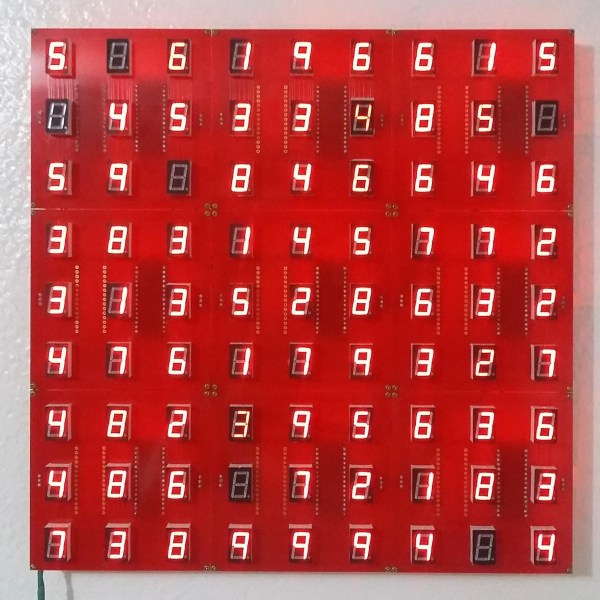
I don’t, of course. But why do I, and probably a bunch of you out there, like old and/or odd tech? Take [Tyler]’s plasma fetish, for instance, or many people’s love for VFD or nixie tube displays. At Supercon, a number of people had hit up Apex Electronics, a local surplus store, and came away with some sweet old LED character displays. And I’ll admit to having two handfuls of these displays in my to-hack-on drawer that I bought surplus a decade ago because they’re so cute.

It’s not nostalgia. [Tyler] never had a plasma growing up, and those LED displays were already obsolete before the gang of folks who had bought them were even born. And it’s not simply that it’s old junk – the objects of our desire were mostly all reasonably fancy tech back in their day. And I think that’s part of the key.

My theory is that, as time and tech progresses, we see these truly amazing new developments become commonplace, and get forgotten by virtue of their ever-presence. For a while, having a glowing character display in your car stereo would have been truly futuristic, and then when the VFD went mainstream, it kind of faded into our ambient technological background noise. But now that we all have high-res entertainment consoles in our cars, which are frankly basically just a cheap tablet computer (see what I did there?), the VFD becomes an object of wonder again because it’s rare.

Which is not to say that LCD displays are anything short of amazing. Count up the rows and columns of pixels, and multiply by three for RGB, and that’s how many nanoscale ITO traces there are on the screen of even the cheapest display these days. But we take it for granted because we are surrounded by cheap screens.

I think we like older, odder tech because we see it more easily for the wonder that it is because it’s no longer commonplace. But that doesn’t mean that our current “boring” tech is any less impressive. Maybe the moral of the story is to try to approach and appreciate what we’ve got now with new eyes. Pretend you’re coming in from the future and finding this “old” gear. Maybe try to figure out how it must have worked.

In Praise Of Plasma TVs

I’m sitting in front of an old Sayno Plasma TV as I write this on my media PC. It’s not a productivity machine, by any means, but the screen has the resolution to do it so I started this document to prove a point. That point? Plasma TVs are awesome.

Always the Bridesmaid, Never the Bride

An Egyptian god might see pixels on an 8K panel, but we puny mortals won’t. Image “Horus Eye 2” by [Jeff Dahl]
The full-colour plasma screens that were used as TVs in the 2000s are an awkward technological cul-de-sac. Everyone knows and loves CRTs for the obvious benefits they offer– bright colours, low latency, and scanlines to properly blur pixel art. Modern OLEDs have more resolution than the Eye of Horus, never mind your puny human orbs, and barely sip power compared to their forbearers. Plasma, though? Not old enough to be retro-cool, not new enough to be high-tech, plasma displays are sadly forgotten.

It’s funny, because I firmly believe that without plasma displays, CRTs would have never gone away. Perhaps for that I should hate them, but it’s for the very reasons that Plasma won out over HD-CRTs in the market place that I love them.

What You Get When You Get a Plasma TV

I didn’t used to love Plasma TVs. Until a few years ago, I thought of them like you probably do: clunky, heavy, power-hungry, first-gen flatscreens that were properly consigned to the dustbin of history. Then I bought a house.

The house came with a free TV– a big plasma display in the basement. It was left there for two reasons: it was worthless on the open market and it weighed a tonne. I could take it off the wall by myself, but I could feel the ghost of OSHA past frowning at me when I did. Hauling it up the stairs? Yeah, I’d need a buddy for that… and it was 2020. By the time I was organizing the basement, we’d just gone into lockdown, and buddies were hard to come by. So I put it back on the wall, plugged in my laptop, and turned it on.

I was gobsmacked. It looked exactly like a CRT– a giant, totally flat CRT in glorious 1080p. When I stepped to the side, it struck me again: like a CRT, the viewing angle is “yes”. Continue reading “In Praise Of Plasma TVs”