More Pins And More Power With A DIY Sanguino

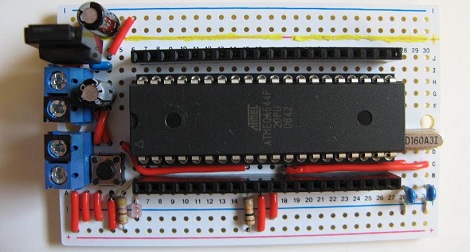
Not long after [CulinarilySpeaking] got into the Arduino game, he began to want more IO pins and a larger program space for more ambitious projects. This, of course, led him down the path towards the Sanguino, the ATMega644-based dev board with many more IO pins than Arduino boards based on the ATMega328. Instead of buying new, [CulinarilySpeaking] decided to make his own Sanguino, and the results look fantastic.

After coming across an ATMega644 while browsing for parts on line, [CulinarilySpeaking] found the micro that had enough power and pins to do some fairly complex stuff. A bunch of other people though about using this chip in the Arduino environment before, so all [CulinarilySpeaking] had to do was copy the circuit with the parts he had on hand.

After soldering all the components to the neat breadboard-style PCB, [CulinarilySpeaking] fired up the Arduino IDE and put the Blink example on the 644. Everything worked, so now there’s a board with much more power than a standard Arduino built with only $8 USD in parts.

via reddit

Hacking Magnets Into Your Skin

[Dave] loved his iPod nano so much that he implanted 4 magnets in his arm to hold it.

Ok, go ahead and shout “fanboy” at your screen and say something snide about apples products or lament the poor working conditions at foxconn. Got it out of your system? Cool.

Actually, if we had to guess, [Dave] really isn’t doing this all for his love of the device or the company. It is much more likely that he is just really into body modding and this was a convenient theme for a mod. We find the idea pretty interesting. We’ve seen implants before, but they are usually of the RFID type. Typically those are used for some kind of security or computer control.

Implanting a magnet, however, is interesting because it could almost give you a “sixth sense” You could detect what was magnetic, and how magnetic it was. If we were going to do something like this, we would probably go fully sub-dermal though to help avoid infection.

What other kind of implants could you realistically do with today’s technology to give yourself other senses?

Hackaday Links May 13th 2012

Amazing ass… for a robot

Yep, Japan still has the creepy robotics market cornered. Case in point is this robotic posterior. Don’t worry, they’ve included a dissection so you can see how the insides work too. [via Gizmodo]

Time-lapse camera module results

As promised, [Quinn Dunki] sent in a link to the photo album from her time lapse camera module. In case you missed it, she built it in a Tic Tac container and stuck it to the side of a racecar.

Kinect controlled killbot

Didn’t we learn anything from RoboCop? We could totally see this Kinect controlled robot (which happens to weigh five tons) going out of control and liquefying an unsuspecting movie extra standing near it. [via Dvice]

Laser popping domino balloons

apparently [Scott] has set a world record by using a laser to pop a line of 100 red balloons. We enjoy seeing the size of the 1W laser that does the popping… it can’t be long now before we get a hold of handheld laser pistols. [via Gizmodo]

Laser balloon targeting

If that last one was a bit of a let down, you might enjoy this automatic targeting system more. The blue triangle shaped icon is setting a target, the amber triangles have already been targeted. Once all the balloons are identified a laser quickly zaps each in order. Quite impressive, although no details have been provided. [Thanks everyone who sent in a link to this]

http://gizmodo.com/5909007/we-hope-lasers-popping-hundreds-of-balloons-is-the-new-dominos-fad

Hacking The Kingston Wi-Drive

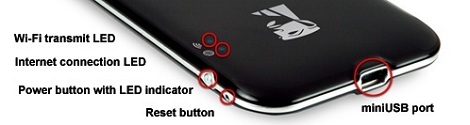
[Andrew] got his hands on a Kingston Wi-Drive, and being the responsible Hackaday reader he is, spent the better part of a weekend figuring out how to get root on this shiny new toy

The Kingston Wi-Drive is a small battery-powered Flash drive with a wi-fi adapter in a small, compact case. Even though Kingston is going after a fairly niche market by advertising the Wi-Drive to expand the storage of iOS and Android devices, a network attached storage solution that can fit in a pocket is somewhat interesting. Unfortunately, Kingston decided to lock down the Wi-Drive; [Andrew] can’t even get a terminal running on this little box.

After a weekend, [Andrew] is no closer to his goal of getting root on the Wi-Drive. He suspects the problem may be there simply isn’t a terminal for Telnet to bind to. [Andrew] realized he was a bit out of his league on this hack and decided to open up his research to people much more experienced in embedded Linux environments. If you’ve been playing around with a Wi-Drive, or you want a tiny battery-powered NAS, send us something on the tip line and we’ll follow up on this post.

Putting A Software Defined Radio On A Mac

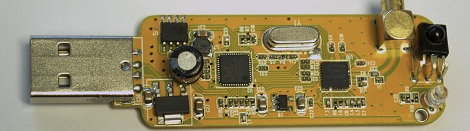
A few months ago [Antti Palosaari] discovered cheap USB TV tuners could be used as a software-defined radio. Since then, we’ve seen these TV tuners receive signals from GPS satellites and even the signals between air traffic control and passenger aircraft. Like everything cool, Mac support for these drivers is slightly terrible so [hpux735] wrote his own Cocoa app to support these amazing dongles.

[hpux735]’s driver is a port of the osmocom driver, repackaged as a native Cocoa app so the terribly fickle libusb and other dependencies aren’t needed. All the code is up on GitHub, ready for you to start playing around with SDR.

As far as tutorials for those wading into the deep waters of software-defined radio, a number of how-to guides have popped up over the last month to get SDR noobs up and running quickly. Here’s a few of the best ones we’ve seen:

[braingram] put up an Instructable for Ubuntu users.

For people who have a Windows box lying around [balint] put up a getting started guide.

There’s a slightly more thorough Windows guide here.

Most of the development in the TV tuner SDR community is happening on the RTLSDR subreddit, and there’s more than enough info there to do just about anything with these TV tuner dongles. If you come up with a novel use for one of these dongles, send it in on the tip line.

Heathkit Closes Down, Again.

With this rather large flip flop, Heathkit has closed its doors… again. The company that so many of us remember fondly from their myriad of electronics kits originally closed its doors in 1992. Last year, there was an announcement of a revival and a call for kit submissions. Unfortunately, it looks like that just didn’t work out. While this isn’t an official announcement, the facts appear to line up to Heathkit closing their doors.

If you’d like to re-live a few fond memories, here’s a Heathkit unboxing at EMSL.

Destroying Stuff For The Good Of All Mankind

NC state’s constructed facilities laboratory is a place where things get broken for science. We’ve shared several videos lately of things being sliced, diced, sheared, exploded, and smashed, purely for the fun of it, and now we feel like we should compensate a little bit. No, we’re not going to undergo physical punishment, instead, we’ll share some educational destruction.

In the video after the break, you can see a few things pushed to their absolute limits, then a bit further. The Constructed Facilities Laboratory is a research lab that tests the limits of some of the infrastructure that we rely on daily. Bridges, roads, walls, support beams. Someone needs to figure out what they can really handle. Even more interesting than the short video below, are all the different videos in the tour that explain how the facility is constructed an how they operate. Take a few minutes and enjoy the tour.

Continue reading “Destroying Stuff For The Good Of All Mankind”