Artemis II Agenda Keeps Moon-Bound Crew Busy

With the launch of Artemis II from Cape Canaveral potentially just weeks away, NASA has been releasing a steady stream of information about the mission through their official site and social media channels to get the public excited about the agency’s long-awaited return to the Moon. While the slickly produced videos and artist renderings might get the most attention, even the most mundane details about a flight that will put humans on the far side of our nearest celestial neighbor for the first time since 1972 can be fascinating.

The Artemis II Moon Mission Daily Agenda is a perfect example. Released earlier this week via the NASA blog, the document seems to have been all but ignored by the mainstream media. But the day-by-day breakdown of the Artemis II mission contains several interesting entries about what the four crew members will be working on during the ten day flight.

Of course, the exact details of the agenda are subject to change once the mission is underway. Some tasks could run longer than anticipated, experiments may not go as planned, and there’s no way to predict technical issues that may arise.

Conversely, the crew could end up breezing through some of the planned activities, freeing up time in the schedule. There’s simply no way of telling until it’s actually happening.

With the understanding that it’s all somewhat tentative, a look through the plan as it stands right now can give us an idea of the sort of highlights we can expect as we follow this historic mission down here on Earth.

Continue reading “Artemis II Agenda Keeps Moon-Bound Crew Busy”
Modular 18650 Packs, No Spot Welding Required

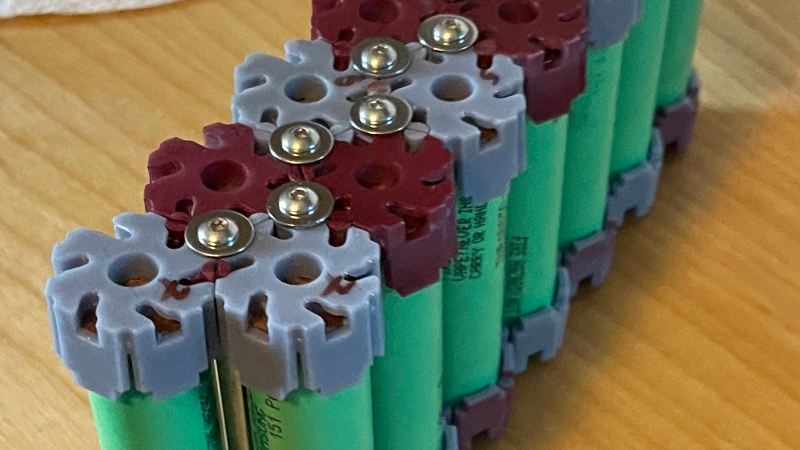
Building a battery pack from 18650 cells traditionally requires patience, a spot welder, and a supply of nickel strip. But what if there was another way? [Ben] is here with Cell-Lock, a modular battery assembly system.

At the system’s heart are a set of interlocking end caps and connection pieces that function as locking cams as well as the electrical connections where needed. They were inspired by the cam systems used for furniture assembly, and are activated by rotation with a screwdriver. The result is a mechanically stable battery system in which different configurations can easily be assembled.

We like that it doesn’t involve any heat near those cells; in part because we’ve seen our share of dodgy connections overheating. But we do have a few concerns. These include how reliable a connection those cams would make, as well as how much current they could safely take without overheating. If both of those could be addressed, we can see that this is an idea with a future.

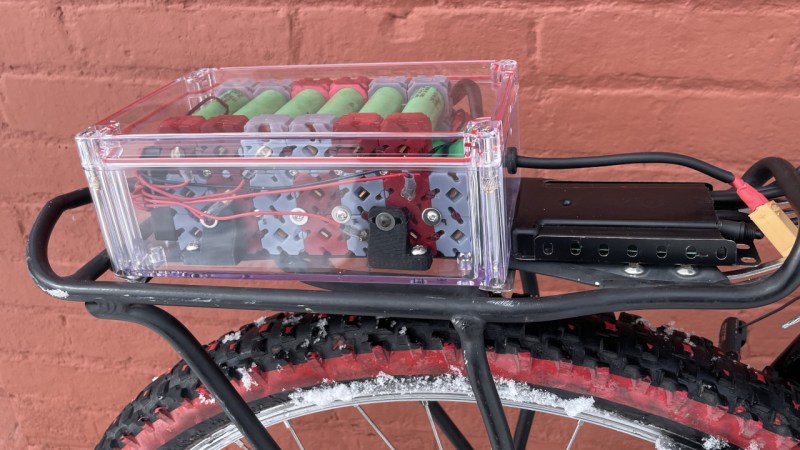
You can see plenty of examples on the linked project, including an e-bike pack which seems to return no problems. Meanwhile this is by no means the first modular battery pack system we’ve seen.

Simple MIDI Sample Player Runs On ESP32

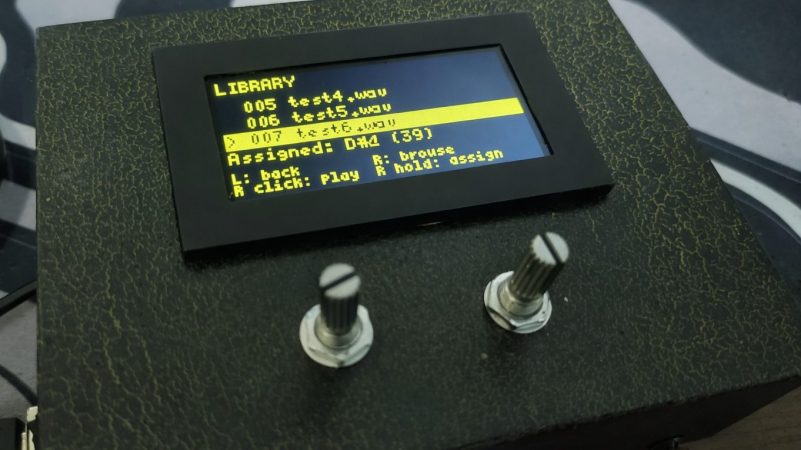
[Jakub] is a musician, and found himself in need of a simple way to trigger samples via MIDI when on stage. So many commercial solutions exist, but most were overkill for the job or too messy and complicated to justify their use in a live environment. Thus, [Jakub] worked up Samplotron to do exactly the job needed with a minimum of fuss.

The project is based around the ESP32. It’s effectively a lightweight hardware sampler that can trigger sounds on command via MIDI. Sample data is loaded from an SD card, which also stores the device configuration. The Samplotron plays back mono 16-bit WAV files at 44,100 Hz, delivering audio via an ES8388 audio codec module connected via I2S. Two encoders are used to control the device, with a menu system presented via an SSD1309 OLED screen. Samples can be loaded and managed via this interface, and it allows tweaks to be made to volume levels and one-shot/loop playback as needed. MIDI input to the device is simply handled via the onboard UART functionality of the ESP32 itself.

It’s a neat little bit of music hardware that does exactly what [Jakub] needs and nothing more. We’ve featured similar builds before, like this neat RP2040 soundboard. If you’re building rad custom hardware for your own musical adventures, we’d love to know all about it.