
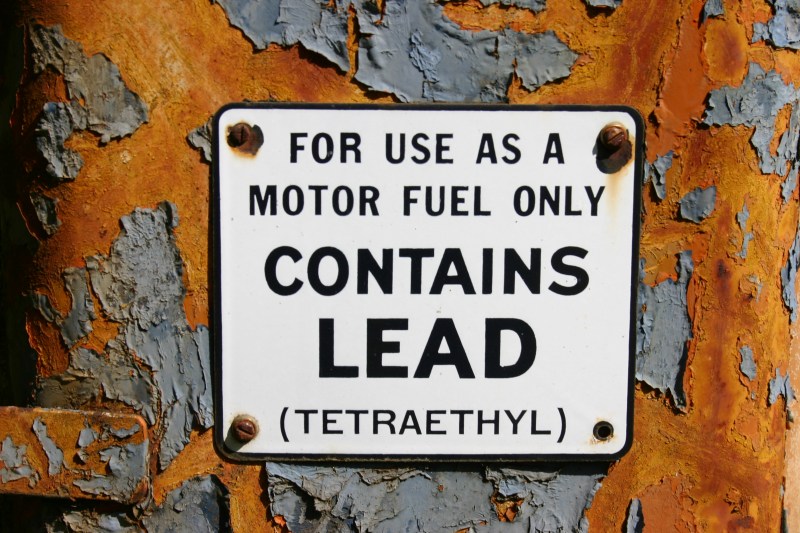
Leaded fuel is considered one of the greatest environmental failures in modern human history. Adding tetraethyl lead to gasoline reduced knock in internal combustion engines, which was widely considered a good thing. It was only later that the deleterious health effects came into view, by which point there was a massive fleet of lead-dependent automobiles and an industry reluctant to change. Still, the tide turned, and over the last 50 years, unleaded fuel has become the norm for automotive use across the world.
And yet, there remains a hold out—a world where engines still burn leaded fuels and spray their noxious fumes across the countryside. In the aviation sector, leaded fuel remains a normal part of everyday operations to this day amidst concerted efforts to eliminate it for good.
“Low” Lead

Piston-engined aircraft do not typically run on the same fuels as automobiles. Instead, they burn aviation gasoline, or Avgas, which comes in specific grades and is designed to suit the needs of aircraft engines, by being less volatile and more suitable for high-performance applications.
The most common grade is 100LL (low lead), which is used widely across North America and Western Europe. Despite the moniker, the fuel contains 0.56 grams/litre of tetraethyl lead (TEL), somewhat higher than many leaded automotive fuels used in the 20th century. As with ground-based applications, the additive is used to provide a measure of valvetrain protection by offering cooling and preventing microwelds between contacting parts. It also provides an easy increase to the fuel’s effective octane rating. The latter is particularly useful in aviation contexts where engines run under high load conditions for extended periods of time, and where performance is critical.
Other grades of aviation fuel are also in regular use in various parts of the world, many of which still contain significant levels of TEL as well. It’s worth noting that turbine-based aviation engines are not relevant to this issue, as they burn kerosene-based fuels which are lead-free.
The basic makeup of aviation gasoline was largely decided by the mid-1940s, a period in which fuels were heavily developed to suit the needs of then-cutting-edge piston military aircraft. At the time, knock resistance was key to enabling supercharged aircraft engines to achieve higher power levels, a point of key military interest during World War II. Tetraethyl lead was an easy way to achieve this, and this requirement also led to development of technologies like water-methanol injection.
Unfortunately, burning leaded fuel effectively sprayed significant amounts of lead into the environment. This lead to elevated blood lead levels in the population, causing premature deaths, neurological damage, and negatively impacting development in children. This is perhaps somewhat galling given that the inventor of TEL, Thomas Midgley Jr., himself suffered significant health effects from the compound. Many workers would also die during early efforts to produce industrial amounts of TEL in the 1920s. It’s one of many examples from the 20th century of industrial will prevailing in spite of obvious severe health risks from a dangerous but otherwise useful chemical.
Despite early knowledge of the dangers, it took some time for the negative impacts of TEL to become readily apparent on a wide scale. Japan lead the charge with a leaded fuel ban for automotive use in 1986, with other developed countries following suit in years to come. It would take decades for the last domino to fall, with Algeria finally outlawing the fuel in 2021.
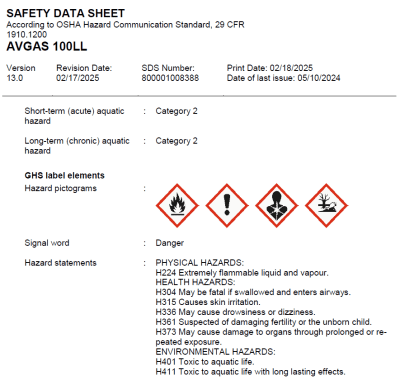
However, the aviation world has not been so quick to abandon lead. Much of the reasoning behind this comes down to practicality. Aviation piston engines simply require high octane fuel and TEL has proven one of the easiest ways to achieve a high rating. 100LL, for example, has a MON rating of 100, which is quite high compared to even premium gasoline used in automotive applications.
Engines designed to run on TEL often rely on the additive to prevent excessive valve wear, too, so running these engines on non-leaded fuels can significantly increase wear. This would be an expensive inconvenience in an automotive application, but when the engine is what’s keeping you in the sky, it’s less desirable to risk a failure by running a cleaner fuel.
In 2019, the FAA estimated that there were 167,000 aircraft in the United States that relied on 100LL avgas, and 230,000 worldwide. The agency had asked in 2014 for industry proposals to make a transition towards unleaded fuels for internal combustion applications.
However, testing revealed issues with proposed alternatives, and was eventually halted in 2018. The FAA has since provided a draft plan in 2026 that lays out the timeline to phase out leaded aviation fuel for good. The intent is to end the use of 100LL fuel in the United States by 2030, excepting Alaska, which will phase out the fuel in 2032. The intention is to take an incremental approach, giving the industry time to develop and certify unleaded replacement fuels—with G100UL, 100R, and UL100E all candidates for FAA approval.
Real-world use of these fuels will then be monitored for compatibility and safety and to determine if further support or changes are required to manage the transition away from 100LL. For now, the timelines are still subject to change, particularly in Alaska, where piston-engined aircraft are particularly vital for transport and logistics are harder to manage. However, it marks a very real commitment to ending the use of leaded aviation for good, at least in the United States. If the FAA does manage to pull off this feat, it should be readily achievable for other countries around the world.
Ultimately, leaded aviation fuels aren’t causing the same level of damage to humanity and the environment as leaded automotive fuels, purely by virtue of their more limited use. Still, it’s never ideal to be spraying lead into the environment, and the health risks are always going to be elevated for those near general aviation airports or under flightpaths of piston-engined aircraft. It’s positive that there is a real commitment to end the use of these fuels, but much work remains to be done to end the reign of tetraethyl lead for good.
Featured Image: “Tetraethyl Lead” by [David Brodbeck]












Not only did Thomas Midgley Jr. put lead in fuel, he also started the use of CFCs.
The only good thing I can think of that Thomas Midgley Jr. did in his life is inventing a contraption that killed Thomas Midgley Jr.
And he is on the list of inventors killed by their own invention. Ironically, for neither TEL or CFCs.
For his rope and pulley device to lift polio patients out of their beds, and strangling himself with it.
Wasn’t he once described as “the single most environmentally-destructive organism in all of history”?
Harsh but fair, I think.
That would probably be blue-green algae.
He probably does deserve that title, but there were many thousands of others who also saw the dollar signs and ignored the consequences. There is a pretty good recent book on the topic, American Poison by Daniel Stone.
Did he win a Nobel Prize for that?
So, in America, crop dusting is a big thing, pouring toxic and carcinogenic pesticides, fungicides and herbicides onto the biggest crop fields in the world. We’ve known that for decades, and now we discover that persistent earth m-poisoning lead has also been accumulating in the soil all that time.
Unless I missed it I can’t remember the last time I would have been exposed to a significant amount of lead from a piston engine plane.
Toxicity levels are determined by exposure. If I had to guess I would be more at risk of being irradiated by a Banana.
If I worked on, flew, or lived under a small airport’s flight path it would no doubt be a higher risk. But what are the numbers?
I find it odd this was not addressed as the amount of exposure would seem to be the area of concern.
I see I did miss the last paragraph, but still I find a bit of a handwave and “it’s never good” to be at odds with the scientific breakdown of the nature of the fuel.
Would have preferred some hard numbers on when and where you need to be to get exposure, and the levels one would expect.
You omit wind. Yes there will be a higher concentration of airborne lead in around airports. Mitigated by win dispersal reducing the local numbers.
Are you discounting the millions of people that live in the flight paths of municipal airports all around the world? They get daily exposure plus it drifts into the ground where kids play. It’s still a huge issue, especially know that they have tied lead exposure to violence
When I was flying small airplanes around 20 years ago we had a small plastic cup with a pin in the center used to drain a fuel sample out of each tank and at the low point below the engine. We would drain a shotglass full of fuel into the cup, look for water, then toss it on the ground. The FBO I rented from did training, and they had 20 planes. On good weather weekends they would have flights every hour for every plane, and each student would do the same thing. Fuel truck would come buy a couple of times a day to top off the tanks, and they would fill it until fuel was coming out the top. Do the math and we’re talking gallons upon gallons of fuel spilled on the ground every day from just one flight school.
Later on they came out with sump cups with some filtration on them to dump the fuel back into the tank when you were done. They were of course more expensive and no one made you use them. There were still a lot of the shotglass cups being used when I stopped flying. Not sure if they’re a requirement now…maybe at the big shops but I’m guessing at the smaller shops it’s still the same. If you test for lead near any General Aviation airport you’re going to find significant lead contamination, guaranteed.
You are long out of date. When sumping, good fuel goes back into the tank. Contaminated fuel goes into a special container for disposal.
Not to mention dumping all those cups of fuel from sump samples on the ramp dissolves the bitumen in the asphalt, leaving little holes full of gravel.
It is not a “huge issue” at this point in time, no.
I don’t think leaded fuel is going to be what ends our civilization.
Can you please explain all the violence in the world prior to leaded gas????
Ask AI: Find studies on urban violence related to leaded gasoline.
Lead piping, lead aquaducts, lead to sweet wine, lead in various amounts in certain environments… it also lowers i.q. ….violent dummies is scary 😨… the stats fod when they stopped using it is convincing, sadly it still contaminates the roadsides and will for a long time. Our road dust is dumming us down without suspected cause. And last i knew Africa and various countries around the world still use TETRA….
Lead pipes.
Lead in the wine of the notoriously pugnacious Roman Legions.
Lead paint.
Lead cosmetics.
Lead plates and drinkware.
Lead used in silver smelting and refining.
Basically, it’s been going strong for 8000 years until the woke snowflakes got their prissy little hands on it.
The whole lead toxicity thing became more noticed in the 1970’s, before the “woke” term even existed. But you know what? Go try some lead with wine in it. Be a “real man.” The casket makers will appreciate it.
RE: “…Basically, it’s been going strong for 8000 years…” because average lifespan rarely went beyond 40, so the effects were not terribly noticeable, something like 99% of the population would die before these would manifest.
Average life wasn’t valued much for most part of the human history, btw.
Woke snowflakes are merely parrots regurgitating poorly digested bits of useful information yanked out of context. I don’t consider them a good source of information, nor I pay attention to their opinions of what science should be sciencing about; however, I do notice that certain Greenpeas (pun intended) lost their/its mojo in the early 1980s and been mostly riding the crest wave of their former glory ever since. Have they been a real party they would be investing into nuclear fusion generating both, energy and fuel, but for the most part they pretend such things don’t exist.
@sammie
Youve fallen prey to a common misunderstanding.
The average lifespan being 40 does not mean people only lived to the age of 40. It means that people had 12+ kids and so many of them died at birth or in early childhood that the average lifespan was seriously impacted.
In medieval England, if you reached the age 25 you could expect to live to an average age of 50.7, meaning many lived well into their 70s or 80s. While rare, reaching 80, 90, or even 100 was possible and documented (e.g., Enrico Dandolo died at 98 in 1205.
Lead pipes
I live a few km from a small private civil airstrip in line with the runway, roughly, and a few km another way from a commercial airport, on the approach turn path and the hold path, that catered for nearly 100 years to private pilots and small commercial single and twin engine piston aircraft (think banner tows, skywriters, and skydivers). Due to occupational exposure, I get tested periodically, and when the commercial airport dropped the private aircraft, mostly, and the banner and skywriters, within a year, my serum lead levels dropped. They never exceeded the 60microgram/dl alert limit, nor the 40ug/dl clear limit, but well above the 3.5ug/dl general (non-occupational) concern limit.
Still not down to that point (I still work in an industry of concern, which is why I have periodic tests) but went from 20+ to about 10ug/dl within two years.
I am curious what would change if the private airstrip closes. It is low traffic, so I would guess not much.
I think it was an old Veritasium video where they overlaid a map of academic results with small airfields, where 100LL is still used. There’s a correlation. Lead makes people dumber.
Correlation is not causation. Maybe if you were less dumb you would know this.
I don’t have actual numbers off the top of my head, but there are cases where neighborhoods right underneath the takeoff path (where the altitude is at the lowest and fuel consumption is at highest) would frequently test high for lead on the surface soil. There is also a correlation between soil lead contamination and mental health issues in the neighborhood.
The only reason why the FAA has been dragging their feet is because they refuse change in the name of “safety”. These aircraft piston engines need 100 octane fuel because no one wants to upgrade the ignition system to anything newer than 1920s technology. (Magneto fixed timing ignition). Classic automotive engines frequently and easily gets converted to unleaded by installing hardened valve seats and modern valve guides, which would fix all lubrication issues.
But the FAA does not allow modification like those on aircraft engines because of “safety”.
Yup. Textron is never going to develop a modern electronic ignition system for legacy engines. Getting FAA certified would cost $2b and 10 years of paperwork. And when it’s ready, the 20hr/year general aviation owner won’t be able to afford a $25k distributor upgrade. They’ve been talking about unleaded Avgas for decades. But the ridiculously bloated FAA regs makes it practically impossible to get new fuels certified. A few companies have tried, none have succeeded. Add in General Aviation being a shadow of what it was because costs have exploded, no refinery is going to spend billions developing a 100LL alternative for a dying market.
Exposure is a big part of ground ops training. I used to work as a line tech at the local airport. Lots of small engine stuff going on there; bush planes. The FAA’s first priority is, has been, and always will be safety. The reason why 100LL is still being used is not because its the easiest/cheapest way to gain octane rating in AV gas, and that companies are greedy (though some are, there are loads that would love to develope a replacement for 100LL) Its because no other fuels that have been developed up to this point have the same reliable resistance to vapor lock related to the atmospheric pressure changes that aircraft are subject to. For those not mechanically inclined, when moving at or above race car speeds, a mile or three up, in a vehicle that effectively IS a crumple zone, vapor lock of fuel flow is VERY. BAD. for your health. Nevermind the fact that comparatively to an automotive setting, there are as many planes in this country as there are cars in some large cities.
Would love it if they started carrying ethanol free high octane Mo gas at my airport. unfortunately it is never going to happen unless the govt requires it. You aren’t even allowed to have your own fuel tank if you want it. So unfortunately this needs to be done top down.
That’s fine. Outlaw it and they take the next best easy way.
I mean, seriously, how is this a argument?
… and develop the piston engines further to elevate the need for leaded …
“easy way” does not exist for aviation.
Also, quantity. USA avgas consumption is about 200M gal/year. Regular gasoline consumption is 350M gal, per day
Somebody please check my math because I want to be wrong.
200 M gallons * 3.76 liters/gallon * 0.56 g lead per liter = 423 x 10^6 grams
or 423 metric tons dispersed into the air for everyone to share?
Yep. But that’s not the scary part. Do the same calculation for car use daily…
“Not flying” is pretty easy. If you ban all other options, that’s still the fallback.
The argument is that the FAA is very clear that you cannot make changes to an aircraft unless the manufacturer has approved the changes, and that includes changing fuel.
There are hundreds of aircraft out there whose manufacturers went out of business forty years ago, so there is currently no legal way for those aircraft to be altered.
Personally I’d be fine with the government buying those aircraft for fair market value and scrapping them. It’s a drop in the bucket compared to the money we’re spending on wars, and it would have a much better outcome.
This is the real reason 100LL is still a thing. There are still planes in use that were designed in the 1940s or 1950s, and still an engine design of that era too. Lead could have been phased out Some of these small planes. oiwners have been known to drop a Subaru engine in… they’ve proven to be more reliable and rtun better due to the fuel injectiom, maintain better engine temps at cruise, and better mileage. But it’s then an excperimental plane, for a vendor to change anything the plane would have to be FAA receritifed at that point which is QUITE expensive.
aviation is so tightly regulated that making even incremental changes becomes a monumental task. you can probibly do a <$100 mod to your engine to run a better fuel, of course then you need that modification to be approved by the faa and then you need to the parts certified and the work certified, and the emissions verified. its not long before that cost increases by two orders of magnitude and nobody can afford it.
FAA recertification of a modified aircraft (an individual aircraft) is -almost- as expensive at certifying the original type aircraft (the fleet of aircraft produced by the original manufacturer). This where the running joke of ‘Change a pound for a pound’ comes from. For every pound of design weight a certificated aircraft changes, the recertification process takes about 1 pound of $100 bills – mostly to pay for the lawyers.
Well, an alternative was trialled in “my” European airport last year. No idea about the success ‘though.
While searching for the name I came across this: https://www.aopa.org/news-and-media/all-news/2026/march/20/faa-expands-swift-unleaded-approval
I think allowing to change a aircraft should be regulated. Then you can still certify a aircraft and put a new engine in it. Our aircraft fly mogas just fine (no lead added). It’s poasible, you only need to allow people to do it.
The only time I ever heard the term “mogas”(motor gas),was in the Army years ago. I don’t think there’s any tactical vehicles around that use gas.I think the jeep and the M-880 series vehicles were the last. Now everything runs on diesel fuel/JP-8.
Or just change the regulations. They’re just paper, after all. If the plane runs, it runs. If it runs badly, the owner will fear for their life and buy a different plane.
I know people who use lead alternatives in their fuel. I don’t know how well that stuff really works. From what I have heard it’s a problem with old higher RPM engines in vintage sports cars. Doesn’t matter if it’s a ferrari, jaguar etc. When it’s old it probably needs lead or a replacement, as (from what I heard) the valves aren’t as hard as the modern stuff so the lead provides a cushioning and protects the engine. I can’t afford that stuff so it’s just what I’ve been told.
For the motorcycles I own I’m much more worried about ethanol in fuel. I’m already buying the expensive fuels which isn’t fun right now as the one near my house asks 2.83 euro’s a liter (or 12.54 USD/gallon) for what should be ethanol free gasoline. But if I run the slightly cheaper stuff then the carburetor, intake manifold, head, gaskets, hoses, all will end up destroying itself from the ethanol.
Dang… Depending on how much you drive it, it might be cheaper in the long run to just replace the components that would be damaged with ethanol resistant parts (if available).
It’s not just certain parts. Ethanol attracts moisture and unless you are continually putting fresh fuel through, you end up with white crystalline goo in the float bowls. One doesn’t generally ride one’s vintage bikes all that much, so leaving ethanol blends in the bike for weeks or months on end leads to problems. First mitigation is to turn off the fuel tap/s and let the carbs run out of fuel, but you can still get goo in the fuel tank.
a) Yup they used softer valve seats, secure in the knowlegde that the lead coating cushioned it.
b) At those prices perhaps you should pursue ethanol-compatible fuel lines and gaskets? Unlike a car it might actrually be reasonable to switch them out on a bike. (Although I suppose a bike does priobably burn much less fuel as well. Probably, although maybe not if it’s like a Kawaki Ninja versus a VW Polo or something LOL.)
It’s all vintage stuff. I’d have to switch to stainless intakes which freeze over, get special carbs made and i’d have to redesign the engine itself. It’s not an option. I’d rather sit it out. If everything goes right then fuel prices should drop soon, according to my crystal ball.
Hmmmm. Price of gas jumped another quarter per gallon… thank you current president of the usa.
A simple search of the interweb reveals Average US gas prices with the result being:
“Average US gas prices from 2020 through 2026 peaked in June 2022, exceeding $4.80 per gallon”.
Im guessing you were just fine with the previous administration having $4.80?
Im also guessing that you’re just fine with terrorists nuking Europe, Israel, or any number of other countries.
tds…
The fix on older cars is pretty standard – if it’s an issue for that model. It might not be, depending on the metallurgy of the head and valves. Take the cylinder head off and take it apart, mill the valve seat area, press in a ring of hardened steel.
The trouble is getting this certified for aircraft engines. Which isn’t entirely crazy; get the fix wrong and you can have the ring pop out, which is generally a catastrophe.
In my antique (postwar, barely) tractors, I run beer piss fuel with a 200:1 mix of a synthetic 2 stroke oil, mostly because I know that there are intake valve stem lubrication issues on one tractor. I do need to pull the plugs and clean them after light load running for too long. No ring issues after several hundred hours, or more, of running light to medium work. 6:1 compression doesn’t need a high octane.
THere are ‘lead substitutes’, but little research into whether they do much other than lighten your wallet. The classic car and tractor forums are full of opinions each way, but, in my case, I’ll be doing a top end or full rebuild for other reasons than valve issues due to lead.
$US12.54 for ethanol free is a bargain. Here, in the US, figure 50 to 100% more. I bought a 24gal half drum- 100l, though the conversion isn’t right, as a US gal is 3.96l- for about $US400 ($17/gal-ish) last fall to cover winter needs (snow clearing, generator, and the like). Roughly three times the price as the last one five years ago. By the gallon is $US25 to $30, and the commercial brands have changed their gallon cans to `gallon’ cans at 2.8l.
Hey Cliff, not sure if I’m misunderstanding the definition of ethanol -free fuel but the local BP stations were selling it for about $5.60/gal here in Minnesota before the latest shit show. Haven’t looked at the price recently. We run it in small engines, classic cars, snow mobiles, and boats. Nowhere near $12/gallon. Are you talking about the stuff they sell in a can by the gallon like TruFuel?
Where I am, The only ways to buy ethanol free fuel are either as product like `trufuel’, or in a bulk unit (42 gal, 24gal– 100l-ish half-ish barrel, IPA, or the like). BP and other commercial suppliers don’t sell it here from the pump.
The overhead to go where I can get it from the pump is more than the cost differential. There just isn’t the demand here. Really. A couple or ten years ago a station tried a county over, and they dropped it. As much as people complain about it not being available here, the actions did not support the words.
One of the changes that had to be made to piston engines in the years leading up to lead elimination was hardening valve seats.
The irony is that ethanol based fuel is even more knock-resistant than standard leaded fuel (E85 is roughly equivalent to 120 octane), so for situations that require leaded fuel purely for preventing knock, ethanol can be a good substitute.
E85 is a bitch to all kinds of older gasket materials. If you got an electric fuel pump designed before 2010, odds are the wee thing will rip itself apart sooner or later pumping e85. Thus it is in the automotive world, thus it shall be in the aeronautical world.
I’m not sure of the point of the story, but consider that certified small airplane engines are very simple and obscenely expensive. They also have 2000 hours between very expensive overhauls. That 2000 hours is often 20 years or more for most private planes. Replacing them with a different engine is out of the question. The modern engines from Rotax are very popular and burn mogas but again, a 4 cylinder engine with gear reduction is $22,000 to $64,000 depending on version. The 2000 hour overhaul cost is about the same as buying a new engine. Simple cost of ownership of the engine is about $20 an hour before fuel, oil, annual inspection, etc. In the end, the majority of light aircraft mostly sit in hangers or tie-downs at an airport. The average is around 100 hours of use a year. Some are very efficient in that they get 20 to 30 MPG at three times highway speeds.
My point is the longevity and cost of the engines that require lead makes conversion to different engines a 60 year process. Also using a total number of planes doesn’t have any meaning. Total amount of flying time is the number one needs and better yet, total amount of fuel used. How much environmental lead compound that is soluble in water and fats do they produce?
BTW, the experimental category does not require certified engines and allows owner maintenance. There are engine makers or over-haulers that produce lower cost superior engines for this market. For example Lycoming has the Thunderbolt line and Continental has the Titan line. The FAA has recently announced new categories that can make it cheaper and easier to have higher performance planes in the Sport Pilot category, which I think has a new name.
Some racing fuel, for antique racing cars, still has lead in it. It’s pretty limited and really expensive, but you can smell it at a vintage racing event. Smells sort of like pancake syrup.
Of course the history of racing fuel has all sorts of unpleasant chemicals in it.
Wood alcohols, nitro methane, tulone etc.
In the 1950s Mercedes Benz was using 40% methyl alcohol, 32% benzene, 24% ethyl alcohol and 4% gasoline
In the 1980s f1 teams were posing fuels made of 84-86% toluene and 14-16% n-heptane, plus other secret ingredients to run 1.5 liter engines at 6x atmospheric pressure to get 1500 horsepower.
Of course F1 engines needed to last a few hours, the fuels used over the years in drag racing where engine life expectancy is a couple minutes of idling and maybe 10 seconds at full power, are really insane, including self oxidizing fuels that would spontaneously explode a few hours after being mixed if hey weren’t used promptly.
Its more of a bureaucratic problem than anything else. Everything in aviation is governed by paperwork — literally paperwork — which means that change is both slow and extremely expensive. In order to use lead free aviation fuel the aircraft engine has to be certified to use it which will only happen with new aircraft or after a major engine overhaul. Even then most airports won’t offer a choice — while most General Aviation planes are only able to use leaded fuel then most fuel offered will be leaded.
The problem isn’t just the fuel. Aircraft engines are quite large, they’re run for extended periods at a high output and they don’t have any semblance of emission control equipment. Its like having a large (4 to 9 liters or more) lawnmower engine from a vintage lawnmower (and no silencer, of course). The only thing in our favor is that there aren’t as many planes as cars.
(Talking of cars, this business of certification is why flying cars never took off. Sure, its possible to make a flying car, although what you end up with is neither a very good plane nor a very good car, but you’ve also got something that when it gets its door dinged in the grocery store parking lot will require specialist mechanics to fix along with the appropriate paperwork. Routine maintenance will also be a bit expensive.)
There was a lot of opposition to leaded gas when it was first proposed, but industry convinced congress that we had a fuel emergency because of the growing number of cars. Henry Ford wanted to use ethanol as a fuel/octane booster.
Leaded fuel for lovely vintage engines only. And mentol cigarettes only for smiling girls:)
“It was only later that the deleterious health effects came into view”, thats not true though. Dupont and Midgley knew all along. There was just too much money to be made for them to care. They poisoned the whole world, and they knew.
And this was in the 20’s not post-WWII.
Midgley even and to take time off work due to lead poisoning.
Poisoning from handling the stuff is not the same as environmental effects. You can be killed by working with sand. Yes, they knew the tetraethyl was dangerous but not so much about the products of burning and dispersion in the atmosphere. I do recall warnings in the early 1960’s about picking berries and fruit along highways. I am dubious about the urban violence and effects on the brain. I have taught physics and chemistry and math in US high schools and they need to explain why kids today are so f*ckin stupid without the lead.
The tetraethyl lead forms lead oxide when it burns and it is not soluble in water or fats except in trace amounts but it is bad for engines, so the lead additive includes compounds that will react with the combustion products to from lead bromide or lead chloride. Each of these are only very slightly soluble in water or fats. I’m guessing the primary entry into the body is by way of the mouth and these compounds will react with the hydrochloride acid in the stomach and become soluble. This could explain the urban effect. The bromide and chloride will eventually be part of the dust and grime of the city and eating without washing, sucking fingers, and all those things will be a conduit to the brain.
Is there any mention of bromine? Highly toxic and corrosive.
Gotta chip in here, those pesky little aerosolized lead bromochloride particles arent stable, they convert back into lead oxides, with some wanting to become lead carbonates and lead sulfides. These wee bastards are small enough that they get absorbed into the blood stream from the lungs. Lead oxides that gets swallowed will, to some degree, be converted by HCl into lead chlorides, which then is absorbed in the digestive track. So its very much an environmental affair. Be as dubious as you want to be, ingesting heavy metals is a known NO-NO. Besides, lead affects the emotional inhibitor filter most, making people more violent and short sighted, not necessarily dumber. Todays people are dumber because they sit with their face 2 inches from a goddamn smart phone, watching brain rot videos on how the government is trying to mind control them through the most ellaborate schemes. Also, a lot of the perceived stupidity can be traced back to bad parenting. If you have zero discipline at home with no guidance from your parents, its bound to lead to developmental issues. Back in the olden days, postwar to late 70´s, parents tried to make sure their kids would become model citizens, working for the greater good of all. Nowadays, if they ever bother, they raise their kids into thinking they are special, and somehow would be just as good as everyone else.
In the late 50s my little brother now 70 drank approximately 4 Oz of leaded gasoline, he was thirsty, took about 1 hour before hospital pumped his stomach. I now 75 was good at fixing engines and have rebuilt a 1,000 carburetor in my life all dripping with red lead and with my bare hands rebuilt them. I have no health problems so you can’t prove led a bad thing by us.
Purdue student pilots circle over our town all day, I’ve heard others complain.
Until we could process titanium and get the oxide everything white was coated in a high density poison with it’s dispersion into very close quarters in homes and elsewhere. A color that is only temporary in nature as it melts or fades away, earth tones were not good enough. There was probably some social reason for this tied to religion and perceived purity. Since it’s banning social cognitive scores have gone up. I was effected between first and second grade with lots of sanding and painting that summer, we only had a cloth bag upright vac. I remember the sweet dust. My grades took a 2 letter or better drop.
Yes, lead paint was a bad thing. But zinc oxide has been a white pigment used in paint since 1850.
Have you ever used lead paint? It’s wonderful. The brush glides forever, it feels like it never runs dry. Zinc oxide is an additive at best. Straight zinc in oil will take five coats to cover and will crack in a year; there’s no comparison. The best white paint is probably a mixture of lead and titanium in linseed oil.
There are diesel and turbine engines for aircraft and both of those use jet fuel.
There’s supposedly only ONE manufacturer of the raw chemical TEL – Innospec, and last I heard they were going to stop production in 2030, which is like 4 years away.
Nobody WANTS to burn leaded fuel in their engines – As others have pointed out, they don’t have any choice. And it’s not just engine reliability, there’s material compatibility questions too. In the trials of the various unleaded fuels it’s been coming up that the linings and coatings in the fuel tanks of certain fancy $ million+ airplanes are having issues, for example. It’s a sucky problem to have.
Other planes need maybe some seals and a sticker, AND PAPERWORK to make them compatible with high end unleaded fuel.
There are also diesel piston engines, and they’re nice. They run on regular old jet fuel and are by all accounts fine engines for their purpose, but there are very few people that know how to work on them, and there’s no overhauling them, just replacement, and they’re EXPENSIVE, because of course they are. I don’t know if there’s mechanical merit to the no-overhauling or it’s just a money grab, but that’s what I’ve heard anyway.
Turboprops (jet fuel) engines are thirsty for GA usage, although there’s a French company called “Turbotech” that supposedly has some miracle engine?
And as for electric? Flight times aren’t really practical and there’s only ONE actual GA certified electric plane out there – the mighty Pipistrel Veils Electro which is quite cozy and fun to fly, but really only good for jaunts around the immediate neighborhood.
Get Toyota to build an airplane engine. I’m sure they already do. Bet it runs fine on the cheapest corny unleaded.
They did: https://www.flightglobal.com/engines/1997/01/toyota-is-cleared-to-produce-piston-aero-engine/ (note the date)
However, fitting a new engine into (eg) an old Cessna would require certification from the FAA which would cost so much nobody was interested in buying it.
This seems like a bit of a foolish own-goal for the government as a whole. They run the process. We spend hundreds of millions a year on various environmental projects with small individual impact. A streamlined, grant funded project to recertify the most common engines on a lead-free alternative seems like a better path to lead reduction.
(and, apropos of nothing above, led is the past tense of lead, and it’s pronounced the same as lead, the element. I’m surprised the author’s grammar checker didn’t catch it. Apologies for being “that guy.”)
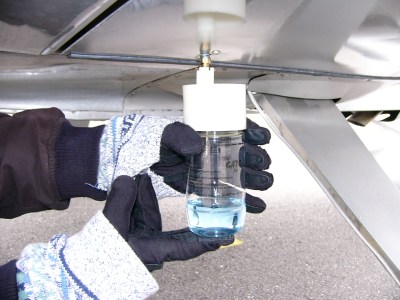
Who wears gloves when sampling fuel on their 172?
” It was only later that the deleterious health effects came into view”
There was opposition and scientific evidence of it’s toxicity from the very beginning https://en.wikipedia.org/wiki/Robert_A._Kehoe#Advocacy_of_lead_in_gasoline
Hackaday editors, you should probably update the article. This is bad information to be spreading around.
I’m always struck by the irony of the ‘chemtrail’ guys positing the existence of various nefarious and exotic chemicals in the vapor trails from burning what’s close to kerosene; but not the innocent old piston engine gear where the neurotoxins are right in the name of what they burn.
The chemtrail people have other more serious me tal issues
That’s like saying in the 1970’s that we couldn’t possibly change to unleaded fuel for cars because all the cars are designed for leaded fuel… designs were improved, many engines were re-tuned or modified and may more were absolutely fine with it.
Leaded fuel is first and foremost a waste of lead. The effect of lead pollution is negligible, and studies on the correlation between lead and behavior/intelligence have a number of confounding factors that mysteriously started appearing in research papers in the 1960s. Primarily the failure to exclude children with pica, which is independently correlated with low intelligence. Turns out smart kids don’t eat paint in the first place; who would’ve guessed? Prior to this error, studies on lead and intelligence found little correlation below the threshold of acute poisoning; in other words, just don’t sweeten your wine with it, and you’ll be fine.
Regardless, we should definitely get the lead out of fuel, so we can use it in better things like paint, roofing, and batteries!
How does lead evade the wrath asbestose received, both are added natural elements
Cuba is nearly 100% leaded, 0% Ethanol.
The dangers of TEL & TML are greatly overdone.
Yes, in it’s neat state it’s highly toxic but once it’s in gasoline, it’s pretty safe. We used TEL for decades in my old oil refinery & noone died or came to harm as a result.
People forget that TEL was only ever removed from petrol because it interfered with catalyst exhaust systems. Prior to the introduction of catalytic converters, the environmental concerns were about emissions of carbon monoxide, NOx & unburned hydrocarbons, not lead.
It is true that lead poisons the catalytic converters and was a very strong driving force in transition to lead free gasoline. The detrimental effects of lead oxides inhaled and ingested is pretty much proven to death. No one sane would say inhaling lead oxide dust is safe for ya. It is however a smooth criminal, it dumbs you down enough that you actually start believing you are smarter than the average Joe, or those eggheads with their fancy publications.
At what dose?
You don’t get lead oxides coming out of the exhaust pipe of a car running on leaded petrol; you get lead chlorides & lead bromides. TEL fluid contains ethylene dichloride & ethylene dibromide. These are the so-called lead scavengers which stop the build up of lead deposits inside the engine. If you don’t have scavengers, you get things like spark plug ‘whiskering’ which interferes with ignition.
Yes, agreed, lead particles of any description in the environment aren’t a good thing & it’s better that they’re gone. That said, if like me, you grew up in the ’50s & ’60s in an area with lots of heavy industry, coal mining & metal smelting, you were probably breathing in a cocktail of nasties on a daily basis & car emissions were the least of your worries!
So basically the whole nation is getting cropdusted with lead, that explains the violence & stupidity
Except for the fact that the violence and stupidity has been increasing steadily for the decades AFTER lead was eliminated from the far greater, in both volume and exposure, source of emission CAR exhaust.
Never, ever dismiss the need for maintaining certification, particularly for aerospace.
I worked for a major CAE software developer back in the day. Any time we found a more accurate theory or formulation for a result, we HAD to provide a switch that would return the previous result. We even had to do that if a math error was found in a long-standing derivation. This was a certification issue–that is, in order to use the new version, some clients were forced to document the identical results for results used to certify their aircraft, even if we could prove the previous result was less accurate or even incorrect.
We also had to continue to provide full customer support to a few special clients that continued to use Very Old Versions of the code on Very Old Computers for their Very Old Yet Operational products.
An interesting parallel is lead in solder for electronics. That has been effectively banned in Europe since 2006 with limited exceptions for medical/high reliability equipment. To me it appears that banning lead in fuel greased the skids here as the lead solder ban moved faster.
As to arguments against such bans or debates about what a “safe” level is my decades of chemical industry experience has given me the following perspective:
You cannot eliminate risk only reduce it. People who call for zero tolerance are generally pushing ideological agendas and hsve no intetest in accurate risk analysis. In life, zero risk is not an option.
The price of progress is never killing or poisioning significant segments of the public or the environment. People who argue for eliminating or easing regulations are usually the ones who benefit financially from this. They are also usually well insulated from the consequences when their risk taking goes bad.
Neither zero tolerance ideologues nor profiteering regulation eliminators seek accurate risk assessments that benefit society as a whole. This should be taken into account when these groups weigh in on risk assessments.
Employing a “beneficial” additive on an industrial scale involves huge risks so barriers to acceptance should be very high. Small scale pilot projects often expose issues but the trick is to not let corporate intetests minimize or hide these issues. Hence the need for outside regulation. The best time to dispassionately evaluate risks is before a process is entrenched in industry.
Once a process has become entrenched it is very hard to move to better alternatives even if they are demonstrably cheaper and safer. The cheapest process is the one already operating not the one I need to spend money to build.
Most people in industry are not out to poison the planet or the population but it only takes a few misguided ideologues and greedy billionaires in power to wreak havoc.
Giving large amounts of decision authority to individuals rarely ends well. I used to think most of us were in agreement on this.
How about tetraethyl zinc or tetraethyl aluminum.?
To make TEL, you first need to make the Sodium-Lead alloy, Na4Pb (so four sodium atoms to one lead atom).
I’ve not thought about it but not all metals form true alloys with each other. However, assuming you these two metals did, the Zinc & Aluminium (please note the CORRECT spelling!) alloys would be Na2Zn & Na3Al. Assuming these would react with Ethylene Chloride, you’d likely get Di-Ethyl Zinc (DEZ) & Tri-Ethyl Aluminium (TEA). You’d then need these to be fully soluble in petrol over a wide temperature range so they don’t blob out in cold climates or start boiling off as you drive through Death Valley. And after that, they’d need to demonstrate the same ‘flame quenching’ properties that make TEL such a clever anti-knock additive.
It’s not as simple as you thought is it?
All these fuels would be better left to the past. We could and probably will move to electric VTOL air travel for shorter flights at first and local commuter traffic will certainly evolve into VTOL instead of electric land based cars and the hybrid land air sea vehicles. Then the other thing we can end is useing fuels of any sort for shipping and intercontinental travel. The idea of lighter than air craft redesigned for the future I’ve seen proposed designs for basically lighter than air trains in the sky this gets rid of the need for tracks, tunnels, bridges and in general logistical obstacles traveling on land has.
Oil is bad for the people not just the planet we kill each other over it and it’s used as tool to create power for some while others and in much greater numbers are made slaves to the oil industry if they work directly for it or otherwise.
We need to realize that we are allowing great harm when we have the technology and innovation to get all the energy we need without fuel gasoline or any other. I also know it’s hard to imagine it could work a world without oil wars and pollution but we can do it.
100LL is the reason I hung up my David Clarks. Between the obscene cost of flying even an airplane that is only small enough to carry two light people and the health and environmental disaster they are contributing to, I’d rather fly FPV.