If you watched the Mickey Mouse Club way back when, you might remember Professor Wonderful, who was, in reality, physics professor [Julius Sumner Miller]. He also had his own show, “Why Is It So?” along with appearances on talk shows. We recently ran across one of the shows from 1962 where [Miller] uses electromagnets to break a lamp.
[Miller] moved to Australia, and this episode is from the Australian version of “Why Is It So?” As you might expect, given the topic, the professor covers Oersted and Faraday.
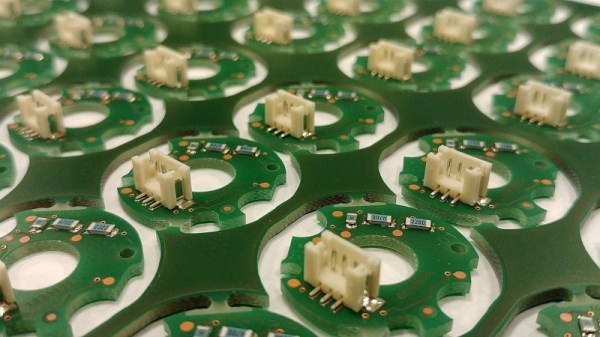
Most of us probably have a mental image of tankers sailing through the Strait of Hormuz laden with Gulf crude, off to be processed by refineries somewhere else in the world. Certainly a load of oil takes just that route, but for the Saudis and other oil-producing nations in the region, it also makes economic sense to site petrochemical industries at source. They export the much more valuable refined products, among which is the polymer resin used in PCB production. The Reuters report says that consequent to this and a rise in copper prices, the cost of a PCB in China has risen by 40%. Naturally this doesn’t sound like good news.
Here at Hackaday, when it comes to component shortages this isn’t our first rodeo. We’re in the middle of a memory shortage due to AI companies, and the COVID-era chip shortage is still fresh in our minds. Unfortunately, this type of thing as been a regular of the technology world for decades. Here we are with another one, and should we be worried? In the short term it’s certainly a concern as the Gulf conflict is still searching for an end to its uneasy stalemate, but remembering previous shortages we think that global industry will adapt and expand other sources where necessary. Just as with the similar IC encapsulation resin shortage back in the ’90s, it may eventually be the panic more than the shortage which becomes responsible for the price hikes.
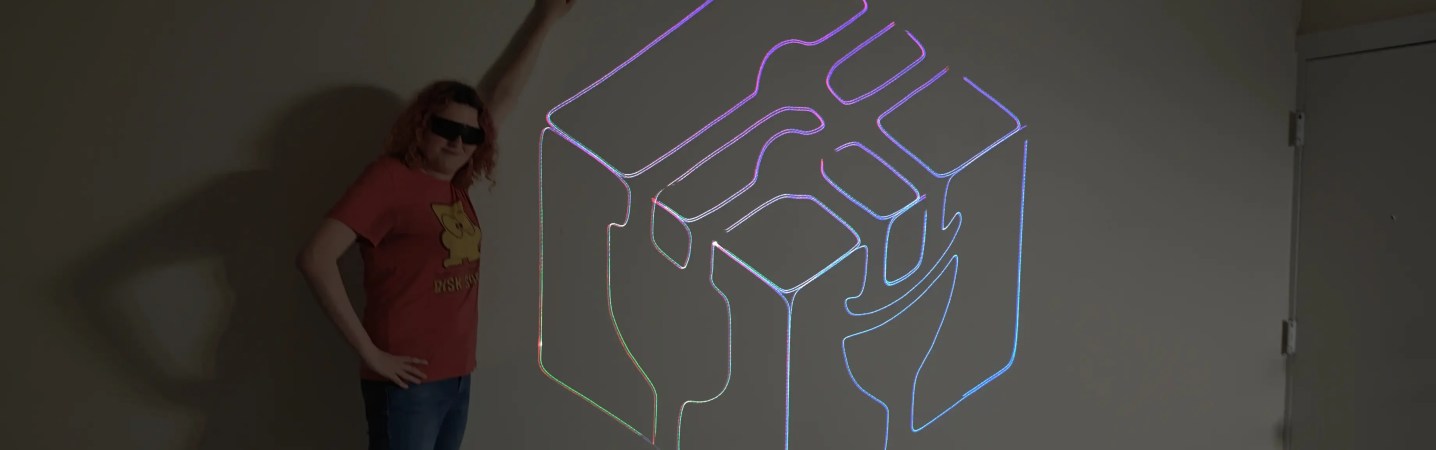
Have you thought about building a galvonometer-based laser projector, but don’t know where to start? There are a lot of resources out there, but you could do worse than to check out [Breq] and [Mia]’s laser vector project, which provides a very well-documented and low-cost starting point. They boast that the most expensive part of the project was the ANSI-certified safety glasses, which shows a dedication to safety we wish more people would show when playing with coherent light.
The rest of the parts — from the galvos to the RGB lasers module with dichoric mirrors to keep everything on the same beamline, to the ESP32 module driving everything — was ordered from AliExpress, and not from the most expensive vendors, either. Considering that, it works remarkably well.
If you’re not playing Asteroids on your vector display, why even bother?
Like all DIY laser projectors, this one does vector graphics, sweeping the beam fast enough that the human eye registers crisp, clean lines. Galvonometers, or galvos for short, take analog input, so a DAC is needed — fortunately the ESP32-S2 comes with a pair built in. The custom PCB of course has audio-in for the usual Lissajous lightshow or oscilloscope music, but with an ESP32 as the brains, you can do a lot just inside the projector.
Like what? Well, play Asteroids, for instance, using Wiimote controllers. Project a lovely clock. Render text input in various single-stroke fonts. More to the point, since this is a projector, take arbitrary SVG data and project literally any image you’d like — as long as it doesn’t have too many lines, at least. The galvos in this project are rated at 20,000 points per second, which is not exceedingly fast: they were chosen to meet the budget, not the greatest-possible speed.
More to the point is that this is one of the better-documented projects of this type we’ve seen. [Breq] doesn’t just tell us how to build the projector, but why they designed it that way. We really encourage you to give it a read if you’ve been thinking of getting into this sort of display.