

This Week In Security: FBI Gets Hacked, Muse Vulnerable To ClickFix, Popular Rust Developers At Risk, And New Attacks Against RSA

The prolific ShinyHunters group has announced it used a zero-day vulnerability in Oracle PeopleSoft to exploit the FBI jobs website and gain access to the AWS GovCloud instances and dump 2 TB of employee data. GovCloud being a special, locked-down version of the Amazon Web Services cloud for US government users.

ShinyHunters has previously been involved in dozens of high-profile hacks and ransomware incidents.  Some of the highest-profile incidents include Jaguar-Land Rover, causing a measurable impact on the UK GDP, Grubhub, Carnival Cruise Lines, Rockstar Games, and multiple universities and educational institutions, casinos, and other government agencies.  ShinyHunters has also been credited with the hack of the Canvas educational program in the spring of 2026 where data including test results and chat logs of hundreds of millions of students, teachers, and staff was stolen.  ShinyHunters has generally been identified as an international group of criminals, often teenagers, who will demand a BitCoin ransom of several million US dollars, with the threat of the stolen data being leaked if the victims do not pay.

On May 15, 2026 the FBI released a bulletin on the activities of ShinyHunters, focusing on the Canvas educational hack.  In the report, the FBI said that the group uses “harassment strategies, sending threatening text messages and phone calls to victims and their family members”.  ShinyHunters says that this is not accurate, and that they will release the FBI employee data, including information of employees and their family members, if the agency does not retract the statements, telling The Register “I have been doing my very best to combat these allegations, and this is the best way to do it”.
Continue reading “This Week In Security: FBI Gets Hacked, Muse Vulnerable To ClickFix, Popular Rust Developers At Risk, And New Attacks Against RSA” →

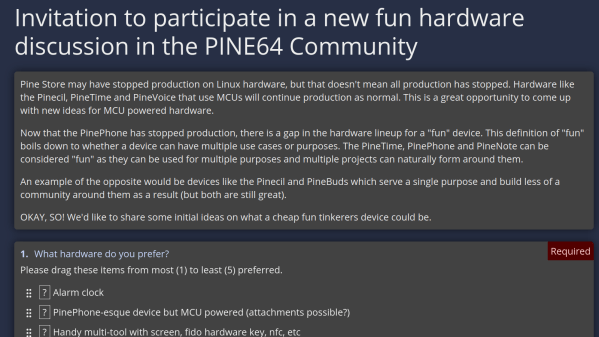
Screenshot of the survey webpage, saying "Invitation to participate in a new fun hardware discussion in the PINE64 Community Pine Store may have stopped production on Linux hardware, but that doesn't mean all production has stopped. Hardware like the Pinecil, PineTime and PineVoice that use MCUs will continue production as normal. This is a great opportunity to come up with new ideas for MCU powered hardware. Now that the PinePhone has stopped production, there is a gap in the hardware lineup for a "fun" device. This definition of "fun" boils down to whether a device can have multiple use cases or purposes. The PineTime, PinePhone and PineNote can be considered "fun" as they can be used for multiple purposes and multiple projects can naturally form around them. An example of the opposite would be devices like the Pinecil and PineBuds which serve a single purpose and build less of a community around them as a result (but both are still great). OKAY, SO! We'd like to share some initial ideas on what a cheap fun tinkerers device could be. 1.What hardware do you prefer?Required Please drag these items from most (1) to least (5) preferred. ?Alarm clock ?PinePhone-esque device but MCU powered (attachments possible?) ?Handy multi-tool with screen, fido hardware key, nfc, etc ?Other (next question) ?MP3 player"

What Should Pine64 Build With Microcontrollers?

Pine64 is an open-source-community-centered project of mostly-open hardware, known for such hits as the PinePhone, the Pinecil soldering iron, and the PineTime. Now, the Pine64 project wants to know what kind of MCU-powered device you’d want to see built next, and there’s an online form you can fill out to let them know about any fun ideas they could bring to reality, as we all recover from the second round of Hardware Horrors Of 2020s.

In the age of RAM and storage shortage, it’s evident we’re not about to see a new Pine64 Linux SBC – but there’s plenty that can be done with regular microcontrollers, especially seeing how far modern microcontrollers have come in capabilities. On their Discord server and other linked platforms, you can see the announcement post giving you more details, as well as examples of devices that would fit the bill. An MP3 player? An alarm clock? Some sort of electronics multi-tool? PinePhone-esque device but based on an MCU? Digital camera? Whether you have full-on device ideas or specific feature requests for the aforementioned, check out the form and let them know.

Of course, any suggestions will ultimately have to be considered for viability by the Pine Store, the Pine64 hemisphere that actually decides on what to manufacture, so no promises can be made, but we consider this more than promising enough that you ought to have a say. Pine64 has come incredibly far in the 10 years it’s been around, and despite the troubles, we hope they’re here to stay, doing their thing releasing hardware that so often runs circles around the competition, and dropping by hacker cons all over the globe.

Commodore 128 Becomes Marine Vessel Tracker

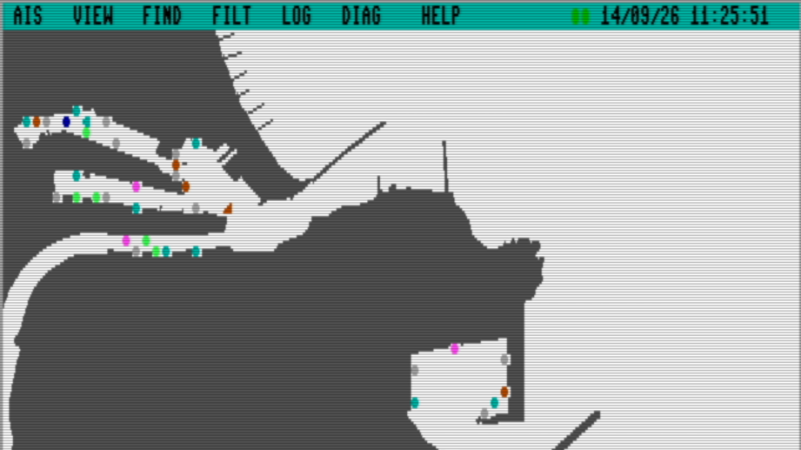
The Automatic Identification System (AIS) is a maritime radio communications tool used to allow different vessels to identify each other and communicate their movements and other telemetry. You can readily view a variety of AIS trackers online. Alternatively, you could build your own, and display the data on a retrocomputer from 40-plus years ago.

The concept is straightforward enough—it’s a Commodore 128 displaying vessel tracks from AIS data. The team behind AIS4CBM implemented this with assembly code to receive data over serial, parse and decode the AIS reports, and manage vessel data. Meanwhile, the front end is coded in BASIC 8, which provides useful graphic routines for plotting vessels on a map. There’s also a BASIC 7 text interface if you prefer to view the vessel data that way.

It’s worth noting that you can’t just run this on a barebones C128. AIS4CBM requires a 512 KiB REU RAM expansion, as well as 64 KiB VDC memory. You also need a SwiftLink compatible serial interface to get the data into the machine in the first place from your AIS receiver or other source. The project website notes that an Ultimate-II+ unit is a great way to fulfill most of these requirements with a single piece of hardware.

If you dig the project, you can check out a live stream from the C128 doing its thing below. We wouldn’t recommend a Commodore 128 if you’re a harbor master or otherwise commanding ships on the water. Still, it’s a fun project, and much like the NES that was set up to track planes with ADS-B data. Video after the break.

Continue reading “Commodore 128 Becomes Marine Vessel Tracker” →









