Chilling A Hot Camera

[Eric]’s camera has a problem. It overheats. While this wouldn’t be an issue if [Eric] was taking one picture at a time, this camera also has a video mode, which is supposed to take several pictures in a row, one right after the other. While a camera that overheats when it’s used is probably evidence of poor thermal engineering, the solution is extremely simple: strap a gigantic heat sink to the back. That’s exactly what [Eric] did, and the finished product looks great.

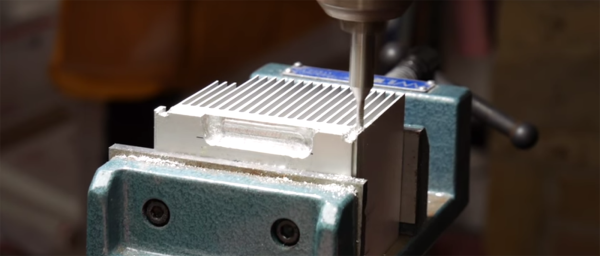
The heatsink chosen for this application is a gigantic cube of aluminum, most likely taken from an old Pentium 4 CPU cooler. Of course, there’s almost no way [Eric] would have found a sufficiently large heat sink that would precisely fit the back of his camera, which meant he had to mill down the sides of this gigantic heat sink. [Eric] actually did this in his drill press using a cross slide vice and an endmill. This is surely not the correct, sane, or safe way of doing things, but we’ll let the peanut gallery weigh in on that below.

The heatsink is held on by a technique we don’t see much around here — wire bending. [Eric] used 0.055″ (1.3 mm) piano wire, and carefully bent it to wrap around both the heatsink and the camera body. Does the heatsink cool the camera? Yes, and the little flip-up screen of the camera makes this camera a very convenient video recording device. You can check out the video of this build below.
Continue reading “Chilling A Hot Camera”

Three Magnets Make Fidget Spinners Amazing And Only Engineers Will Appreciate This Hack!

The fidget spinner posts will continue until morale improves. This time, we’re looking at [TannerTech]’s electromagnetic accelerator for a fidget spinner. [Tanner] can spin his fidget spinner electronically using parts he had sitting around and a clever application of magnets and relays! Engineers hate him!

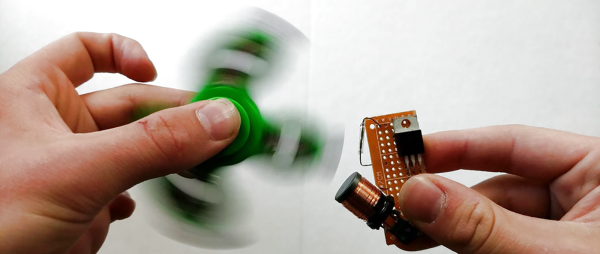
[Tanner]’s build consists of three magnets mounted on the tip of a fidget spinner’s arms, with the North pole facing outwards. The ‘drive circuit’ consists of an electromagnet — an inductor [Tanner] found in an old TV set — a reed switch, and a MOSFET. When the circuit is placed next to the fidget spinner, the reed switch closes, powering the electromagnet, pushing the tip of the fidget spinner forward, and starting the cycle anew. Think of it as the same technology that goes into a particle accelerator or a maglev train. Or a brushless DC motor.

Haven’t gotten your daily fill of fidget spinner hacks and fidget spinner news? Don’t worry, because we got your back, fam. Check out this amazing way to teach STEAM education — the ‘A’ stands for ‘arts’ — with the help of fidget spinner shaped PCBs and a flanged bearing. Is your oscilloscope too boring? Spice it up with some fidget spinner awesomeness. Useless machines are cool, and even [Marvin Minsky], the father of Artificial Intelligence, would say this fidget spinner hack is amazing. Like, share, and subscribe for the latest in fidget spinner news.

It’s great, if slightly ironic, to see people doing something other than fidgeting with their fidget spinners. Who would have thought a fad that began as a few extra skateboard bearings and a 3D-printed blob of plastic would beget so many truly interesting hacks? You can check out [Tanner]’s build video of this amazing hack below.

Continue reading “Three Magnets Make Fidget Spinners Amazing And Only Engineers Will Appreciate This Hack!”

The 3D Printer Packing Problem

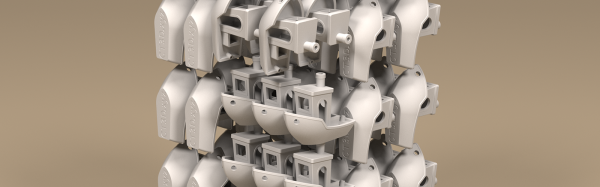
Form Labs recently announced the launch of the Fuse 1, a desktop SLS printer that will print all your parts using nylon powder and a laser. This a fundamentally different method of 3D printing as compared to filament-based machines, and the best way to use a Fuse 1 is to fill the entire volume of the machine with 3D printed parts. [Michael Fogelman] decided to investigate the 3D packing problem, and managed to fill this printer with the maximum number of 3D printed tugboats. If you’re wondering, it’s 113, as compared with 82 tiny Benchies using naive bin packing.

The formal definition of this sort of problem is the bin packing problem, or simply calculating the maximum number of items can be packed into a finite volume. There is no general solution to this problem, and it’s probably impossible to create an algorithm that will solve this problem for any collection of 3D models. Nevertheless, it’s possible to create a solution that shows marked improvement over a naive solution.

[Michael]’s solution involves simulated annealing. This algorithm begins by randomly placing tugboats, then mutating the position or rotation of one of the boats for each iteration. The code is less than 1000 lines of Go and is available on GitHub if you already have an SLS printer at your disposal.

It should be noted this type of problem isn’t particularly new to the world of 3D printers. There have been a few tools to solve the bin-packing problem for filament-based printers, but the solutions to these problems are two-dimensional; since filling a bed is a problem that only uses the ‘shadow’ of the Z-axis of each part, it’s a slightly easier problem to solve.

Now that Form Labs’ Fuse 1 SLS printer has been announced, there is a new application for this type of problem in the space of 3D printers. It’s not a perfect solution — and it’s doubtful there will ever be a perfect solution — but if you’re looking for a way to fill the volume of your powder printer with parts, this is the best you’re going to do.

Best Product Entry: Pocket Thermal Camera

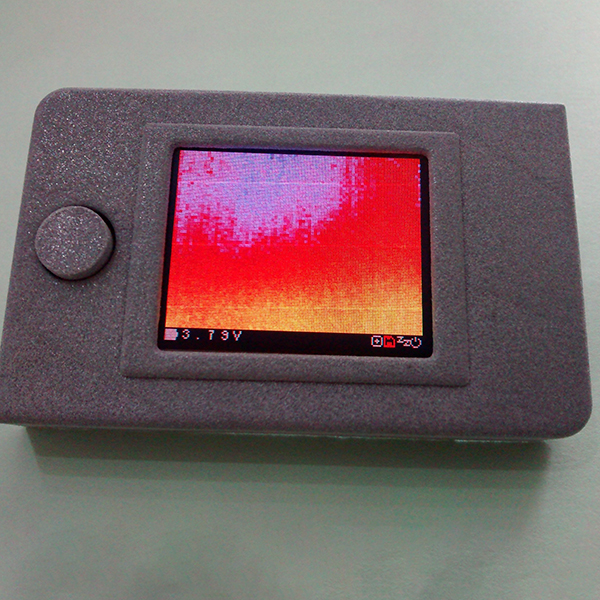
One of the entries in the Hackaday Prize Best Product competition is [x-labz]’s pocket thermal imager. It’s more than a prototype, it’s a design conceived to get out into the world and be used by many. Best Product entries are open until July 24th, and with a $30,000 cash prize on the line let’s take a look at some of the things that elevate a project to product status.

Thanks to recent advances in the state of thermal image sensors, a tool that gives you Predator vision is almost a necessity on the modern workbench. The pocket thermal imager will find drafts in your house during winter, will tell you how to cook a steak, figure out what part is shorting out in your latest electronics project, and will tell you how terrible the heated bed is on your 3D printer.

[x-labz]’s thermal camera is based around the FLIR Lepton image sensor, an 80×60 pixel thermal imaging sensor that’s good enough for most uses. This camera is soldered onto a PCB sandwich containing an Atmel SAMD21 microcontroller, full-color OLED display, SD card, and a battery management system.

What we’ve mentioned so far isn’t out of the ordinary for any other entry in the Hackaday Prize. Building something for the Best Product competition is different, though: a lot of thought has to go into the manufacturability and the fit and finish of this device. So far, everything’s looking great for [x-labz]’s camera. There’s a 3D printed case that looks like it could be easily translated into an injection-moldable shell and at least some of the parts of the user interface are unbelievably satisfying. We’re looking forward to seeing the full Bill of Materials and a business plan (a new requirement this year). That’s an area where many hardware designers lack experience; being able to study the examples from Best Product entries will be a welcomed resource.

There’s a world of difference between building a project and building a product, and the entire goal of the Best Product portion of the Hackaday Prize is to reward those people who go the extra mile as aspiring entrepreneurs and show us how that’s done. $50k in cash prizes are set aside for Best Product; $30,000 for the winner as we mentioned before, but there is also $1000 for each of the twenty entries that make it to the finals in this category in addition to some much deserved notoriety from Hackaday’s community of hardware aficionados and early adopters.

Friday Hack Chat: Climate Change

This Friday, we’re talking climate change. Is it possible to remove carbon from the atmosphere before most cities are underwater? What role can hackers play in alleviating climate change? It’s all going down this Friday on the Hack Chat on Hackaday.io

We’ve invited [Tito Jankowski] and [Matthew Eshed] to talk about climate change this Friday over on hackaday.io. [Tito] and [Matthew] are the founders of Impossible Labs, and they’re looking for ways to find, test, and build technology that will remove carbon from Earth’s atmosphere. Their goal is to return the earth’s atmosphere to 300 parts per million of carbon dioxide by 2050. Will they succeed? If someone doesn’t, you can kiss every coastal city goodbye.

Their first job is getting everyone to care. [Jankowski] thinks it can be done through better access to information and snazzy graphics — if people knew what was going on, maybe they’d give a darn. So whether you’d like to talk graphics and data or the engineering of carbon sequestration devices, this is a Hack Chat of global importance. Join us!

Here’s How To Take Part:

join-hack-chatOur Hack Chats are live community events on the Hackaday.io Hack Chat group messaging. This Hack Chat will take place at noon Pacific time on Friday, June 30th. Confused about where and when ‘noon’ is? Here’s a time and date converter!

Log into Hackaday.io, visit that page, and look for the ‘Join this Project’ Button. Once you’re part of the project, the button will change to ‘Team Messaging’, which takes you directly to the Hack Chat.

You don’t have to wait until Friday; join whenever you want and you can see what the community is talking about.

The Computer Of Yesterday, Today

There are a handful of computers that have become true museum pieces. The Altair, of course, is tucked away in the Smithsonian’s warehouse waiting for some time in the future when Apple’s legacy fades or until there’s a remake of War Games. Likewise, the French Micral and American SCELBI are important historical artifacts, and even a modern component-accurate reproduction of an Apple I could fetch a decent amount of cash at the right auction.

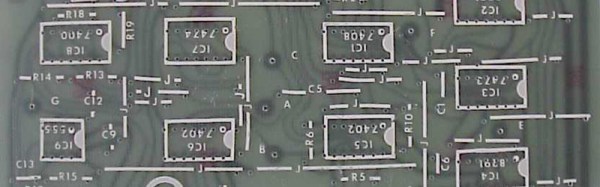
There’s something special about these old kit computers – even though the instructions for these machines provided volumes of documentation, no one is building these machines anymore. You just can’t buy the PCBs, and sourcing period-correct components is hard. [Brad] is an exception. He found original, untouched PCBs for the cover story of the July, 1974 edition of Radio-Electronics. It’s an unbuilt Mark-8 minicomputer. Now [Brad] is in a position no one else has been in since the 1970s: he can build a vintage minicomputer, with a TV Typewriter, from scratch. He’s documenting the whole thing.

Since this is the first opportunity this century anyone has had to build a truly retro minicomputer, [Brad] is going all-in with this project. For an interface, he’s building [Don Lancaster]’s TV Typewriter, a device introduced in the September 1973 issue Radio-Electronics. When combined with an old CRT TV, the TV Typewriter becomes a serial terminal. While today something like this could be built around a single microcontroller, constructing the TV Typewriter is no small feat: it’s spread across four boards, uses character generator ROMs, and is currently housed in a beautiful red oak case.

Just because [Brad] is building an ancient computer using ancient parts doesn’t mean he can’t get a little help from modern technology. He’s applying white silk screen to his custom TV Typewriter boards using the toner transfer process. Yes, apparently you can get toner cartridges filled with white (and neon!) toner, and this works well enough to replicate the look of professionally silk screened boards.

This is one of the greatest retrocomputing projects we’ve seen in a very long time. This is a true retrocomputer, complete with custom transformers and gigantic linear power supplies. When this project is complete, [Brad] will have a museum piece, all thanks to a lucky find of an eBay auction and a lot of hard work.

CastAR Shuts Doors

Polygon reports CastAR is no more.

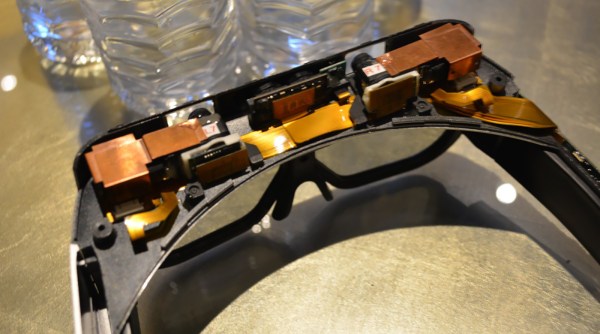
CastAR is the brainchild of renaissance woman [Jeri Ellsworth], who was hired by Valve to work on what would eventually become SteamVR. Valve let [Jeri] go, but allowed her to take her invention with her. [Jeri] founded a new company, Technical Illusions, with [Rick Johnson] and over the past few years the CastAR has appeared everywhere from Maker Faires to venues better focused towards innovative technologies.

In 2013, Technical Illusions got its start with a hugely successful Kickstarter, netting just north of one million dollars. This success drew the attention of investors and eventually led to a funding round of $15 million. With this success, Technical Illusions decided to refund the backers of its Kickstarter.

We’ve taken a look a CastAR in the past, and it’s something you can only experience first-hand. Unlike the Oculus, Google Cardboard, or any of the other VR plays companies are coming out with, CastAR is an augmented reality system that puts computer-generated objects in a real, physical setting. Any comparison between CastAR and a VR system is incomplete; these are entirely different systems with entirely different use cases. Think of it as the ultimate table top game, or the coolest D&D game you could possibly imagine.