LVL1 Has A Rocketeers Group, Is Not Working On ICBMs.

We’re very familiar with the Louisville Hackerspace LVL1 here at Hackaday. From their GLaDOS-inspired sentient overlord, an evil box to filter the Internet, and a friggin’ moat, LVL1 is the closest we’ve got to a mad scientist heard cackling from a wind-swept castle on a stormy night. It turns out they also have a rocketry program. Now we’re just waiting for confirmation of their subterranean complex of missile silos.

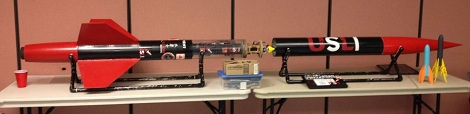
The rocketery-oriented part of LVL1 spawned from a University of Louisville’s group. The goal of the group is to compete in the NASA University Student Launch Initiative, dedicated to competing against other teams to launch a scientific payload to 1 mile AGL. At the competition last May, the team placed 5th out of 42 teams and won the award for best website. We can’t wait to see what they come up with next year.

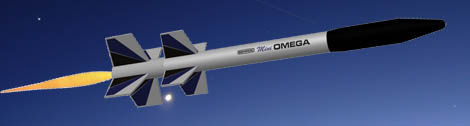
Even though the team is out of school for the summer, they’re still cooking up a few rocketry hacks. They’ve built a test stand to measure the thrust of off-the-shelf motors, kitbashed a few Estes Baby Berthas (very awesome and very easy if you have a laser cutter), and are starting a pulse jet project.

We’re assuming the LVL1 Rocketeers group is just a front for their yet to be unveiled moon-based “laser” project, but you can check out a few videos from the ULSI competition after the break.

Continue reading “LVL1 Has A Rocketeers Group, Is Not Working On ICBMs.”

Android Oscilloscope Built From Parts Just Lying Around

So you need to debug a circuit and you don’t have an oscilloscope. That’s not a problem thanks to [retronics] $0 Android oscilloscope, made with parts he just happened to have lying around.

The heart of every modern oscilloscope is the ADC – the chip that takes analog input and outputs a digital signal. Every Android device has one of these converters connected to the microphone port. All [retronics] needed to do was solder up a 3mm headphone jack, wire in a few resistors, and attach a pair of alligator clips. After installing an oscilloscope app, [retronics] had a half decent ‘scope.

Yes, this is truly a poor man’s oscilloscope, and [retronics] probably won’t be debugging high frequency RF circuits with his Android microphone jack anytime soon. Low frequency stuff such as audio is where this ‘scope really excels; even more so if a small preamp is thrown into the mix.

You can check out [retronics]’ build after the break. Sure, it’s not something for precise and calibrated measurement, but sometimes you only need a tool that will do the job.

Continue reading “Android Oscilloscope Built From Parts Just Lying Around”

Printing A Boat Made Out Of Milk Jugs

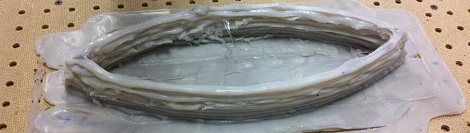
Today, groups from all over the Pacific Northwest will take up their oars and head over to Green Lake for the 42nd annual Seafair Milk Carton derby. The team who builds the fastest boat made out of milk cartons wins the regatta (and $10,000). This year, we’d put our money on the 3D printer group from the University of Washington; they printed a boat large enough to carry a person using crushed melted milk jugs.

After building a huge extruder to feed shredded HDPE plastic through a nozzle, the team repurposed an old plasma cutter to serve as an 8-foot-long 3D printer. There were a number of problems the team ran into – getting layers to fuse together, finding a suitable printing surface, and perfecting the art of squeezing melted milk jugs through a heated metal tube – but the final result is impressive, to say the least.

As far as how lake-worthy the UW team’s boat is, we have no idea. The milk jug regatta will be held later today, and if you have an update of how the team fared, send us a tip.

Sorting Resistors With Speech Recognition

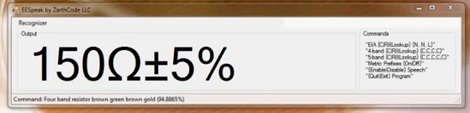
If you’ve ever had to organize a bunch of resistors, you’ll know why [Anthony] created EESpeak. It’s a voice-controlled component look up tool that calculates a component value by listening to you read out color code bands.

In his demo video of EESpeak, [Anthony] reads off the color bands of several resistors whilst the program dutifully calculates and displays the value. [Anthony] also included support for calculating the value of capacitors and inductors by speaking the color bands, as well as EIA-96 codes for SMD parts.

In addition to taking speech input and flashing a component value on the screen, EESpeak also has a text-to-speech function that will tell you what a component without ever having to look at your monitor.

Even though the text-to-speech function seems a little cumbersome – it takes much longer for a computer to speak a value than to display it on the screen – using voice recognition to calculate component values is an awesome idea. With an extremely limited vocabulary the computer has to understand, the error rate of EESpeak is probably very low.

You can check out [Anthony]’s demo video after the break, and of course download the app on his blog.

Continue reading “Sorting Resistors With Speech Recognition”

Hackaday Links: July 13, 2012

Testing LEDs

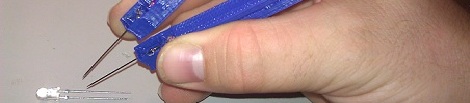
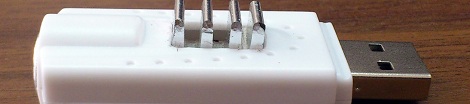
Over at the Albuquerque, NM hackerspace Quelab, [Alfred] needed to test a bunch of surface mount LEDs. He ended up building a pair of 3D printed tweezers with a pair of needles attached to the end and a space for a coin cell battery. It works and Quelab got a new tool.

Woo Raspberry Pi

[tech2077] added an FTDI chip to his Raspberry Pi to do a little single cable development. We’ve seen a few similar builds, but surprisingly nothing related to the on board display serial interface. This wiki page suggests it’s possible to connect an iPhone 3G or iPhone 4 display directly to the Raspi. Does anyone want to try that out?  Nevermind, but it would be cool to get a picture from a display plugged into that display port on the Raspi.

I like to ride my bicycle, I like to ride my bike

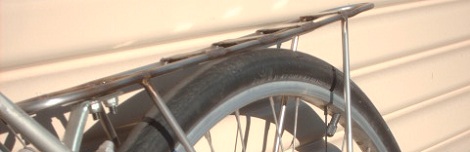
Over at the 23b hackerspace a few people were having trouble finding a good bike cargo rack that wasn’t overpriced. They built their own with $30 in materials and a salvaged milk crate. It looks great and is most likely a lot more durable than the Walmart model.

If that cargo rack fell off, it would look like this

Apparently you can get ‘spark cartridges’ to attach to the underside of a skateboard. [Jim] saw these would look really cool attached to his bike so he did the next best thing. He attached them to his sandals. It does look cool…

Less heat, less noise

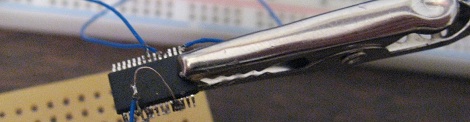
[YO2LDK] picked up a TV tuner dongle for software radio and found it overheated and stopped working after about 15 minutes (Romanian, Google Translate). He hacked up a heat sink from an old video card to solve this problem. Bonus: the noise was reduced by a few tenths of a dB.

Playing Pong Or Breakout On The Nexus Q

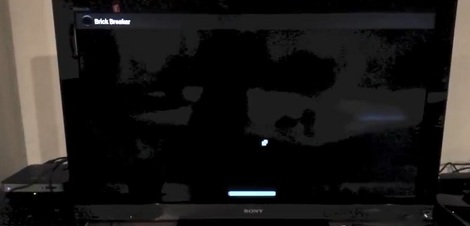
Since Google announced the Nexus Q media streaming device at the Google developers conference a few weeks ago, a lot of devs have been toying around with the idea of running Android apps on this small media sphere. [Det] over at BrickSimple threw his hat into the ring with a Pong and/or Breakout app that showcases the huge rotary volume knob on the Q.

The Nexus Q was hacked into running proper Android apps not long after it made its way into the hands of Google IO conference attendees. Of course with no way to get user input into Google’s little sphere, that hack was of questionable utility. Recently, [kornyone] over on the XDA developers forum got USB HID input on the Q, allowing for full mouse and keyboard support.

Not much has been said about the Q’s most prominent physical feature, the half hemisphere rotary encoder that serves as the volume knob. To build his Pong/Breakout clone, [Det]’s app simply responds to volume up/volume down events by moving the paddle to the left or right.

A neat build, and hopefully we’ll see a few more Nexus Q hacks in short order.

Launching Rockets And Recording Video

Since we put out a call for model and amateur rocketry hacks, we’ve been getting a lot of submissions on our tip line. Here’s two that found their way to us yesterday:

Upgrading an original

Back in the early 70s, Estes released a rocket with an 8mm movie camera attached to the nose of the rocket. It was called the Estes Cineroc, and is an excellent demonstration of engineering prowess to fit a movie camera inside a cardboard tube. The Cineroc is somewhat of a collector’s item, so of course there’s a reproduction kit with a payload bay large enough for [Bob Marchese]’s 808 key fob video camera. His launch video looks awesome, has color, and doesn’t need to be mailed off to Estes to be developed.

Much better than a lightbulb and a button

Remember the old yellow (or blue, and I think maybe a red one) push-button launch controller? Equipped with an arming key (a piece of wire), batteries, and a button, that controller wasn’t much to write home about. [Joe Niven] built his own launch controller with multiple LED lights, buzzer, continuity checker, and a battery tester. Not bad for a 555 and a pair of 4000-series logic chips.