Levitating Lego Generator Runs On Air

[Jamie] decided to build a generator, and Lego is his medium of choice. Thus was created a fancy levitating generator that turns a stream of air into electricity. 

The basic concept is simple enough for a generator—magnets moving past coils to generate electricity. Of course, Lego doesn’t offer high-strength magnetic components or copper coils, so this generator is a hybrid build which includes a lot of [Jamie’s] non-Lego parts. Ultimately though, this is fun because of the weird way it’s built. Lego Technic parts make a very crude turbine, but it does the job. The levitation is a particularly nice touch—the build uses magnets to hover the rotor in mid-air to minimize friction to the point where it can free wheel for minutes once run up to speed. The source of power for this contraption is interesting, too. [Jamie] didn’t just go with an air compressor or a simple homebrew soda bottle tank. Instead, he decided to use a couple of gas duster cans to do the job. The demos are pretty fun, with [Jamie] using lots of LEDs and a radio to demonstrate the output.  The one thing we’d like to see more of is proper current/voltage instrumentation—and some measurement of the RPM of this thing!

While few of us will be rushing out to build Lego generators, the video nonetheless has educational value from a mechanical engineering standpoint. Fluids and gases really do make wonderful bearings, as we’ve discussed before. Video after the break.

Continue reading “Levitating Lego Generator Runs On Air”

Building A Sliding Tile Clock

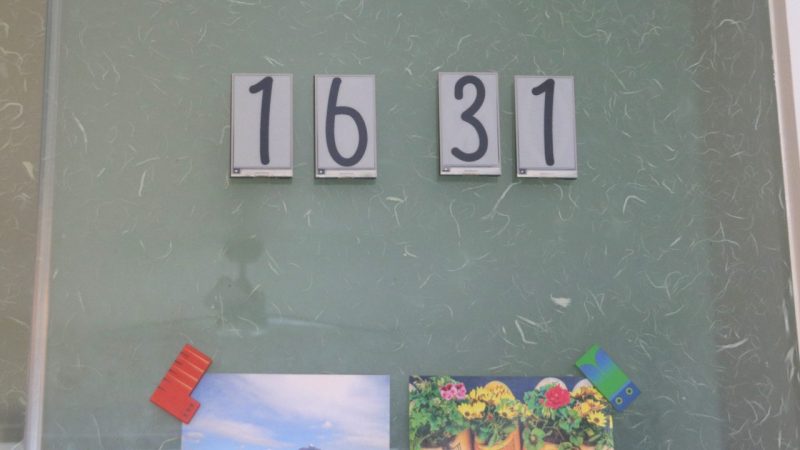
Hackers like making clocks, and we like reporting on them around these parts. Particularly if they’ve got a creative mechanism that we haven’t seen before. This fine timepiece from [gooikerjh] fits the bill precisely—it’s a sliding tile clock!

The brains of the build is an Arduino Nano ESP32. No, that’s not a typo. It’s basically an ESP32 in a Nano-like form factor. It relies on its in-built WiFi hardware to connect to the internet and synchronize itself with time servers so that it’s always showing accurate time. The ESP32 is set up to control a set of four stepper motors with a ULN2003 IC, and they run the neat time display mechanism.

All the custom parts are 3D printed, and the sliding tile concept is simple enough. There are four digits that show the time. Each digit contains number tiles that slide into place as the digit rotates. To increment the digit by one, it simply needs to be rotated 180 degrees by the relevant stepper motor, and the next number tile will slide into place.

We love a good clock at Hackaday—the more mechanical, the better. If you’re cooking up your own nifty and enigmatic clocks at home, don’t hesitate to drop us a line!

A SNES CPU Replacement Via FPGA

Let’s say you had a SNES with a busted CPU. What would you do? Your SNES would be through! That is, unless, you had a replacement based on an FPGA. [leonllr] has been developing just such a thing.

The project was spawned out of necessity. [leonllr] had purchased a SNES which was struck down with a dead CPU—in particular, a defective S-CPU revision A. A search for replacements only found expensive examples, and ones that were most likely stripped from working machines. A better solution was necessary.

Hence, a project to build a replacement version of the chip using the ICE40HX8K FPGA. Available for less than $20 USD, it’s affordable, available, and has enough logic cells to do the job. It’s not just a theoretical or paper build, either. [leonllr] has developed a practical installation method to hook the ICE40HX8K up to real hardware, which uses two flex PCBs to go from the FPGA mainboard to the SNES motherboard itself. As for the IP on the FPGA, the core of the CPU itself sprung from the SNESTANG project, which previously recreated the Super Nintendo on Sipeed Tang FPGA boards. As it stands, boards are routed, and production is the next step.

It’s nice to see classic hardware resurrected by any means necessary. Even if you can’t get a whole bare metal SNES, you might be able to use half of one with a little help from an FPGA. We’ve seen similar work on other platforms, too. Meanwhile, if you’re working to recreate Nintendo 64 graphics chips in your own basement, or something equally weird, don’t hesitate to let us know!

Supercon 2024: Yes, You Can Use The Controller Area Network Outside Of Cars

Ah, the CAN bus. It’s become a communication standard in the automotive world, found in a huge swathe of cars built from the mid-1990s onwards. You’ll also find it in aircraft, ships, and the vast majority of modern tractors and associated farm machines, too.

As far as [Randy Glenn] is concerned, though, the CAN bus doesn’t have to be limited to these contexts. It can be useful far beyond its traditional applications with just about any hardware platform you care to use! He came down to tell us all about it at the 2024 Hackaday Supercon.

Continue reading “Supercon 2024: Yes, You Can Use The Controller Area Network Outside Of Cars”

Supercon 2024: A New World Of Full-Color PCBs

Printed circuit boards were once so simple. One or two layers of copper etched on a rectangular fiberglass substrate, with a few holes drilled in key locations so components could be soldered into place. They were functional objects, nothing more—built only for the sake of the circuit itself.

Fast forward to today, and so much has changed. Boards sprout so many layers, often more than 10, and all kinds of fancy geometric features for purposes both practical and pretty. But what catches they eye more than that, other than rich, saturated color? [Joseph Long] came to the 2024 Hackaday Supercon to educate us on the new world of full color PCBs.

Continue reading “Supercon 2024: A New World Of Full-Color PCBs”

Designing A Portable Mac Mini

When Apple first launched the Macintosh, it created a new sort of “Lunchbox” form factor that was relatively portable and very, very cool. Reminiscent of that is this neat portable Macintosh Mini, created by [Scott Yu-Jan].

[Scott] has created something along these lines before—putting an iPad dock on top of a Macintosh Studio to create a look vaguely reminiscent of the very first Macintosh computers. However, that build wasn’t portable—it wasn’t practical to build such a thing around the Macintosh Studio. In contrast, the Mac Mini is a lithe, lightweight thing that barely sups power—it’s much more suitable for a “luggable” computer.

The build relies on a 3D printed enclosure that wraps around the Mac Mini like a glove. Inside, there’s a chunky 20,800 mAh power bank with enough juice to run the computer for over three hours. Just like the original Mac, there’s a handle on top, too. The build’s main screen is actually an iPad Mini, hooked up to the Mac Mini. If you want to use it separately, it can be popped out just by pushing it via a cutout in the bottom of the enclosure.

[Scott] notes that it’s cool, but not exactly practical—it weighs seven pounds, mostly due to the weight of the heavy power bank. We’ve featured [Scott’s] stylish builds before, too, like this nice iPhone dock.

Continue reading “Designing A Portable Mac Mini”

LED Filaments Become Attractive Time Piece

There are a million ways to use LEDs to make a clock. [sjm4306] chose to go a relatively conventional route, making something that approximates a traditional analog timepiece. However, he did it using LED filaments to create a striking and unique design. Thus the name—FilamenTIME!

LED filaments are still relatively new on the scene. They’re basically a bunch of tiny LEDs mounted in a single package to create a single “filament” of light that appears continuous. It’s great if you want to create a bar of light without messing around with populating tons of parts and having to figure out diffusion on your own.

[sjm4306] used them to create glowing bar elements in a clock for telling the time. The outer ring contains 60 filaments for the 60 minutes in an hour, while the inner ring contains 12 filaments to denote the hours themselves. To handle so many LEDs, there are 9 shift registers on board. They’re driven by an ATmega328P which runs the show, with a DS3232MZ real-time clock onboard for keeping time.  As you might imagine, creating such a large circular clock required a large PCB—roughly a square foot in size. It doesn’t come cheap, though [sjm4306] was lucky enough to have sponsorship to cover the build. [sjm4306] is still working on the firmware, and hopes to build a smaller, more compact version, which should cut costs compared to the large single board.

It’s a neat clock, and we’d know, having seen many a timepiece around these parts. Video after the break.

Continue reading “LED Filaments Become Attractive Time Piece”