Reviewing Nuclear Accidents: Separating Fact From Fiction

Few types of accidents speak as much to the imagination as those involving nuclear fission. From the unimaginable horrors of the nuclear bombs on Nagasaki and Hiroshima, to the fever-pitch reporting about the accidents at Three Mile Island, Chernobyl and Fukushima, all of these have resulted in many descriptions and visualizations which are merely imaginative flights of fancy, with no connection to physical reality. Due to radiation being invisible with the naked eye and the interpretation of radiation measurements in popular media generally restricted to the harrowing noise from a Geiger counter, the reality of nuclear power accidents in said media has become diluted and often replaced with half-truths and outright lies that feed strongly into fear, uncertainty, and doubt.

Why is it that people are drawn more to nuclear accidents than a disaster like that at Bhopal? What is it that makes the one nuclear bomb on Hiroshima so much more interesting than the firebombing of Tokyo or the flattening of Dresden? Why do we fear nuclear power more than dam failures and the heavy toll of air pollution? If we honestly look at nuclear accidents, it’s clear that invariably the panic afterwards did more damage than the event itself. One might postulate that this is partially due to the sensationalist vibe created around these events, and largely due to a poorly informed public when it comes to topics like nuclear fission and radiation. A situation which is worsened by harmful government policies pertaining to things like disaster response, often inspired by scientifically discredited theories like the Linear No-Threshold (LNT) model which killed so many in the USSR and Japan.

In light of a likely restart of Unit 1 of the Three Mile Island nuclear plant in the near future, it might behoove us to wonder what we might learn from the world’s worst commercial nuclear power disasters. All from the difficult perspective of a world where ideology and hidden agendas do not play a role, as we ask ourselves whether we really should fear the atom.

Continue reading “Reviewing Nuclear Accidents: Separating Fact From Fiction”

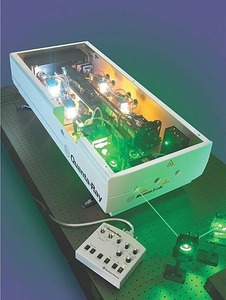
Sketch of the UED setup at EPFL, 1) Electron gun, 2) High-Voltage connector, 3) Photo-cathode, 4) Anode, 5) Collimating solenoid, 6) Steering plates, 7) Focusing solenoid, 8) RF cavity, 9) Sample holder, 10) Cryostat, 11) Electron detector, 12) Turbo pump, 13) Ion gauge. Credit: Proceedings of the National Academy of Sciences (2024). DOI: 10.1073/pnas.2316438121

Using Femtosecond Laser Pulses To Induce Metastable Hidden States In Magnetite

Hidden states are a fascinating aspect of matter, as these can not normally be reached via natural processes (i.e. non-ergodic), but we can establish them using laser photoexcitation. Although these hidden states are generally very unstable and will often decay within a nanosecond, there is evidence for more persistent states in e.g. vanadates. As for practical uses of these states, electronics and related fields are often mentioned. This is also the focus in the press release by the Ecole Polytechnique Federale de Lausanne (EPFL) when reporting on establishing hidden states in magnetite (Fe3O4), with the study published in PNAS (Arxiv preprint link).

[B. Truc] and colleagues used two laser frequencies to either make the magnetite more conductive (800 nm) or a better insulator (400 nm). The transition takes on the order of 50 picoseconds, allowing for fairly rapid switching between these metastable states. Naturally, turning this into practical applications will require a lot more work, especially considering the need for femtosecond pulsed lasers to control the process, which makes it significantly more cumbersome than semiconductor technology. Its main use at this point in time will remain a fascinating demonstration of these hidden states of matter.

New Additive Manufacturing Contenders: HIP And Centrifugal Printing

Additive Manufacturing (AM) is a field of ever-growing importance, with many startups and existing companies seeking to either improve on existing AM technologies or market new approaches. At the RAPID + TCT 2024 tradeshow it seems that we got two more new AM approaches to keep an eye on to see how they develop. These are powder-based Hot Isostatic Pressing (HIP) by Grid Logic and centrifugal 3D printing by Fugo Precision.

Grid Logic demo at RAPID + TCT 2024. (Credit: Ian Wright)

Grid Logic’s HIP uses binder-less powders in sealed containers that are compressed and deposited into a HIP can according to the design being printed, followed by the HIP process. This is a common post-processing step outside of AM as well, but here HIP is used as the primary method in what seems like a budget version of typical powder sintering AM printers. Doubtlessly it won’t be ‘hobbyist cheap’, but it promises to allow for printing ceramic and metal parts with minimal wasted powder, which is a major concern with current powder-based sintering printers.

While Grid Logic’s approach is relatively conservative, Fugo’s Model A printer using centrifugal printing is definitely trying to distinguish itself. It uses 20 lasers which are claimed to achieve 30 µm accuracy in all directions with a speed of 1 mm/minute. It competes with SLA printers, which also means that it works with photopolymers, but rather than messing with FEP film and pesky Earth gravity, it uses a spinning drum to create its own gravitational parameters, along with a built-in parts cleaning and curing system. They claim that this method requires 50% fewer supports while printing much faster than competing commercial SLA printers.

Even if not immediately relevant to AM enthusiasts, it’s good to see new ideas being tried in the hope that they will make AM better for all of us.

The Continuing Venusian Mystery Of Phosphine And Ammonia

The planet Venus is in so many ways an enigma. It’s a sister planet to Earth and also within relatively easy reach of our instruments and probes, yet we nevertheless know precious little about what is going on its surface or even inside its dense atmosphere. Much of this is of course due to planets like Mars getting all the orbiting probes and rovers scurrying around on its barren, radiation-blasted surface, but we had atmospheric probes descend through Venus’ atmosphere, so far to little avail. Back in 2020 speculation arose of phosphine being detected in Venus’ atmosphere, which caused both excitement and a lot of skepticism. Regardless, at the recent National Astronomy Meeting (NAM 2024) the current state of Venusian knowledge was discussed, which even got The Guardian to report on it.

In addition to phosphine, there’s speculation of ammonia also being detectable from Earth, both of which might be indicative of organic processes and thus potentially life. Related research has indicated that common amino acids essential to life on Earth would be stable even in sulfuric droplets like in Venus’ atmosphere. After criticism to the original 2020 phosphine article, [Jane S. Greaves] et al. repeated their observations based on feedback, although it’s clear that the observation of phosphine gas on Venus is not a simple binary question.

The same is true of ammonia, which if present in Venusian clouds would be a massive discovery, which according to research by [William Bains] and colleagues in PNAS could explain many curious observations in Venus’ atmosphere. With so much uncertainty with remote observations, it’s clear that the only way that we are going to answer these questions is with future Venus missions, which sadly remain rather sparse.

If there’s indeed life on Venus, it’ll have a while longer to evolve before we can go and check it out.

Carbon–Cement Supercapacitors Proposed As An Energy Storage Solution

Although most energy storage solutions on a grid-level focus on batteries, a group of researchers at MIT and Harvard University have proposed using supercapacitors instead, with their 2023 research article by [Nicolas Chanut] and colleagues published in Proceedings of the National Academy of Sciences (PNAS). The twist here is that rather than any existing supercapacitors, their proposal involves conductive concrete (courtesy of carbon black) on both sides of the electrolyte-infused insulating membrane. They foresee this technology being used alongside green concrete to become part of a renewable energy transition, as per a presentation given at the American Concrete Institute (ACI).

Functional carbon-cement supercapacitors (connected in series) (Credit: Damian Stefaniuk et al.)

Putting aside the hairy issue of a massive expansion of grid-level storage, could a carbon-cement supercapacitor perhaps provide a way to turn the concrete foundation of a house into a whole-house energy storage cell for use with roof-based PV solar? While their current prototype isn’t quite building-sized yet, in the research article they provide some educated guesstimates to arrive at a very rough 20 – 220 Wh/m3, which would make this solution either not very great or somewhat interesting.

The primary benefit of this technology would be that it could be very cheap, with cement and concrete being already extremely prevalent in construction due to its affordability. As the researchers note, however, adding carbon black does compromise the concrete somewhat, and there are many questions regarding longevity. For example, a short within the carbon-cement capacitor due to moisture intrusion and rust jacking around rebar would surely make short work of these capacitors.

Swapping out the concrete foundation of a building to fix a short is no small feat, but maybe some lessons could be learned from self-healing Roman concrete.

Las Vegas’ Sphere: Powered By Nvidia GPUs And With Impressive Power Bill

A daytime closeup of the LED pucks that comprise the exosphere of the Sphere in Paradise, Nevada (Credit: Y2kcrazyjoker4, Wikimedia)

As the United States’ pinnacle of extravaganza, the Las Vegas Strip and the rest of the town of Paradise are on a seemingly never-ending quest to become brighter, glossier and more over the top as one venue tries to overshadow the competition. A good example of this is the ironically very uninspiredly named Sphere, which has both an incredibly dull name and yet forms a completely outrageous entertainment venue with a 54,000 m2 (~3.67 acre) wrap-around interior LED display (16 x 16K displays) and an exterior LED display (‘Exosphere’) consisting out of 1.23 million LED ‘pucks’. Although opened in September of 2023, details about the hardware that drives those displays have now been published by NVidia in a recent blog post.

Driving all these pixels are around 150 NVidia RTX A6000 GPUs, installed in computer systems which are networked using NVidia BlueField data processing units (DPUs) and NVidia ConnectX-6 NICs (up to 400 Gb/s), with visual content transferred from Sphere Studios in California to the Sphere. All this hardware uses about 45 kW of power when running at full blast, before adding the LED displays and related hardware to the total count, which is estimated to be up to 28 MW of power and causing local environmentalists grief despite claims by the owner that it’ll use solar power for 70% of the power needs, despite many night-time events. Another item that locals take issue with is the amount of light pollution that the exterior display adds.

Although it’s popular to either attack or defend luxurious excesses like the Sphere, it’s interesting to note that the state of Nevada mostly gets its electricity from natural gas. Meanwhile the 2.3 billion USD price tag for the Sphere would have gotten Nevada 16.5% of a nuclear power station like Arizona’s Palo Verde (before the recurring power bill), but Palo Verde’s reactor spheres are admittedly less suitable for rock concerts.

FDM Filament Troubles: Keeping Hygroscopic Materials From Degrading

Despite the reputation of polymers used with FDM 3D printing like nylon, ABS, and PLA as being generally indestructible, they do come with a whole range of moisture-related issues that can affect both the printing process as well as the final result. While the concept of ‘baking’ such 3D printing filaments prior to printing to remove absorbed moisture is well-established and with many commercial solutions available, the exact extent to which these different polymers are affected, and what these changes look like on a molecular level are generally less well-known.

Another question with such hygroscopic materials is whether the same issues of embrittlement, swelling, and long-term damage inflicted by moisture exposure that affects filaments prior to printing affects these materials post-printing, and how this affects the lifespan of FDM-printed items. In a 2022 paper by Adedotun D. Banjo and colleagues much of what we know today is summarized in addition to an examination of the molecular effects of moisture exposure on polylactic acid (PLA) and nylon 6.

The scientific literature on FDM filaments makes clear that beyond the glossy marketing there is a wonderful world of materials science to explore, one which can teach us a lot about how to get good FDM prints and how durable they will be long-term.

Continue reading “FDM Filament Troubles: Keeping Hygroscopic Materials From Degrading”