Open-Sourcing The Lisa, Mac’s Bigger Sister

Forty years ago, on January 19th of 1983, Apple released the Lisa, which was in many ways a revolutionary system. On January 19th of 2023, to celebrate the system’s 40th birthday, the Computer History Museum released the source code for Lisa OS version 3.1 under the Apple Academic License Agreement. Written in Pascal, the source includes over 1,300 source files, covering the OS itself, the Lisa Toolkit development system and a number of applications. The questions one might ask at this point include what the Apple Lisa even is, and why it was such an important system in computer history.

This especially in light of the terrible flop that the Lisa turned out to be, with only 10,000 units sold over two years. Part of this failure was definitely due to the introductory price, that was set at $9,995 (over $27,000 in 2021 dollars). Although it featured an OS with memory protection, despite the lack of an MMU on the Motorola 68k, among other advanced features that placed it well beyond other desktop computers of the time, it got quickly crushed in the market by Apple’s MacIntosh, even after successive Lisa successor releases that sought to address its shortcomings.

Continue reading “Open-Sourcing The Lisa, Mac’s Bigger Sister”
New Commodore VIC-20 Build

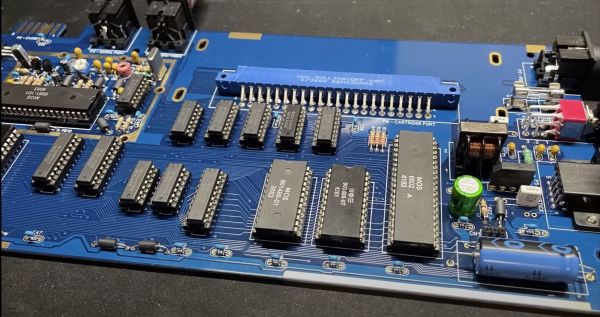
In a recent episode of [The Retro Shack], a new Commodore VIC-20 is built, using a ‘Vicky Twenty’ replacement PCB by [Bob’s Bits] as the base and as many new components as could be found. The occasion for this was that a viewer had sent in a VIC-20 that turned out to be broken, so in order to diagnose it, building a new one with known working parts seemed incredibly useful.

Advantages of the reproduction PCB are a number of board-level fixes that negate the need for certain bodge wires, while also having footprints for a wider range of round DIN connectors. The non-proprietary ICs were obtained along with other standard parts from a retro computing store, while the proprietary Commodore components were scrounged up from your friendly used component selling sites.

The result is what from the outside looks like a genuine VIC-20, and which should prove to be very useful in diagnosing the broken VIC-20 system in the future, as well as presumably to play some games on.

Continue reading “New Commodore VIC-20 Build”

You Can Help Build A Resin Printer Review Database

Picking the best resin (SLA) printer is not an easy task. Every large and small 3D printer manufacturer offers a range of models covering many features that are backed by an equally extensive range of customer support. Although review sites and user feedback on forums can help with making a decision, especially for beginners it can feel like just a wild guess. Even for advanced users, it is a chore to stay on top of all the goings-on within the world of resin printers. This is why [VOG] (VOGMan, formerly VegOilGuy) has started a resin printer review site that asks for feedback from the community.

In the video, [VOG] explains the goal behind the data gathering, how to use the form to submit experiences with a specific resin printer, as well as any communications with the customer support behind these printers. Ultimately this should result in a pretty solid, community-sourced data set that can be used to figure out trends, pin-point issues with specific printers and make statements about which printer manufacturer offers the best customer support.

Continue reading “You Can Help Build A Resin Printer Review Database”

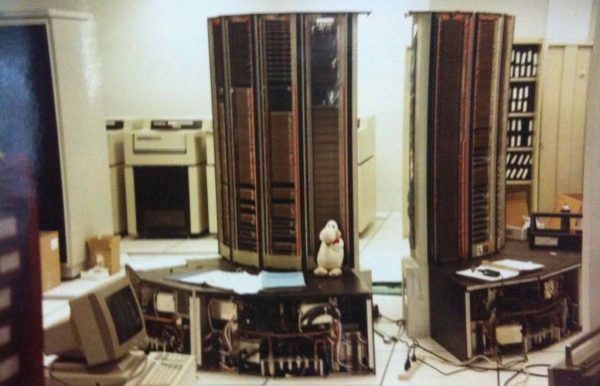
Cray X-MP serial number 302 being assembled (Credit: Andy Gelme)

Running Cray OS And UNICOS On Your Own Cray Simulator Instance

The Cray series of super computers have been pretty much symbolic for high-powered computing since the 1970s, and to this day there’s a certain level of mysticism to them. Much of this is also helped by how rare these systems were and are today. Unlike Commodore, Apple and IBM PC systems which got sold by the truckload, Cray super computers and the much smaller workstation systems were and are significantly more rare. Despite or perhaps because of this [Andras Tantos] embarked on a decade-long quest to bring together what is left of the Cray legacy in the form of the Cray Files.

Part of this is a Cray system simulator that can be found on GitHub as well as online. This simulator allows you to run software written for the Cray X-MP (1982), Y-MP (1988), J90 (1994) and SV1 (1998), which covers essentially all major Cray systems after the Cray 1 and up till when Cray had become part of SGI in 1996. Described in the blog is the extensive archaeological work [Andras] had to undertake to unearth and resurrect these systems. Along the way he got a few lucky breaks, such as when finding two UNICOS CD images on Archive.org, and when people who used to work with Cray systems still had software and such lying around, along with the treasure trove of knowledge contained in their memories.

Although these Cray computer systems are as solidly obsolete as SGI and Sun’s once high-end systems of the 1990s are today, very few would have gotten a chance to use any of those systems, which makes it even more important that they are preserved. As an ongoing project, [Andras] is asking for anyone who might be able to fill in some of the remaining blanks to contact him.

[Heading photo: Cray X-MP serial number 302 being assembled (Credit: Andy Gelme)]

What Else Is An M.2 WiFi Slot Good For?

Many mainboards and laptops these days come with a range of M.2 slots, with only a subset capable of NVME SSDs, and often a stubby one keyed for ‘WiFi’ cards. Or that’s what those are generally intended to be used for, but as [Peter Brockie] found out when pilfering sites like AliExpress, is that you can get a lot of alternate expansion cards for those slots that have nothing to do with WiFi.

Why this should be no surprise to anyone who knows about the M.2 interface is because each ‘key’ type specifies one or more electrical interfaces that are available on that particular M.2 slot. For slots intended to be used with NVME SSDs, you see M-keying, that makes 4 lanes of PCIe available. The so-called ‘WiFi slots’ on many mainboards are keyed usually for A/E, which means two lanes of PCIe, USB 2.0, I2C and a few other, rather low-level interfaces. What this means is that you can hook up any PCIe or or USB (2.0) peripheral to these slots, as long as the bandwidth is sufficient.

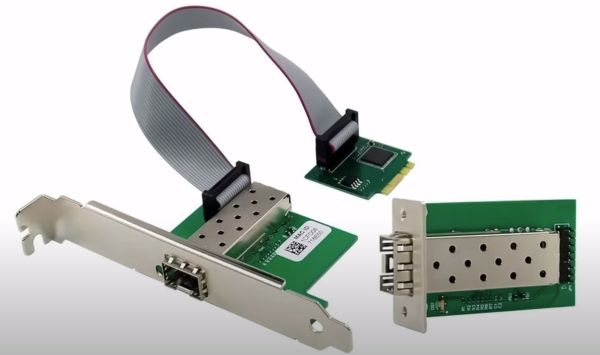
What [Peter] found includes adapter cards that add Ethernet (1 Gb, 2.5 Gb), USB 2.0 ports, SIM card (wireless adapter?), an SFP fiber-based networking adapter, multiple M.2 to 2+ SATA port adapters, tensor accelerator chips (NPUs) and even a full-blown M.2 to x16 PCIe slot adapter. The nice thing about this is that if you do not care about using WiFi with a system, but you do have one of those ports lounging about uselessly, you could put it to work for Ethernet, SFP, SATA or other purposes, or just for hooking up internal USB devices.

Clearly this isn’t a market that has gone unexploited for very long, with a bright outlook for one’s self-designed M.2 cards. Who doesn’t want an FPGA device snuggled in a PCIe x2 slot to tinker with?

Continue reading “What Else Is An M.2 WiFi Slot Good For?”

It’s Not Easy Counting Transistors In The 8086 Processor

For any given processor it’s generally easy to find a statistic on the number of transistors used to construct it, with the famous Intel 8086 CPU generally said to contain 29,000 transistors. This is where [Ken Shirriff] ran into an issue when he sat down one day and started counting individual transistors in die shots of this processor. To his dismay, he came to a total of 19,618, meaning that 9,382 transistors are somehow unaccounted for. What is going on here?

The first point here is that the given number includes so-called ‘potential transistors’. Within a section of read-only memory (ROM), a ‘0’ would be a missing transistor, but depending on the programming of the mask ROM (e.g. for microcode as with a CISC x86 CPU), there can  be a transistor there. When adding up the potential but vacant transistor locations in ROM and PLA (programmable logic array) sections, the final count came to 29,277 potential transistors. This is much closer to the no doubt nicely rounded number of 29,000 that is generally used.

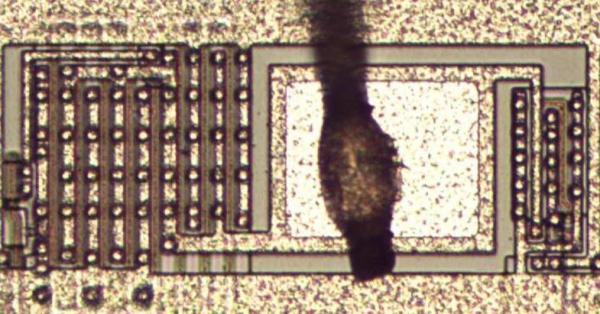
[Ken] also notes that further complications here are features such as driver transistors that are commonly found near bond wire pads. In order to increase the current that can be provided or sunk by a pad, multiple transistors can be grouped together to form a singular driver as in the above image. Meanwhile yet other transistors are used as (input protection) diodes or even resistors. All of which makes the transistor count along with the process node used useful primarily as indication for the physical size and complexity of a processor.

Increasing PV Solar Cell Efficiency Through Cooling

An unavoidable aspect of photovoltaic (PV) solar panels is that they become less efficient when they warm up. [Tech Ingredients] explains in a new video the basic reason for this, which involves the input of thermal energy affecting the semiconductor material. In the subsequent experiment, it is demonstrated how cooling the backside of the panel affects the panel’s power output.

There are commercial solutions that use water cooling on the back of panels to draw heat away from panels, but this still leaves the issues of maintenance (including winter-proofing) and dumping the heat somewhere. One conceivable solution for the latter is to use this heat for a household’s hot water needs. In the demonstrated system a heatsink is installed on the back of the panel, with fans passing cool air over the heatsink fins.

On a 100 Watt PV panel, 10 W was lost from the panel heating up in the sun. After turning on the fans, the panel dropped over 10 °C in temperature, while regaining 5.5 W. Since the installed fans consumed about 3 W, this means that the fans cost no extra power but resulted in increased production. Not only that, but the lower temperatures will in theory extend the panel’s lifetime. Though even with active cooling, even the best of PV panels will need to be replaced after a couple decades.

Continue reading “Increasing PV Solar Cell Efficiency Through Cooling”