A Camera That Signs Off Your Pictures

We’ll admit we’ve kicked around the idea of a camera that digitally signs a picture so you could prove it hasn’t been altered and things like the time and place the photo was taken for years. Apparently, products are starting to hit the market, and Spectrum reports on a Leica that, though it will set you back nearly $10,000, can produce pictures with cryptographic signatures.

This isn’t something Leica made up. In 2019, a consortium known as the Content Authenticity Initiative set out to establish a standard for this sort of thing. The founders are no surprise: The New York Times, Adobe, and Twitter. There are 200 companies involved now, although Twitter — now X — has left.

The problem, the post notes, is that software support is limited. There are only a few programs that recognize and process digital signatures. That’ll change, of course, and — we imagine — if you needed to prove the provenance of a photo in court, you’d just buy the right software you needed.

We haven’t dug into the technology, but presumably keeping the private key secure will be very important. The consortium is clear that the technology is not about managing rights, and it is possible to label a picture anonymously. The signature can identify if an image was taken with a camera or generated by AI and details about how it was taken. It also can detect any attempt to tamper with the image. Compliant programs can make modifications, but they will be traceable through the cryptographic record.

Will it work? Probably. Can it be broken? We don’t know, but we wouldn’t bet that it couldn’t without a lot more reading. PDF signatures can be hacked. Our experience is that not much is truly unhackable.

3D Human Models From A Single Image

You’ve seen it in movies and shows — the hero takes a blurry still picture, and with a few keystrokes, generates a view from a different angle or sometimes even a full 3D model. Turns out, thanks to machine learning and work by several researchers, this might be possible. As you can see in the video below, using “shape-guided diffusion,” the researchers were able to take a single image of a person and recreate a plausible 3D model.

Of course, the work relies on machine learning. As you’ll see in the video, this isn’t a new idea, but previous attempts have been less than stellar. This new method uses shape prediction first, followed by an estimate of the back view appearance. The algorithm then guesses what images go between the initial photograph and the back view. However, it uses the 3D shape estimate as a guideline. Even then,  there is some post-processing to join the intermediate images together into a model.

The result looks good, although the video does point out some areas where they still fall short. For example, unusual lighting can affect the results.

This beats spinning around a person or a camera to get many images. Scanning people in 3D is a much older dream than you might expect.

Continue reading “3D Human Models From A Single Image”

Fixing Astronomy In The Blink Of An Eye

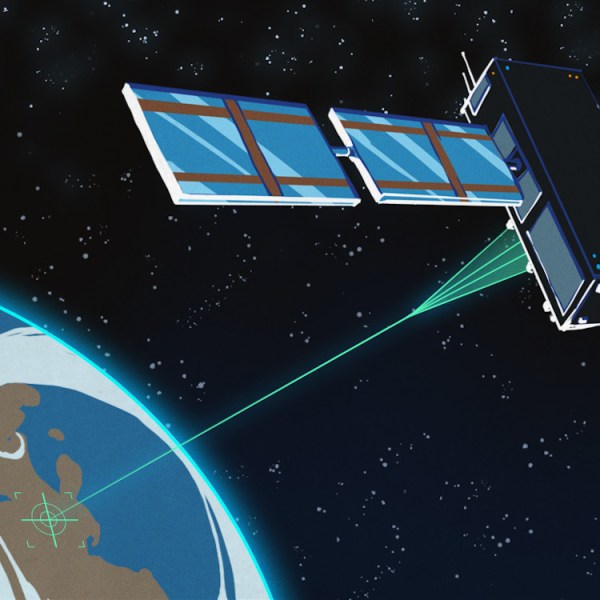
If you’ve ever set a telescope up in your backyard, you probably learned how quick any kind of lighting ruins your observation. In fact, a recent study found that every year, about 10% of the stars that were visible the previous year disappear in the mishmash of light scattering through the atmosphere. A company called StealthTransit has a solution: blink the lights in a controlled way. They have an animated video explaining the concept.

The technology, named DarkSkyProtector, assumes there is LED lighting and that the light’s owner (or manufacturer) will put a simple device in line that causes the LED to blink imperceptibly. As you might guess, the telescope — presumably some giant observatory uses a GPS receiver to synchronize and then images only when the LED lights all turn off. That presumes, of course, that you have a significant number of lights under control.

It is hard to imagine every city and home having astronomy-safe lighting. However, we can imagine a university installing a lighting system on its campus to protect night viewing. The system underwent a test in the Caucasus mountains using a 24-inch telescope and was apparently quite successful with a shutter rate of about 150 Hz. We weren’t clear if each LED control module has to have a GPS-disciplined time source, but it seems like you’d have to. However, the post talks about how the bulbs wouldn’t cost more to make than conventional ones, so maybe they don’t have anything fancy in them.

You can see satellites in the day with some tech tricks. Want to check out observatories? Hit the road. Or, get time on a telescope with Skynet University.

Cooking With Magnets And 3D Printing

Have you ever wondered how induction cooking works? A rotating magnetic field — electrically or mechanically — induces eddy currents in aluminum and that generates heat. When [3D Sage] learned this, he decided to try to 3D print some mechanical rigs to spin magnets so he could try cooking with them.

We doubt at all that this is practical, but we have to admit it is fun and there are some pretty impressive 3D prints in the video, too. The cook surface, by the way, is tiny, so you won’t be prepping a holiday meal on it. But there’s something super charming about the tiny breakfast on a plate produced by a printed magnetic “stove.” We would be interested to know how much power this setup consumed and how much heat was produced compared to, say, just using a big resistor to heat things up.

We’ve heard that induction heating is efficient, but this setup is a bit unconventional. If cooking things isn’t your bag, you can use induction for soldering, too.

Continue reading “Cooking With Magnets And 3D Printing”

Why Gas Turbines Rule The World

It is an interesting fact that the most efficient way to generate electricity — at least so far — is to spin the shaft of a generator. The only real question is how you spin it. Falling water works. Heat from a nuclear reaction is another choice. For many decades, the king of the hill was steam. Now, however, gas turbines rule the electric generator landscape, and [Construction Physics] explains why in a recent post.

With a steam turbine, something burns or otherwise generates heat that boils water. The steam spins the blades, which turns the generator. With a gas turbine, the system compresses air and mixes it with gas. The hot gasses then drive the turbine, which is more efficient than using the combustion to produce steam.

Turns out, the idea for the gas turbine is very old, but material science had to catch up to be practical. Inefficient compressors led to low operating pressures, which was good, in a way, because the materials couldn’t stand the heat and pressure. However, low pressures led to inefficient turbines that were not practical.

The post is long and covers a lot of details about Carnot, Brayton, and Rankine cycles. It is a fascinating read, and we learned a few new things. Bet you will, too.

Turbines are a little like jet engines, but they transfer more power to the turbine blade instead of generating thrust. Turbines show up in odd places today. Some odder than others.

Electric Truck Carries 74 Tons

Thanks to the various measurement systems in use, we aren’t sure if Volvo has created an electric truck that carries 74 metric tons, 74 short tons, or 74 long tons, but either way, that’s a lot of cargo for an electric truck. After all, that’s somewhere between 148,000 and 163,000 pounds (or 67,000 kg to 74,000 kg). That’s about three times what a typical 18-wheeler with a flatbed carries in the US. In fact, on a U.S. road, trucks typically have to weigh less than 80,000 pounds, including the truck to be legal.

Well, the monster electric Volvo has two trailers, so it is more fair to compare it to turnpike doubles, which typically carry about 148,000 pounds of cargo. The truck operates 12 hours a day and charges when the driver takes a break. At the depot, charging is from two 180 kW chargers that use green electricity, according to the company. The truck has been running for a few months, although we haven’t heard more about how successful or unsuccessful it might be.

Continue reading “Electric Truck Carries 74 Tons”

Robot Hand Has Good Bones

What do you get when you mix rigid and elastic polymers with a laser-scanning 3D printing technique? If you are researchers at ETH Zurich, you get robot hands with bones, ligaments, and tendons. In conjunction with a startup company, the process uses both fast-curing and slow-curing plastics, allowing parts with different structural properties to print. Of course, you could always assemble things from multiple kinds of plastics, but this new technique — vision-controlled jetting — allows the hands to print as one part. You can read the full paper from Nature or see the video below.

Wax with a low melting point encases the entire structure, acting as a support. The researchers remove the wax after the plastics cure.

Continue reading “Robot Hand Has Good Bones”