Beyond The Basics: Exploring More Exotic Scope Trigger Modes

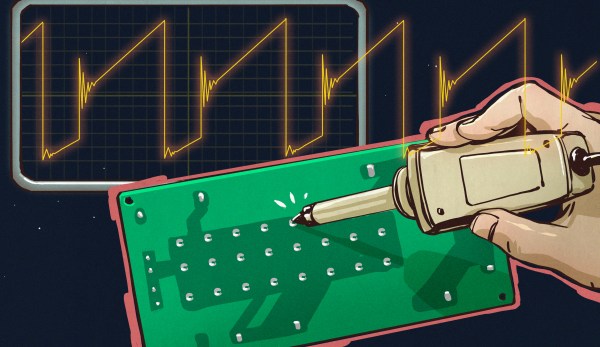
Last time, we looked at some powerful trigger modes found on many modern scopes, including the Rigol DHO900 series we used as an example. Those triggers were mostly digital or, at least, threshold-based. This time, we’ll look at some more advanced analog triggers as well as a powerful digital trigger that can catch setup and hold violations. You can find the Raspberry Pi code to create the test waveforms online.

In addition to software, you’ll need to add some simple components to generate the analog waveform. In particular, pin 21 of the Pi connects to  2uF capacitor through a 10K resistor. The other side of the capacitor connects to ground. In addition, pin 22 connects directly to the capacitor, bypassing the 10K resistor. This allows us to discharge the capacitor quickly. The exact values are not especially important.

Runt Triggers

A runt pulse is one that doesn’t have the same voltage magnitude as surrounding pulses. Sometimes, this is due to a bus contention, for example. Imagine if you have some square waves that go from 0 to 5V. But, every so often, one pulse doesn’t make it to 5V. Instead, it stops at 3V.

Continue reading “Beyond The Basics: Exploring More Exotic Scope Trigger Modes” →
Temperature Measurement By Wire

There’s an old joke about how to tell how tall a building is using a barometer. The funniest answer is to find the building owner and offer them a nice barometer in exchange for the information. We wonder if [DiodeGoneWild] has heard that one since his recent video details how to measure temperatures using an ohmmeter.

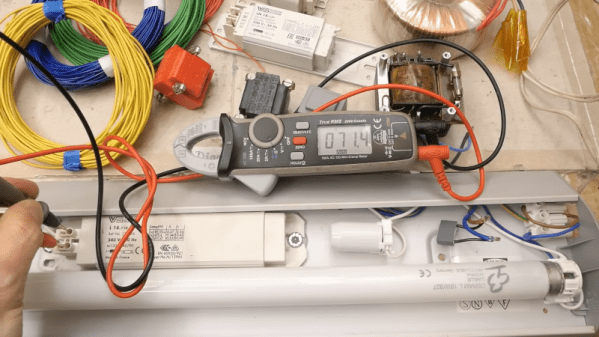
The idea is that wire changes its resistance based on temperature. So if you know the resistance of a lot of wire — maybe a coil — at room temperature and you can measure the resistance at temperature, it is entirely feasible to calculate the amount of temperature that would cause this rise in resistance.

Of course, there are many ways to measure resistance, too. It’s probably possible to measure parameters like operating current and estimate temperature for at least some circuits. The wire’s material also plays a part, and the online calculator lets you choose copper, aluminum, iron, or tungsten. You also need a lot of wire, a very accurate resistance measurement, or, preferably, both.

There are many ways to accurately measure resistance, of course. Then again, you can also get resistors specifically for the job.

Continue reading “Temperature Measurement By Wire” →

A RISC-V Security Key

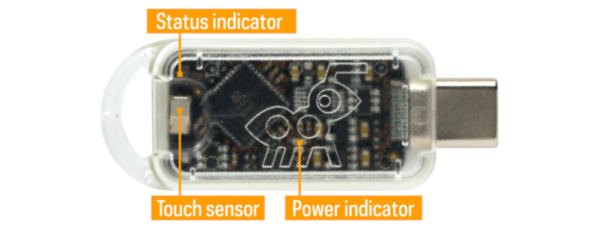
The TKey is a RISC-V-based security key that plugs into a USB port. The device has a number of features, including a device-specific serial number, RAM scrambling, and a monitor that kills the CPU in the event of access to protected memory. There is also an FPGA that, on the end-user version, is locked down. This prevents you from changing the core features and the unique ID number for the device.

As part of the start-up code, the device calculates a hash of the application and merges it with the device ID and, potentially, a user-defined secret. If this number matches a previous calculation, it is reasonably certain that nothing has changed between the times of the calculations.

Continue reading “A RISC-V Security Key” →

Restoring The DC Bias

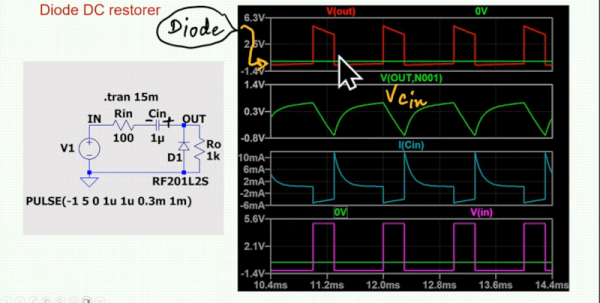
If you have a signal that passes through a capacitor or transformer, you will lose the DC portion of the signal. What do you do? If you need it, you can restore the DC bias using various techniques, as [Sam Ben-Yaakov] shows in a recent video.

These types of circuits were common in analog TVs, and, in fact, [Sam] shows the schematic of a TV to explain the need for the DC level. In that case, a vacuum tube diode does the work, but a solid state one will do the same job.

Continue reading “Restoring The DC Bias” →

Open Source Scanner Scans The Slides

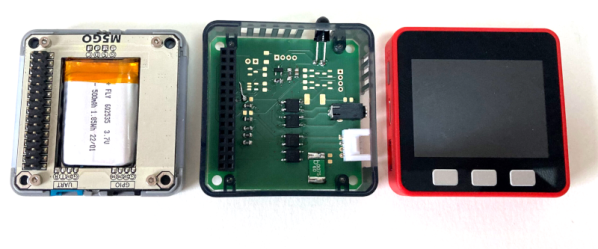
What do you get when you join a slide projector and a digital camera? Filmolimo, an open source slide scanner. The scanner uses an M5Stack Fire, an ESP32 development board. Thanks to the ESP32, you can control the device via WiFi.

All the project files, including KiCAD design files, are on GitHub. Of course, you will probably have to adapt things to your specific camera and slide projector. The PCB is double-sided and looks easy to put together. The board is mostly opto-isolation and interface between the controller and the equipment. The software allows you to change things like the time between slides, for example.

This is one of those projects you probably only need for a bit. Unless, of course, you regularly scan slides. You can farm it out to a service provider, but what fun is that? If you have a few hundred thousand slides, you might need to go for speed. If you just have a few, you can get by with a simple adapter.

The Tech That Died In 2023

We don’t indulge too often in looking back, but [Chloe Albanesisu] at PC Magazine did and wrote the tech obituary for all the tech gadgets and services that died over this past year. Some of the entries are a bit predictable: Twitter died to be replaced by X, which is exactly like it, only different. Others we hardly noticed, like Netflix stopping its DVD shipments.

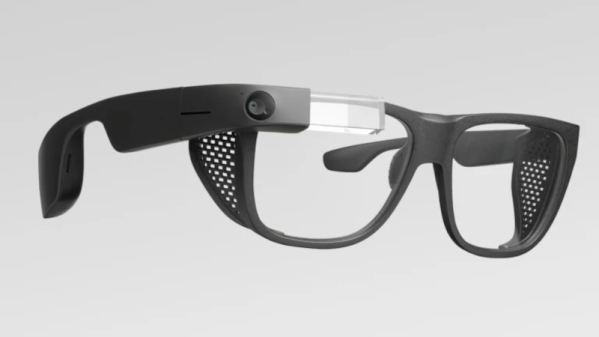
Google Glass died again, but this time it was the enterprise edition. Amazon gave up on both donating money through shopping and print subscriptions via Kindle.

Glass wasn’t the only Google casualty. Gmail lost its basic HTML version and shut down its smart whiteboard product, Jamboard. They also sold off their Internet domain business in an effort to focus on core businesses. Other notable Google shutdowns include their popular podcast app and Usenet support for Groups. Oh, and don’t forget their experiment in offering Pixels phones as a subscription. That’s done, too.

As you might expect, PC Magazine’s list is a bit consumer-oriented. What hacker-centric products and services vanished this year that you’ll miss? The Sculpteo Marketplace? XYZ Printing? Start up companies collapsed in 2023 at an alarming rate, but you didn’t hear about most of them. Were there any you were especially disappointed about? Let us know in the comments.

3D Printing With Plastic Cutlery

How many plastic spoons, knives, and forks do you think we throw away daily? [Stefan] noted that the compostable type is made from PLA, so why shouldn’t you be able to recycle it into 3D printing stock? How did it work? Check it out in the video below.

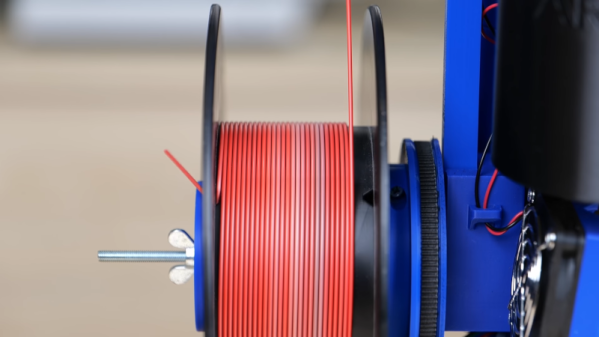
[Stefan] already has a nice setup for extruding filament. However, unsurprisingly, it won’t accept spoons and forks directly. A blender didn’t help, so he used an industrial plastic shredder. It reduced the utensils to what looked like coarse dust, which he then dried out. After running it through the extruder, the resulting filament was thin and brittle. [Stefan] speculates the plastic was set up for injection molding, but it at least showed the concept had merit.

In a second attempt, he cut the ground-up utensils with fresh PLA in equal measures. That is, 50% of the mix was recycled, and half was not. That made much more usable filament. So did a different brand of compostable plasticware.

The real test was to take dirty plasticware. This time, he soaked utensils in tomato sauce overnight. He cleaned, dried, and shredded the plastic. This time, he used 20% new PLA and some pigment, as well. We aren’t sure this is worth the effort simply on economics, but if you are committed to recycling, this might be worth your while.

It always seems like it should be easy to extrude filament. Until you try to do it, of course. Recycling plastic bottles is especially popular.

Continue reading “3D Printing With Plastic Cutlery” →