Exposing PCBs With A Home Made Laser Printer

Making your own printed circuit boards – as useful as it is – is a pain. Using the very popular toner transfer method requires a dozen steps that have to go perfectly the first time, and milling boards on a CNC machine creates a lot of mess. The most industrious hackers are able to bodge up a direct-to-board printer from an old inkjet printer, but these builds are usually a little kludgy. [Tixiv]’s LaserExposer board printer is one of the first builds we’ve seen that does away with all the negatives of the other techniques of PCB manufacturing and turns making your own boards into a very, very simple process.

The LaserExposer uses photosensitive copper board, like many of the other PCB printers we’ve seen. Instead of printing out the board artwork to a transparency or mask, [Tixiv] used a 1 Watt 445nm blue laser with a hexagonal mirror to directly expose the artwork onto the board, line by line.

The entire device is built around an old flatbed scanner that slowly crawls over the PCB, exposing the traces of copper to be etched away. This required reverse engineering the mirror motor control board from an 90s-era laser printer and building a circuit to precisely control the timing of the laser. [Tixiv] eventually got everything working and after etching had some of the most professional looking home-brew boards we’ve ever seen.

[Tixiv] put up a demo video of his build (after the break, German audio, YouTube has captions…). Anyone have an old flatbed scanner lying around?

Continue reading “Exposing PCBs With A Home Made Laser Printer” →
Making A Game With Capacitive Touch

Hackaday has seen a ton of builds make use of the Arduino CapSense library of late, so it was only a matter of time before we posted a capacitive sensing game controller that is able to move sprites around a screen.

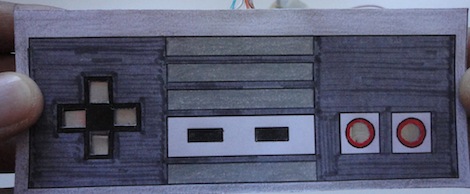
For this build, the controller is made out of small strips of Aluminum foil, wired straight to an Arduino with a few resistors. Once embedded inside a wonderful enclosure that brings about pangs of nostalgia it’s time tow write the game.

For the game portion of the build, Processing was brought into the mix to create a SpongeBob-themed ‘capture all the jellyfish in jellyfish fields’ game. By taping the contacts for the d-pad, the player can move SpongeBob around to catch jellyfish. If you’d like to give the game a go, you can play it in your browser on the project page.

This isn’t the first – or the last – CapSense build we’ll see on Hackaday, but it is the first one dedicated to making a DIY (albeit Nintendo inspired) video game controller. If six buttons aren’t enough, you’ll just have to wait for the PS3 version.


Sparkfun Recognized For Their Growth

The Denver Business Journal has recognized Sparkfun Electronics as the 2nd fastest growing company in the Denver area (in the $17.5-$46million class). This is fantastic news, not only for Sparkfun, but for Open Source Hardware.  Sparkfun is the worlds largest manufacturer of open source hardware, located right in the middle of the country, Boulder Colorado.

Not only has Sparkfun grown immensely in open source hardware products, they’ve also put together several educational systems like their tutorial section as well as their “learn at sparkfun” system. Way to go sparkfun!

Hackaday Is Going To ToorCamp!

Last month, we lamented that Toorcamp was coming but we weren’t going to be able to attend. Since then, we’ve brought a new writer on board that will be going to Toorcamp! [Eric Evenchick] will be attending and supplying coverage for Hackaday.

For those who haven’t heard yet, Toorcamp is a 4 day hacker event being held near Neah bay Washington. They described it as “burning man with less drugs and more hacking”.  We can’t wait to see what [Eric] shares from this event!

[Limor Fried] (Adafruit) Up For Entrepreneur Of 2012 Award

[Limor Fried], the brains behind Adafruit is one of the five finalists for the Entrepreneur of 2012 award in Entrepreneur magazine. We’ve always been big fans of how she chooses to run her business. Adafruit supplies open source hardware and compiles tons of great tutorials on the pieces. Not only that but they have pushed very hard to build a community that shares information and encourages others to build things, with their “ask an educator” series and the community “show and tell” that we hope to emulate at some point.

You’ll notice she’s the only engineer in the list. Not only would your vote go toward getting an engineer to win, it would also be shedding light on the open source hardware movement.

Unfortunately, the voting is being done through facebook. We know many of you will opt not to participate due to this fact. It is unfortunate that this is becoming so common. I’ll be voting though. We could use more companies like Adafruit.

Adding A Serial Trigger To A Logic Analyzer

If you’re attempting to debug a serial bus with a bare-bones logic analyzer, you’re going to have a bad time. Most of the inexpensive analyzers available don’t have a serial pattern trigger, or a way to start recording data after a specific pattern of bits comes down the pipe. [Neil] sent in a great little project that adds a serial trigger to these analyzers, we’ve got to hand it to him for designing such a useful board.

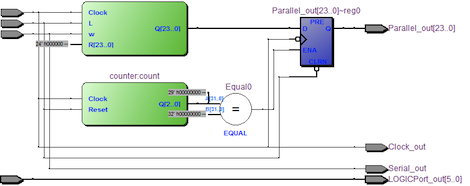
[Neil] designed a small board featuring a CLPD that converts serial data to parallel data. By setting the trigger condition of the logic analyzer to any 24-bit pattern he wants, it’s possible for [Neil] to sniff a serial bus exactly when he wants to.

The circuit is quite minimal, basically just a 100-pin CLPD and a bunch of 0.100″ header pins. It’s a useful tool, and although we couldn’t find the board file to make our own, we’re sure [Neil] will be providing that shortly.

Hacking Laser Tag And Building Custom Guns

As [Brad] over at the LVL1 hackerspace watched his friend build a Laser tag/tazer mashup for Makerfaire Detroit 2012, he noticed these new laser tag guns were really cool. These Light Strike guns have an impressive array of electronics for a $30 toy, but there was still much to be desired. [Brad] decided to reverse engineer these guns and work on a drop-in replacement for the game’s electronics so people like his friend can hurt themselves more easily.

The Wowwee Light Strike guns operate with IR LEDs, so the obvious solution for decoding the laser tag protocol would be the Arduino IR remote library. [Brad] had a bit of trouble getting his Teensy to read the IR data correctly, but after connecting everything up to a logic analyzer he had the data format figured out.

Now [Brad] has the Light Strike data format figured out and is theoretically able to make his own guns that are compatible with the off-the-shelf laser tag system. It’s also possible for [Brad] to extend the capabilities of this laser tag system by using the ‘health’ function to create a medi gun, or build a gun with a larger magazine for a laser tag mini gun.

If you’d like to build your own version of laser tag compatible with the Wowwee Light Strike, you can grab all the code on [Brad]’s git.