Techspansion Closes It’s Doors

Techspansion, creators of the popular media conversion programs VisualHub and AudialHub, have called it quits. Company founder [Tyler Loch] explains that the decision to stop the development of these popular Mac based utilities was due to personal reasons.

Unlike the numerous media converters available for Windows based computers, there are only a handful of good media conversion applications on the Mac and Techspansion’s applications were some of the best.

VisualHub makes it easy to convert one video format to another, while AudialHub does the same for audio files. We found AudialHub very useful when converting WMA files for import into iTunes as the Mac version of iTunes does not have the ability to convert WMA files like its Windows counterpart.

Registered users who don’t have a copy of the latest build will find direct download links removed from the Techspansion website. All is not lost as one very enthusiastic individual has made the downloads available at The Pirate Bay.

Xbox 360 Battery Pack Teardown

Reader, [Fox9p3400], opened up an Xbox 360 controller battery pack so we could all see what goes into one. It contains two Sanyo 2100mAh NiMH AA rechargeables (Model HR-3U 1.2V). In addition to that, there is an Atmel microcontroller (not pictured) and the copper temperature probe you can see above. He has more pictures on Photobucket.

Build A Solar Dehydrator

[Erik Knutzen] and [Kelly Coyne], authors of The Urban Homestead, are really into all things green and sustainable. In their blog, Homegrown Evolution, they discuss building their own solar dehydrator using plans from the February/March 1997 issue of Home Power Magazine. The dehydrator is designed by Appalachian State University’s Appropriate Technology Program. If interested, you can check out or buy other solar dehydrator designs. This seems like a great, cheap alternative to buying an expensive electric dehydrator, and you get some great advantages, like low-cost dehydrating, solar energy, and beef jerky whenever you want it. Plus, the authors point out, for most of these designs, if you remove the top box and you stick it next to a window, you’ve got a solar heater. It’s now a dual-purpose device.

Hack A Day Is Always Hiring


We’re always looking for people to contribute posts daily and help expand the site. We’ve added a handful of contributors in the last couple months, which you can see in our new How-tos.

This is a paid, freelancing position that requires professionalism, consistency, and reliability. We want to hear from people that are passionate about software/hardware hacking and growing Hack a Day. To apply, send the following to jobs@hackaday.com

  • A short bio about yourself
  • 3 example daily posts written in the style of Hack a Day
  • 3 software or hardware how-tos you’d like to see. For examples of work we’ve done in the past, look here, here, here, and here.
  • A couple sentences on how you would improve the site either through features or content
  • Any additional reasons why you would make a good fit for Hack a Day

Do not send any attachments. Having your own blog you can show off is a definite plus.

[photo:fbz]

Animated LED Eyes For Halloween

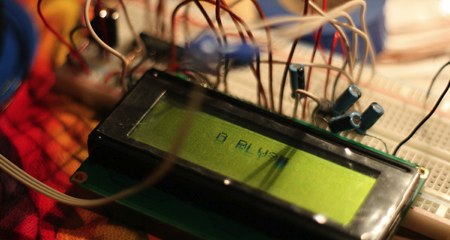
[Matt Daughtrey] sent us this sweet little project he’s doing for Halloween. He’s building some animated LED eyes. He says that the whole thing is 3 individual LMDriver platforms, another project he’s working on. There isn’t any info available about that, but he does expand a little. He states that each display module uses an Atmega169 with some heavy multiplexing.  The eyes really don’t look that impressive sitting on the bench, but watch the video to see how cool they really are.

We noticed that the back of the boards appear to have http://www.embeddedether.net on them.  Unfortunately that site seems to have been grabbed by a domain squatter.

How-to: Networked Graffiti Wall

[youtube=http://www.youtube.com/watch?v=G8KprTVbHD4]

Wondering what we did with our web server on a business card project from last week? It’s powering a giant LED graffiti wall. Animations can be user-submitted using the online designer. You can watch a live feed of user animations as well. The online interface runs on the Google App Engine for maximum scalability and resilience.

In today’s How-to we cover all the ins and outs of building your own networked graffiti wall. Continue reading “How-to: Networked Graffiti Wall” →

Amazingly Cheap Dual Channel Scope

[Jacques] sent us this little project he has been working on. It is an amazingly cheap USB 2 chanel scope. The total cost of the project was around 5 Euros.  It is based off of an Atmel Tiny45, has 2 analog inputs, and can supply 5 Volts to a breadboard. He has listed the bill of materials as well as downloads for the source code, plans, and display software.