Russian Homemade Telescope


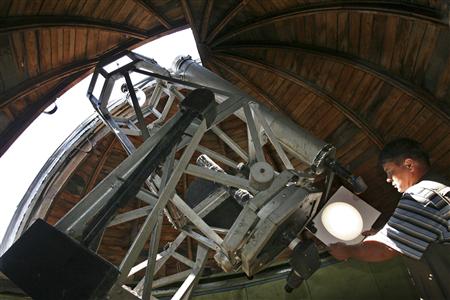
In the Russian city of Barnaul, some enthusiasts are gathering their resources to revive a home made telescope and observatory. Built by [Mikhail Levchenko], in the mid 70’s, the telescope is quite impressive. [Levchenko] kept his hobby somewhat of a secret so as not to arouse the suspicions of his neighbors, but its pretty hard to hide a tower as tall as a house with a domed observatory on top. The telescope itself has a 16 inch glass lens that provides 500x magnification. His hobby would turn out to have a pretty big impact on the town. People would come to him hoping that his telescope could tell their fortunes. Not a believer in horoscopes, he tried to educate people with lessons in astronomy and physics. One man was said to have given up drinking after seeing Saturn.

[Levchenko] passed away in 2002 and his observatory fell into disrepair. Local thieves tried to steal pieces for scrap and the whole structure has sunken somewhat. Some of those who were inspired when young by [Levchenko] have decided to renovate it for the eclipse. Barnaul will be a prime location for viewing. The total renovation and possible relocation will cost around 2 million dollars.

In the past, we covered a high powered telescope made by some girl scouts, and this $40 USB telescope looks fun too.

British Hacker To Be Extradited To U.S.

British computer hacker [Gary McKinnon] lost his final appeal to block his extradition to the U.S. He stands accused of hacking into almost 100 U.S. military and NASA computers from his girlfriend’s aunt’s house in London over a four year period by the U.S. government. If convicted of the crimes in a U.S. court, he could face up to 70 years imprisonment. [Gary McKinnon] freely admitted to hacking into the computers, but claimed that he did it out of curiosity, not out of malice or any terroristic aims. He was looking for information on UFOs. The U.S. government claimed that in addition to hacking into the computers, he also stole 950 passwords and erased important files. [McKinnon’s] next move will be to appeal to the European Court, and if unsuccessful, he will have no other option but to stand trial in the U.S. court system.

Hacking Animatronic Elvis


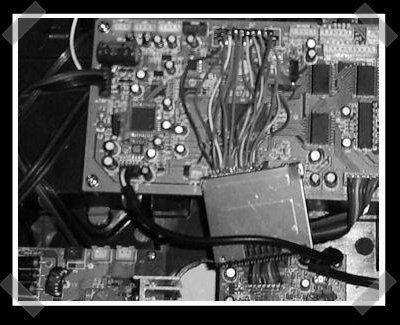
[Scott] shot us a tip about some progress on hacking those creepy [Elvis] heads produced by Wowee. The head uses a flash cartridge to store all the data used for the motion/audio control. The cartridge uses NAND flash, so a quick solder job to an XD flash card reader yielded a useful dump of the memory cartridge – which happened to be fat32 formatted. There’s still plenty of work to do, but it seems that it’ll be trivial to replace the data with custom audio and motion commands.

WarBallooning At Defcon

[rocketman] has posted about a new event at Defcon dubbed WarBallooning. They are using a Kismet drone (a modified WRT54G), a webcam, and a few high gain antennas. The balloon will be launched at about 15 stories and will be remotely fed targets chosen directly by the Defcon participants. The the directional antenna will be mounted to the camera so pan and tilt can be controlled. The Kismet CSV files will be available for everyone after the event.

If you are interested in WarDriving or building you own high-gain antennas, we suggest you check out this WiFi biquad dish antenna mounted on a car. If cars are too boring, or you do not have one, you could always go WarSailing or WarFlying. Yes, the permutations are endless.

[photo: JoergHL]

Esquire’s Hackable E-paper Display


In celebration of there 75th year, Esquire magazine’s October issue will feature an e-paper cover. The display will be about 3mm thick flexible paper with four shades of gray and some animated text and images. The backside will also have a display featuring a Ford ad for the new Flex. The Ford ad is essentially subsidizing this whole production. The cover isn’t finalized yet, but Boing Boing Gadgets was able to get a few more details about it from deputy editor [Peter Griffin]. The battery isn’t anything exotic and they fully expect people to break the device open and do what they want with it. It will unfortunately still require you building your own controller, but at least you get two revolutionary displays to play with for the cost of a magazine. If you’re wondering what Esquire is, they apparently showed George Clooney 2 Girls 1 Cup. So they’ve got that to celebrate too.

Robot Red Snapper


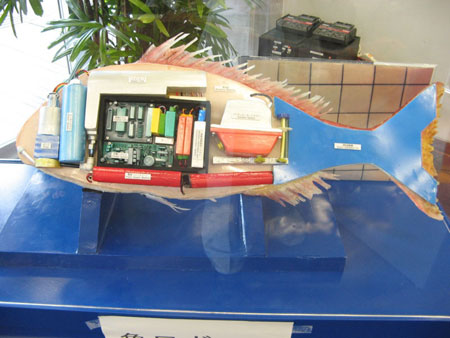
Engineers at the University of Kitakyushu have built this red snapper robot. Intended for wildlife surveys, this robot sports an array of sensors as well as a hand painted silicon body. It is decidedly more realistic looking than the Robofish and the Essex University robot fish. They say that the life like construction will aid in getting information about natural behavior of sea animals since it won’t stand out. It features a “unique” propulsion system that allows it to swim like a real fish. More information on that system would be nice. You can see more pictures of it here, but the descriptions are all in Japanese.

Continue reading “Robot Red Snapper” →

Bubbloo Interactive Floor Display


Bubbloo is an interactive display at the Denver Art Museum. They appear to be embracing a more interactive approach to displaying some of their art and information. One of their displays, shown above, features a pair of projection systems working together to make a game. As you pop the bubbles, the artwork is displayed. You can see it definitely helps keep the kids amused.

While the technology used isn’t exactly new, its a good example of how effective interactive displays can be. Even if they are just there to distract the kids so the parents can look at art.

The floor projection systems don’t seem as though they would be that difficult to make. We’ve seen interactive projection displays using Wiimotes made in peoples homes, but what about one of these? How would you handle the input without an accessory like a light pen or reflective tape? The Wisdom Well uses Frustrated Total Internal Reflection and rear projection. Reactrix, a manufacturer of these systems uses infrared sensors as well as some kind of floor sensor. [Lawrence Lau] has made one, but didn’t post any information. If you make one and let us know.