Be Your Own DJ With QN8066 And An Arduino Library

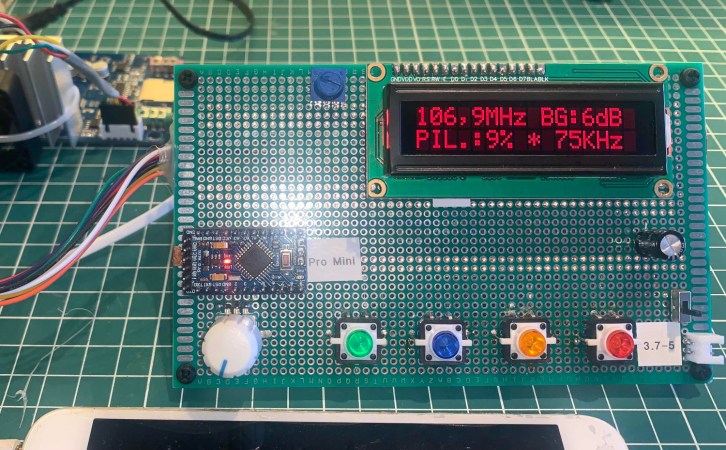
The QN8066 is a fun little FM transmitter chip. It covers the full FM broadcast band and has built-in DSP. You would find this sort of part in car cell phone adapters before every vehicle included Bluetooth or an AUX port.  [Ricardo] has created an Arduino library to bring the QN8066 to the masses.

The chip is rather easy to use – control is handled with a common I2C interface. All the complex parts – Phase Locked Loop (PLL), RF front end, power management, and audio processing are all hidden inside. [Ricardo’s] library makes it even easier to use. One of the awesome features of the 8066 is the fact that it handles Radio Data System (RDS). RDS is the subcarrier datastream that allows FM stations to inject information like song title and artist into the signal. The data is then displayed on your radio screen.

You can find the source to [Ricardo’s] library on GitHub. Using it is as simple as picking it up from the Arduino IDE.

If you are looking for an RDS-enabled radio to test out your QN8066 design, you wouldn’t do too bad with this Gameboy cartridge receiver.

Click through the break for a video from [Ricardo] explaining his QN8066 design. Continue reading “Be Your Own DJ With QN8066 And An Arduino Library”
The Waveguide Explanation You Wish You’d Had At School

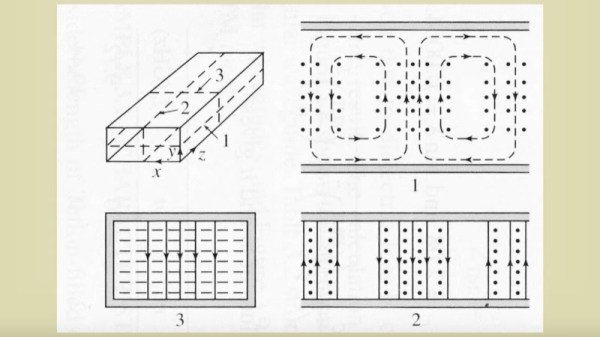
Anyone who has done an electronic engineering qualification will at some point have had to get to grips with transmission lines, and then if they are really lucky, waveguides. Perhaps there should be one of those immutable Laws stating that for each step in learning about these essential parts, the level of the maths you are expected to learn goes up in an exponential curve, for it’s certainly true that most of us breathe a hefty sigh of relief when that particular course ends. It’s not impossible to understand waveguides though, and [Old Hack EE] is here to slice through the formulae with some straightforward explanations.

First of all we learn about the basics of propagation in a waveguide, then we look at the effects of dimension on frequency. Again, there’s little in the way of head-hurting maths, just real-world explanations of cutt-off frequencies, and of coupling techniques. For the first time we’ve seen, here are simple and understandable explanations of the different types of splitter, followed up by the famous Magic T. It’s all in the phase, this is exactly the stuff we wish we’d had at university.

The world needs more of this type of explanation, after all it’s rare to watch a YouTube video and gain an understanding of something once badly taught. Take a look, the video is below the break.

Continue reading “The Waveguide Explanation You Wish You’d Had At School”

Vintage Crystal Radio Draws The Waves

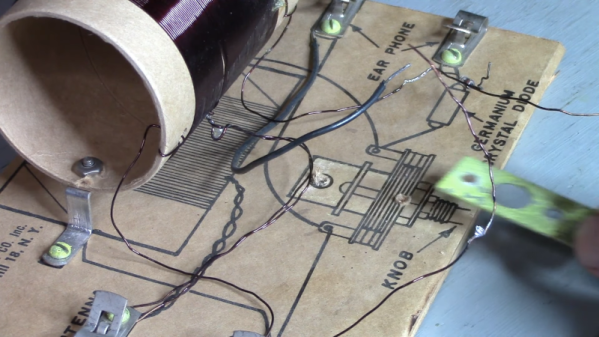
The classic crystal radio was an oatmeal box with some wire and a few parts. [Michael Simpson] has something very different. He found an assembled Philmore “selective” radio kit. The simple kit had a coil, a germanium diode, and a crystal earphone.

We were sad when [Michael] accidentally burned a part of the radio’s coil. But–well–in the end, it all worked out. We’ll just say that and let you watch for yourself. The radio is simplicity itself, built on a wooden substrate with a very basic coil and capacitor tuned circuit. Continue reading “Vintage Crystal Radio Draws The Waves”

An Antenna To Throw You For A Loop

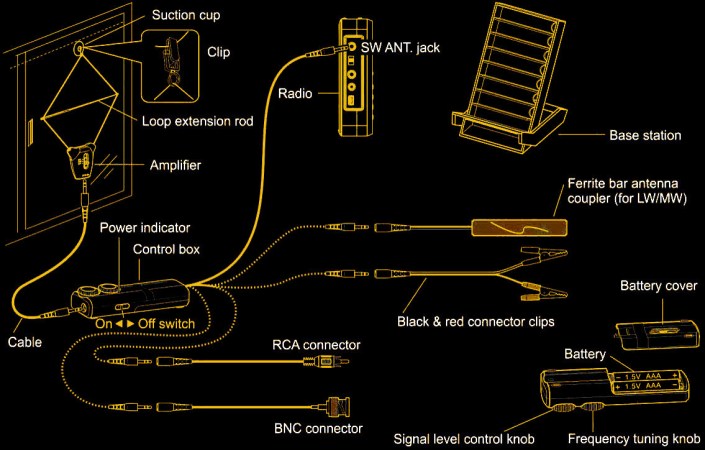
It is one of Murphy’s laws, we think, that you can’t get great things when you need them. Back in the heyday of shortwave broadcasting, any of us would have given a week’s pay for even a low-end receiver today. Digital display? Memory? Digital filtering? These days, you have radios, and they aren’t terribly expensive, but there isn’t much to listen to. Making matters worse, it isn’t easy these days to string wires around in your neighborhood for a variety of reasons. Maybe you don’t have a yard, or you have deed restrictions, or your yard lacks suitable space or locations. This problem is so common that there are a crop of indoor antennas that seem attractive. Since I don’t often tune in shortwave and I don’t want to have to reset my antenna after every storm, I decided to look at the Tecsun AN-48X along with a YouLoop clone from China. Let’s start with the Tecsun. Continue reading “An Antenna To Throw You For A Loop”

You’ve Got The Portable Radio, Now What About The Antenna?

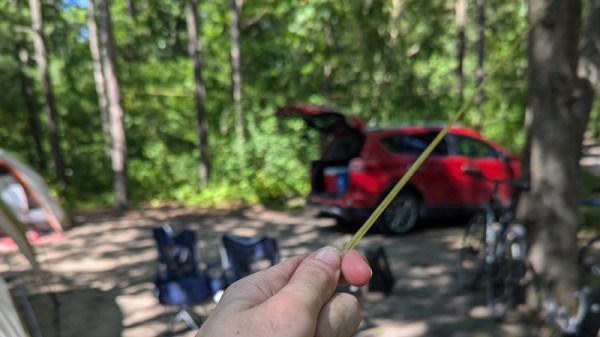
There’s an old saying in the amateur radio community that when it comes to antennas all you need is a piece of wet string. This may be a little fanciful, but it’s certainly true that an effective antenna can be made with surprisingly little in the way of conductor. It’s something [Evan Pratten VZ3ZZA] demonstrates amply with a description of the antenna he took camping in a Canadian provincial park.

Most of us would try some form of dipole on our adventures, but the antenna he’s using caught our eye as it’s described as an end-fed half-wave, but it has both a half-wave and quarter-wave element. Made from speaker cable or in this case thin mains cable for lamps, it’s obviously far from a perfect match and requires an ATU, but it generates an impressive array of FT4 contacts on a pretty meagre power level. We particularly like his in-plain-sight test run in the parking lot of a supermarket.

We frequently talk about the diversity of pursuits in amateur radio aside from that of the chequebook ham, and this project shows one of those. The world of QRP, operating at extreme low power, is not expensive to enter and can be extremely rewarding.

Ask Hackaday: Is Shortwave On Life Support?

A QSL Card from Radio Moscow probably got many 14-year-olds on government watch lists. (Public domain)

Between World War II and Y2K, shortwave listening was quite an education. With a simple receiver, you could listen to the world. Some of it, of course, was entertainment, and much of it was propaganda of one sort or another. But you could learn a lot. Kids with shortwave radios always did great in geography. Getting the news from a different perspective is often illuminating, too. Learning about other cultures and people in such a direct way is priceless. Getting a QSL card in the mail from a faraway land seemed very exciting back then.

Today, the shortwave landscape is a mere shadow of itself. According to a Wikipedia page, there are 235 active shortwave broadcasters from a list of 414, so nearly half are defunct. Not only are there many “dead” shortwave outlets, but many of the ones that are left are either not aimed at the world market or serve a niche group of listeners.

You can argue that with the Internet, you don’t need radio, and that’s probably correct in some ways but misses a few important points. Indeed, many broadcasters still exist as streaming stations or a mix of radio and streaming. I have to admit I listen to the BBC often but rarely on the air. My computer or phone plays it in crystal clarity 24 hours a day.

A future Hackaday author in front of an Eico shortwave radio

So, while a 14-year-old in 1975 might be hunched over a radio wearing headphones, straining to hear NHK World Radio, these days, they are likely surfing the popular social media site of the week. You could easily argue that content on YouTube, Instagram, and the like can come from all over the world, so what’s the problem?

The problem is information overload. Faced with a shortwave radio, there were a limited number of options available. What’s more, only a small part of the band might be “open” at any given time. It isn’t like the radio could play games or — unless you were a ham — allow you to chat with your friends. So you found radio stations from Germany to South Africa. From China and Russia, to Canada and Mexico. You knew the capital of Albania. You learned a little Dutch from Radio Nederlands.

Continue reading “Ask Hackaday: Is Shortwave On Life Support?”

CW Not Hard Enough? Try This Tiny Paddle

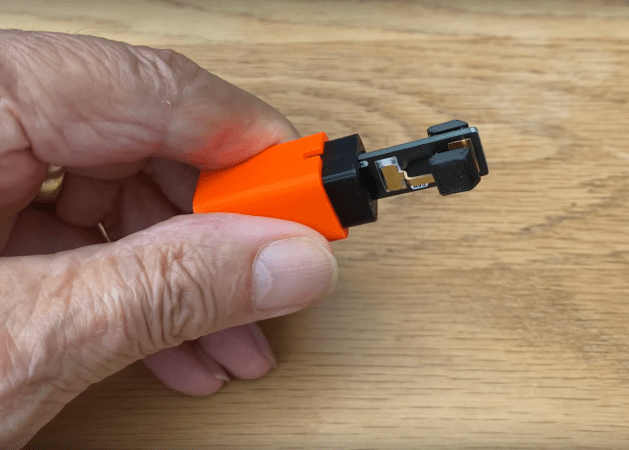
For a long time, a Morse code proficiency was required to obtain an amateur radio license in many jurisdictions around the world, which was a much higher bar of entry than most new hams have to pass. Morse, or continuous wave (CW) is a difficult skill to master, and since the requirement has been dropped from most licensing requirements few radio operators pick up this skill anymore. But if you like a challenge, and Morse itself isn’t hard enough for you, you might want to try out this extremely small Morse paddle.

Originally meant for portable operation, where hiking to something like a mountain top with radio gear demands small, lightweight, and low-power options, this paddle is actually not too complex. It attaches to most radios with a 3.5 mm stereo cable and only has two paddles on flexible metal arms which, when pressed against the center of the device, tell the radio to either produce continuous “dits” or “dahs”. For portable use the key sits inside a tiny plastic case and only needs to be pulled out and flipped around to get started. And, while not waterproof, [N6ARA] reports that it’s so small you likely could just shield it from the rain with your other hand if you needed to.

Presumably, this paddle actually wouldn’t be that much different than using any other paddle except for the fact that it’s not heavy enough to resist the force of use, so you’d have to hold it with your other hand anyway. And, while this is a product available for purchase it’s simple enough that, presumably, the design could easily be duplicated with just a few parts. Paddles like this were made as an improvement to older technology like straight keys which require the operator to produce the correct lengths of tones for each character manually. While you can get higher speeds with a paddle, there are still some dedicated CW operators using a straight key.

Continue reading “CW Not Hard Enough? Try This Tiny Paddle”