
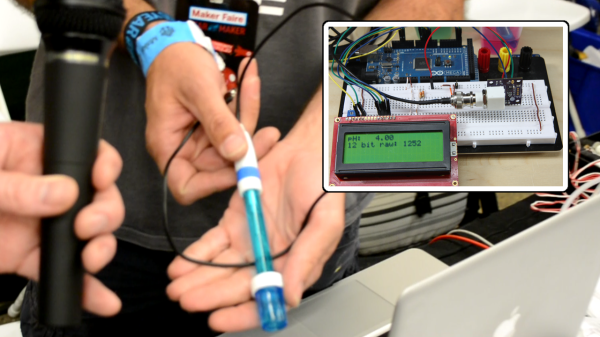
[youtube=https://www.youtube.com/watch?v=yKigsN8046k&w=580]
We’ve mentioned that it’s hard to find someone not selling or crowd funding something at Maker Faire. Despite the fact that [Ryan Edwards] is selling his boards, we still got the feeling that he’s a hacker who is selling just to make sure the idea he had is available for other hackers to use. He showed us his interface boards for inexpensive pH probes.
Since we’re always looking for more chemistry hacks to run, it was nice to hear [Ryan’s] description on how these probes (which can be had for around $9 on eBay) actually work. It turns out it’s all about salt. When it comes to the electronics, the board provides a connector for the probe on one edge, and pins for voltage, ground, and I2C on another. Rig this up with your microcontroller of choice and you’ll be building your own automatic pool doser, fish tank minder, or one of a multitude of food-related hacks.
Head on over to Sparky’s Widgets to see a few other demo applications.
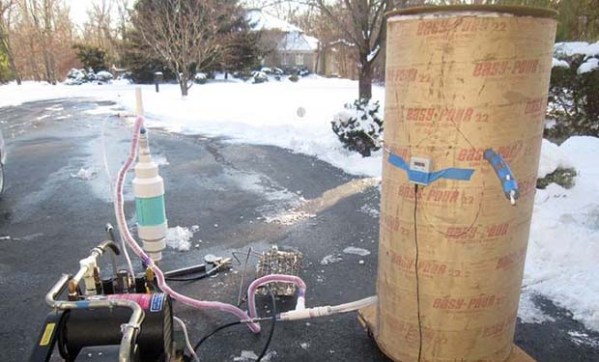
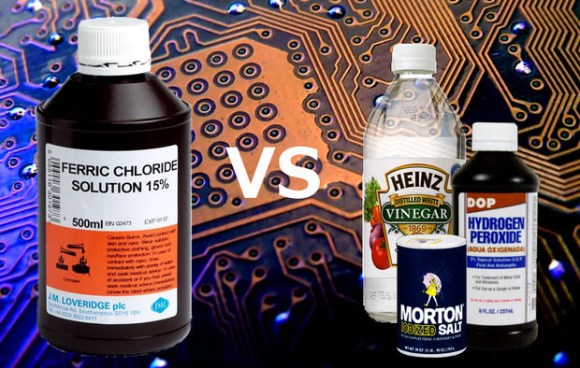 In the interest of the scientific method [Feynmaniac] (great name, btw) over on Instructables
 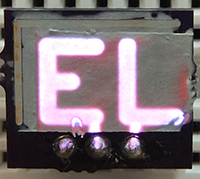 Elecrolumiscent displays have seen a huge swing in popularity recently, but only in limited forms like EL wire or flat EL panels. You can, of course, cut and bend these wires and panels to suit any purpose, but custom shaped EL displays are just the bee’s knees. They’re not hard to fabricate, either: with cheap custom PCBs,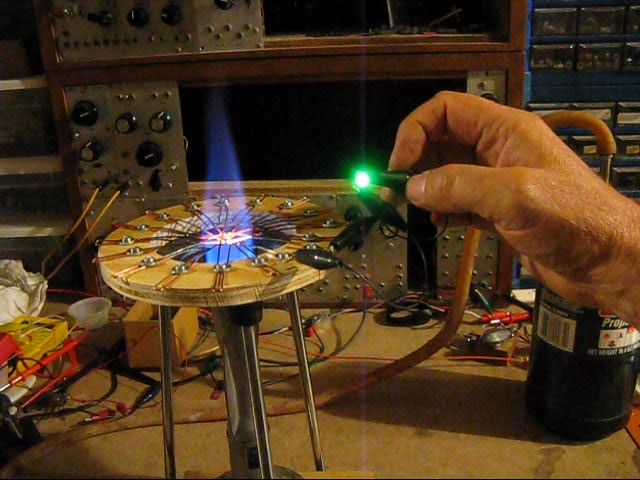
 It’s a remarkable thing when ad agencies manage to help people in the course of advertising. The University of Technology and Engineering Peru (UTEC) was looking for ways to increase enrollment. They went to the Peruvian offices of agency DraftFCB and came away with the idea to install








