Live in Kentucky? Want to invent the next big thing for the kitchen, like the automated ice maker? Well, you’re in luck. GE is hosting a massive hackathon at their microfactory called FirstBuild which is located in Louisville, Kentucky. Unfortunately it looks like pre-registration is already closed.
The concept of FirstBuild is pretty cool. GE has created what they like to call a microfactory for innovating new products in small production runs to flush out good ideas. We’d call it more of a corporate hackerspace with some serious funding. Regardless of their motives, it’s still a cool concept. And they have some awesome toys, er, tools.
The event is being sponsored by lots of big names like Intel, Atmel, TI, Freescale, MakerBot and even Autodesk — and the prizes aren’t too shabby either! Though for the really big prizes you’ll need to stick with us.
We have to wonder — what happens when GE sees an idea they like? Hopefully it results in a sweet job.
No, we’re not talking about any lock, or car for that matter. The creators of Loxet are so confident in their product, a smart lock for your car, they’ve issued a challenge to the world. If you can defeat it, you can keep the car — sadly the car isn’t anything special though.
The device, after installed on your vehicle, gives you a taste of the premium lifestyle of fancy push-to-start vehicles. It automatically unlocks your vehicle when you come near with your cellphone, and only your cellphone. It also has the option to give access to friends and family using an invite system. It controls ignition access, and works as a proximity lock.
The car is located at ul. Straszewskiego 14 in Krakow. If you’re not from Poland, [Matt] recommends you team up with a local to try your hack. The alternate prize (if you’re not from Poland or don’t want the car) is $2000.
The car is just sitting there. We’d love to see some 1st person attempts from any of our Polish readers living in Krakow! It is currently set to unlock and lock every 10 minutes. You might be able to get into the vehicle — but will you be able to take it? Let us know!
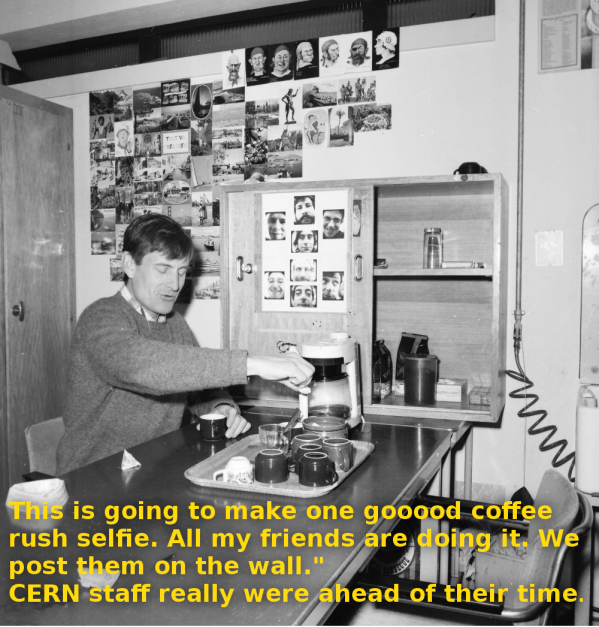
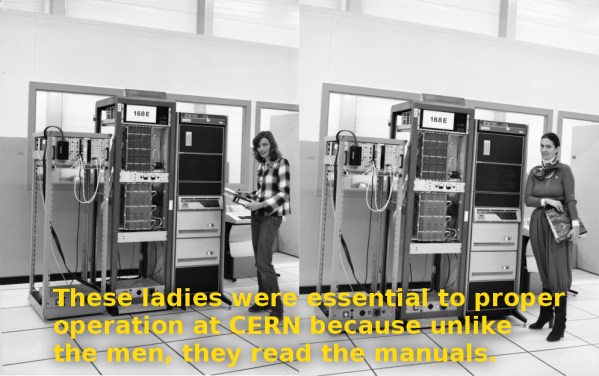
Thanks for another week of great entries in the Caption CERN Contest over at Hackaday.io! We still aren’t sure if our CERN staffer is looking at that machine pensively, amorously, or with a bit of confusion, but you all found some great words to go with the image!
The Funnies:
“Dr. Breman’s early attempts to create the perfect robot woman had some early success, but was later scrapped do to a tragic input/output error.” – Terry Davis
“You were supposed to be intelligent, my dear. What do you mean by segfault?” –elias.alberto
“CERN’s pioneering computer dating service didn’t quite work out as expected.” – Nick Johnson
The winner for this week is Stripeytype with the quote seen in the top image of this article. Stripeytype will be sporting a CRT head T-Shirt From The Hackaday Store at their next hackerspace meeting.
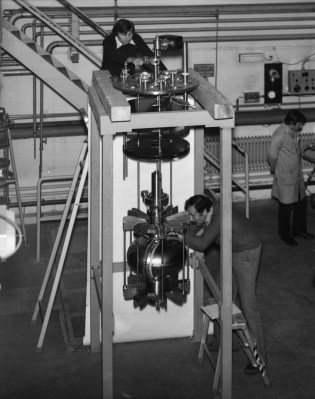
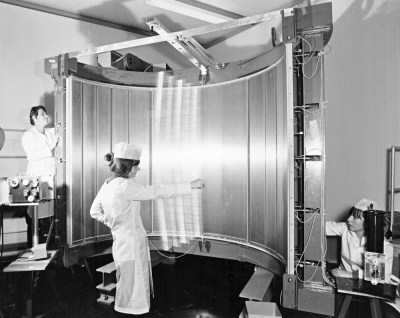
Some of CERN’s experiments take place in the miles of tunnels below their labs in and around Meyrin, on the border of France and Switzerland. It looks like this image was taken in one of those tunnels. It’s definitely an interesting shot. CERN’s documentation for the image has been lost to history, so it’s up to you to explain what’s going on here! Add your humorous caption as a comment to the project log. Make sure you’re commenting on the log, not on the project itself. As always, if you actually have information about the image or the people in it, let CERN know on the original image discussion page.
Aging in Place is a growing issue facing the world. As the population begins to live longer, healthier lives we need to continue developing assistive technologies that will facilitate independence and safe living long into our twilight years. That is the topic of this week’s Time for the Prize. Enter your idea for Aging in Place by starting a project on Hackaday.io and tagging it 2015HackadayPrize. Do this by next Monday and you’re in the running for this week’s awesome prizes.
What is Aging in Place?
I use the “define:” search term on Google all the time and for Aging in Place it turns up the Center for Disease Control’s definition:
“the ability to live in one’s own home and community safely, independently, and comfortably, regardless of age, income, or ability level.”
I love this definition. How easy is it to get behind the concept of better quality of life for all as we age? Still not getting the thought process flowing? After listing the prizes I’ll illustrate a couple of projects that will give you a good idea of what people are working on.
This Week’s Prizes
We’ll be picking three of the best ideas based on their potential to help alleviate a wide-ranging problem, the innovation shown by the concept, and its feasibility. First place will receive a RE:load Pro programmable constant current load. Second place will receive a Sparkfun Microview. Third place will receive a Hackaday CRT-android head tee.
Hacks that Help
The easiest examples I can think of relate to medicine. A lot of the time people can be independent and high-functioning as long as they take the right medicine at the right time. The simplest way to ensure this is to use technology that helps track medication schedules. Pill reminders can monitor a pill case, sending reminders to you if you miss your schedule, and alertimg family or caretakers if you don’t respond to the reminder.
We’ve also seen technology built right into the cap of the prescription bottle. These caps have a timer that resets to zero every time the bottle is opened. But anyone who has taken several medicines on different time schedules can tell you that this can still be very confusing. We wonder if anyone can prototype a system that would use computer vision to verify and log the pills each time you take them?
Of course the prescription reminders are just one of a multitude of low-hanging fruit. Safety is another aspect. Here’s an entry that seeks to give peace of mind that the stove is off for those dealing with Alzheimer’s or memory issues.
Now you see what we’re getting at. What ideas do you have that can move the goal of Aging in Place forward?
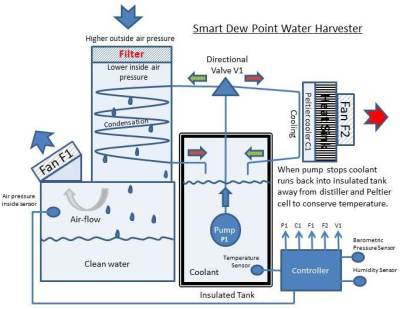
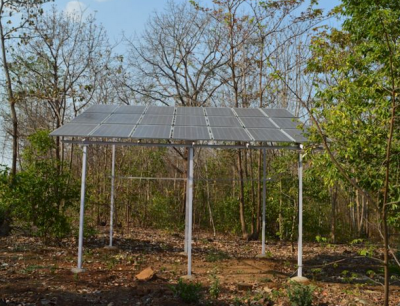
Last week we challenged you to post your idea on environment-related solutions for the 2015 Hackaday Prize. We’ve gone through every entry and have chosen this week’s winners. What a tough process, there are so many interesting ideas to consider that we’ve done a round-up of some that held our attention.
Bosch Haber Process
Energy Saving
Conservation was at the center of these projects and [Peter Walsh] is thinking large scale to improve the Bosch-Haber process. This process is used as a source of nitrogen for fertilizers and consumes 1% of all energy worldwide. Even small efficiency advances could have a huge effect.
From profound to whimsical, [TomaCzar] has an alarming solution to leaving the lights on. We enjoy his preamble about his family moving to Earth from a planet with unlimited energy (hence their habit of leaving the lights on). He plans to add an audible alarm to any light that is switched on for more than 10 minutes.
Energy Production
Those huge solar farms that use arrays of mirrors to focus the sun’s light on a central tower leverage a techique called Concentrated Solar Power. Traditionally they store heat in a pool of liquid salt for generating power around the clock. [PUNiSH3R] has a plan to build his own on a micro-scale. The Portable Micro-CHP will use similar concepts (less the molten salt) in a package small enough to be transported by a single human.
Undeveloped parts of the planet have huge problems when it comes to bootstrapping an electrical grid. [hickss] thinks blimps might be one way to alleviate the problem. The DayBreaker project will tether blimps to the ground, with a hydrogen feed supplied through electrolysis which keeps them afloat. While high in the air they can catch higher winds using a turbine and transfer the electricity back to the ground using the same tether.
Rounding out energy producing examples is the Domestic Geothermal Stirling Power Unit. We’ve seen geothermal systems that use heat exchangers to heat or cool your home. [Shrad] ponders the idea of also using the loops of circulating fluid to feed a Stirling engine that could help supply power to the home.
Way Out There Ideas
Is this parking lot a power plant waiting to happen?
There were a number of interesting concepts that we think are well worth considering and debating. It’s hard to say if these are all feasible, but tossing the ideas around is just the kind of interaction that could lead to a big breakthrough. For instance, the image seen here is a freshly paved and painted asphalt parking lot. Asphalt Heat Harvesting imagines the Peltier effect being used on a large scale by embedding metal networks between layers of the pavement. A heat differential between the surface and the base layer could produce electricity.
We’re at a loss for understanding how the Open Source Modular Absorption Refrigeration Unit actually works. It seeks to supply refrigeration using a heat source instead of electricity. The diagram looks promising and we think OSMARU is a solid acronym!
Remember The Hunt for Red October? If so, you certainly remember the caterpillar drive which made the submarine virtually silent. [N-Monkeys] wants to use that and ocean water as a generator rather than a locomotive device. Check out Project InchWorm.
Congratulations to all three! We think it’s important to mention we are judging the idea on its ability to solve something affecting a wide range of people, its level of innovation, and the feasibility of the concept. There is no requirement at this point to have built anything or completed the documentation. Don’t be afraid to write down your own brainstorm… it might just win you a prize!
Next Week’s Theme
We’ll announce next week’s theme a bit later today. Don’t let that stop you from entering any ideas collection of entries may have inspired.
Coming up with that killer concept is a matter to thinking in different ways and interacting with other Hackers, Designers, and Engineers to help make the mental leap to greatness!
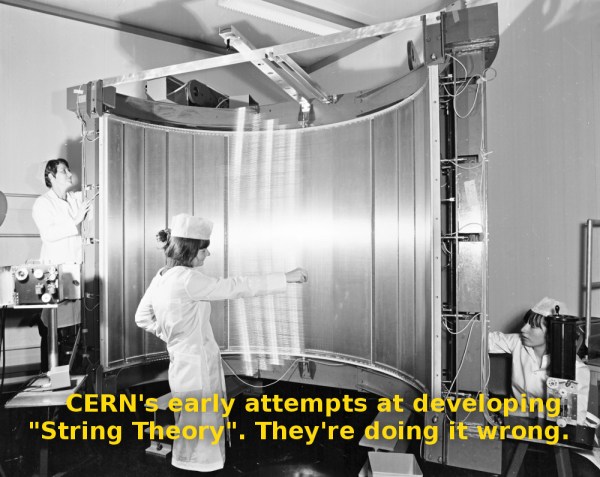
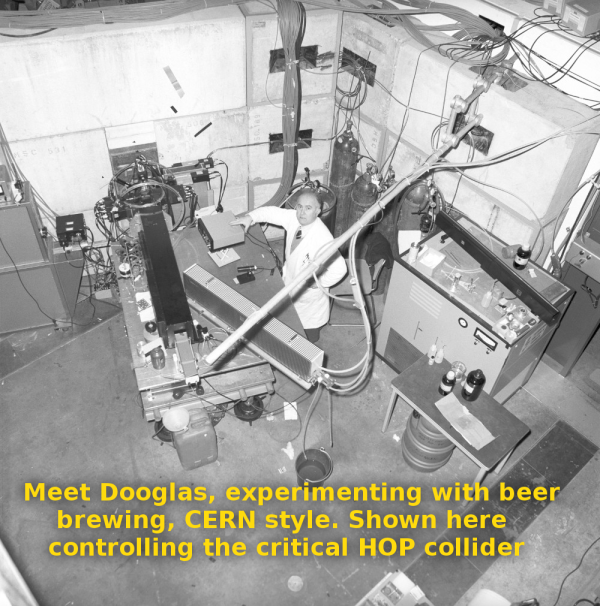
The Caption CERN Contest has been going great guns thanks to the community of users over on Hackaday.io. The contest just finished up its seventh week of finding funny captions for images which CERN has in their archives. CERN has decades of great photo documentation of their projects. Unfortunately they don’t know which project each image goes with, or who exactly is in the image. We’re helping them out where we can, by letting CERN know any information we can find on their photos. We’re also having some fun along the way, by giving out a T-Shirt for the best caption each week.
Here are some of the best quotes from week 7
The Funnies:
“Are Socks and Sandals acceptable safety equipment for the Demolition Pit? Yes, because these are Kelvar socks and Zylon sandals being testing. Quite uncomfortable, but these feet will survive a close proximity blast.” – [controlmypad]
“Check it out! One tube for each Ninja Turtle” – [OzQube]
“Before the LHC, hunting for the Higgs was much less glamorous.” – [Tachyon]
The winner of course is [Tim] with the featured image at the top of this article.
If [Tachyon] sounds familiar, that’s because he came up with the best caption back in week 6. Runners up for week 6 were:
“Damn Mario Brothers ….. ‘gotta save the princess’ How about watching where you’re going for once. – [Scott Galvin]
“Here at CERN, you don’t get shafted. You get tubed.” – [Rollyn01]
“Thank god the separator caught him. Another 50 meters, and he’d be nothing but quarks.” – [Curtis Carlsen]
Click past the break to check out this week’s image!
You should already know about the 2015 Hackaday Prize, but have you submitted your entry yet? All it takes to get started is talking about one idea you have to address a problem faced by a large number of people. To help get the ball rolling we’re giving away some prizes to three entries that discuss possible solutions to Environment-Related problems.
For your chance at this week’s goodies all you need to do is document your idea on Hackaday.io and tag it “2015HackadayPrize”.
We’re not messing with you; all you need to win these early prizes is an idea. One of the most powerful pieces of the Hackaday Prize is the pollination of thought. Your idea might be the tipping point for someone else’s breakthrough or vice-versa. Start a project on Hackaday.io and add the tag “2015HackadayPrize”.
Pictured to the right is a whiteboard sketch by [MechaTweak] which illustrates one very simple shower water-saving idea (we think this was prompted by our column on the topic last week). The idea here is that instead of running water down the shower drain as you wait for it to heat up, the water cold be sequestered in a holding tank and used for flushing the toilet the rest of the day. This will certainly be in the running as it addresses the issue of water conservation. Going along with our Environment-related topic you might also tackle alternative energy production, helping detect or curb pollution, making recycling easier, reducing waste, etc.
As we move along we’ll be awarding bigger and better prizes. Submitting an idea now will give you an early start on your planning. You’ll still be eligible for future prizes, and you may submit as many entries as you like.