Red-bullet: Cooking Stove From Cans, Fueled By Gas Additive

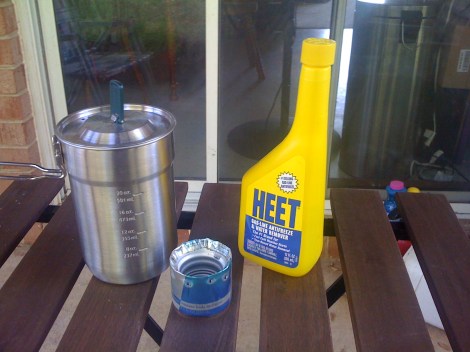
A couple of beverage containers and a little bit of fuel additive bring together this aluminum can stove project. When lit it shoots flames out each of those holes around the top to heat the vessel resting upon it. [Peter Geiger] calls it the Red-Bullet because one of the stove pieces started as a Red Bull can and the other piece was a Coors (aka silver bullet).

This is basically an alcohol stove. We remember seeing a very well designed version of the penny stove several years back. This is different as it uses a side burner so the stove itself functions as the kettle stand. [Peter] started by cutting the Red Bull can just a bit taller than the final height. He then inserted the top portion of one of those aluminum beer cans that are shaped like glass bottles. The neck was lopped off and inverted. It is joined with the other can base using JB weld and by rolling the aluminum in on itself. After that has dried the holes are added and it’s filled with HEET from a yellow bottle. This gasoline additive is meant to sequester water and keep your gas line from freezing. The yellow bottle is mainly alcohol, the red is methanol so make sure you use the right one!
Building A Better PID Smoker Controller

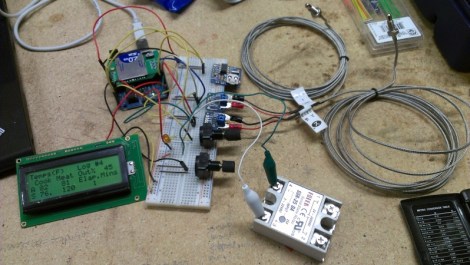
[Matt] wanted to have more control over his meat smoker so he built this advanced PID smoker controller. It uses the solid state relay seen in the bottom-right of this image to switch the smoker’s heating element. But all of the other goodies that are included add several features not usually found in these builds.

This is a replacement for the commercial PID unit he used on the original build. That monitored the temperature in the smoker, using predictive algorithms to maintain just the right heat level. But this time around [Matt] is looking for extra feedback with a second sensor to monitor meat temperature. Using an Arduino with an SD shield he is able to data log the smoking sessions, and his custom code allows him to specify temperature profiles for resting the meat after it has hit the target temperature. It kind of reminds us of a reflow oven controller… but for food.

How To Make That Old Satellite Dish Cook All Your Meals

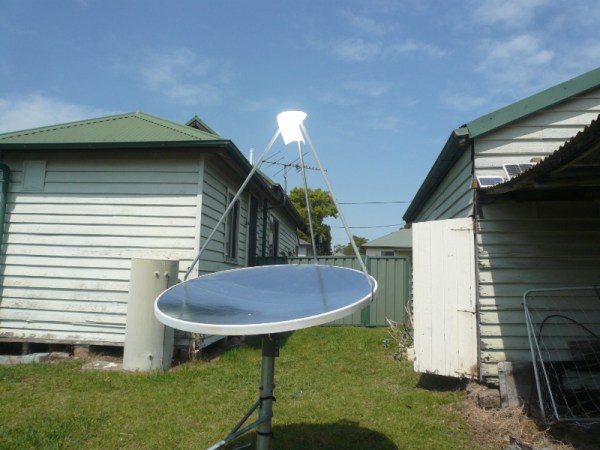
Grab that old satellite dish out of the dark corner of you garage and get those hot dogs ready. [Share alike license] is going to show us how to turn the dish into a solar cooker.

Harnessing the sun’s power requires a reflective surface. Although the image above makes it look like a mirror finish, this is really just covered in foil tape. This is what’s used to seal duct work and can be had for a few bucks at any home store. You’ll notice the dish is pointed up quite a bit more than it would have been when receiving satellite television. The mount on the back of the dish has been turned 180 degrees to allow for this. You want the rays to be focused on the bottom of the cooking area instead of the side and this will do the trick. A small grate was added just below the pinnacle of the receiver tripod. For now it has only been used to boil a pot of water. We’d like to see it grilling up some dogs but you’ll have to figure out a way to catch the drippings. We wonder if a transparent baking pan would block too much of the heat energy?

This is a great way to add purpose to neglected equipment. But if you’re serious about solar cooking you need something more along these lines.

Quacking Egg Timer

[Tom] managed to build a geeky, quirky digital timer for the kitchen. Where most would have used a few seven segment displays along with some buttons and called it done, he found a way to make it a lot more fun. The plush addition on top is a yellow ducky with an orange beak. When time runs out the duck will quack, call you back to the kitchen.

As you can see in the video after the break, [Tom’s] got his hands full with the family. This project was quick enough for him to fit it in during what dwindling free time he manages to hold onto. He used one of the chips that came with his MSP430 Launchpad. Since this family of processors offer extremely low-power modes when asleep they’re perfect for this type of battery-powered application. As for the duck, it’s a toy that had a couple of watch batteries and a small PCB inside. Some poking around led him to a pad that activates the quacking when grounded.

Continue reading “Quacking Egg Timer”

Pulse Jet Tea Kettle

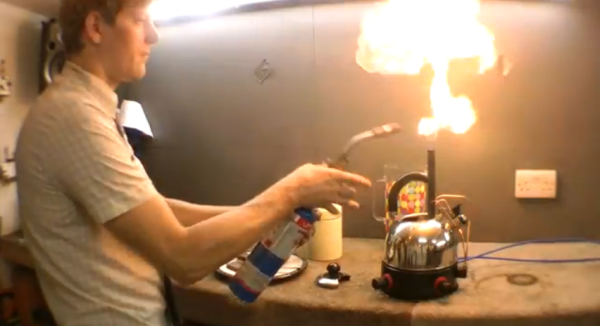
[Colin Furze] is just showing off in this picture. His pulse jet tea kettle is built well enough to get by without help from a blow torch, but who can blame his showmanship? In fact, once it’s running there’s no flame to be seen. That’s because the combustion happens at an earlier stage of that pipe, heating a segment that is submerged in water so that you may have your tea in no time.

Once this thing is tuned up it roars like a robotic lion. [Colin] yells his commentary at the camera, but it is picked up as nothing more than a blip of distortion. Pressurized propane and air both feed into the jet. they’re regulated by the two knobs on the base of the unit (that enclosure is actually just a pie tin). There is also a 9V battery-powered igniter built into the base. You can see how the unit was built in the video after the break.

Continue reading “Pulse Jet Tea Kettle”

Popinator Fires Popcorn Into Your Mouth, Is Probably A PR Stunt

[youtube=http://www.youtube.com/watch?v=b1cz8IasV4w&w=470]

Popcorn Indiana, the same company that manufactures the bags of kettle corn you might find in a convenience store, posted a project on their website called The Popinator. It’s a device you fill with popcorn, turn on, and responds to the word, ‘pop’ by firing a piece of popcorn into your mouth. Details on this build are scant, most likely because The Popinator doesn’t operate exactly as described in the video demo for the Popinator project.

We’re going to call this build a figment of the imagination of one of Popcorn Indiana marketing drones, but the idea behind the project is actually fairly interesting. The idea of using voice recognition to determine when the word ‘pop’ is said to turn on the machine is very cool. Using time of flight to calculate where someone’s head is puts this build into a category of awesome we’ve rarely seen before.

Despite all that coolness, we can’t help but think this project is simply an attempt to “go viral” and get a ton of publicity from random tech blogs using only a video camera and a few hours in Final Cut Pro. You’re welcome, Popcorn Indiana.

Surely there will be a ton of comments for this post arguing the merits of this build. You can check out those comments after the break, along with the official Popinator video.

Continue reading “Popinator Fires Popcorn Into Your Mouth, Is Probably A PR Stunt”

Some Technical Improvements On [Alton Brown’s] Hacked Smoker

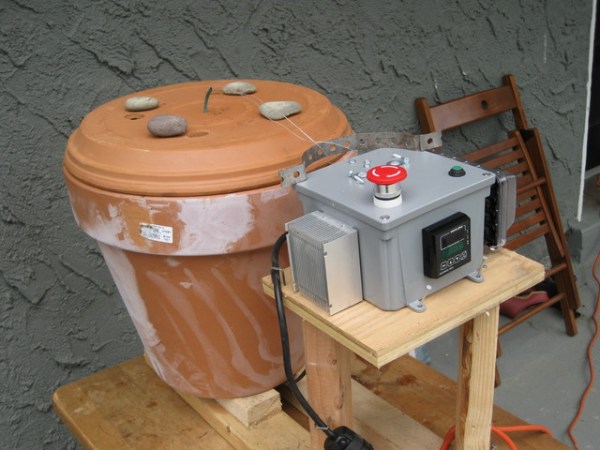
Bringing that smoky goodness to your cooking is neither hard, nor is it expensive. [Alton Brown], who we consider to be the MacGyver of cooking, always seems to be able to build cooking contraptions from common items. The smoker he built from a flower pot was the inspiration for [Tom’s] own project. But [Tom] added in PID hardware to smoke at just the right temperature.

The enclosure hides a single electric burner at the bottom. A metal tray full of wood chips sits on top of it, smoldering as the burner gets hot. You could just set it and forget it, but it will take a lot of trial and error to figure out which setting achieves the best results. [Tom’s] additional hardware, housed in the grey electrical box, switches the burner with a solid state relay. The PID controller takes measurements from a temperature sensor inserted in the lid of the smoker, ensuring perfectly prepared food every time.

If you’re interested in making your own you could try building a heating element from toaster oven parts.