Building Custom Game Controllers For People With Physical Disabilities


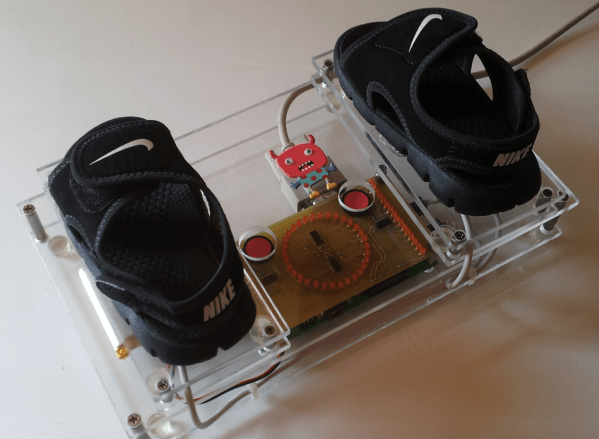
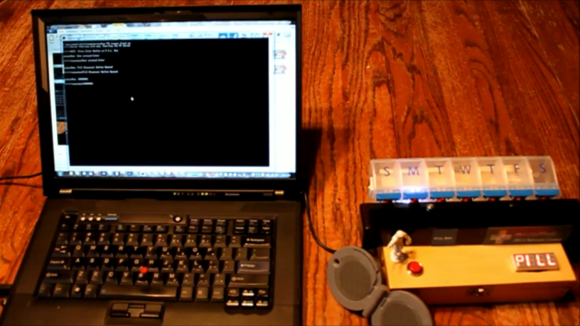
Hold on tight. This is going to be a long post. I kept my temper in the video, but here I can just come out and let you know that I’m livid. Every time I start thinking about this, I feel so angry and helpless that my face gets hot and my hands get shaky.  I’m getting ahead of myself though, so lets just back up a little bit and talk about a pretty cool kid named [Thomas].

[Thomas] has muscular dystrophy. This means he’s going to gradually lose strength and control in his muscles over time. He has already lost his ability to stand, and even holding buttons on a game-pad for extended times can be difficult. Gaming, as you can imagine, is very important to [Thomas] and people like him. It offers a release of frustration, like it does for all of us, but also a level playing ground. When he’s in the game, he’s like everyone else.

Continue reading “Building Custom Game Controllers For People With Physical Disabilities”

Modeling Squid Cells In Code Foregoes Connecting Voltage To Animals

[Kemper Smith] built a little piece of nature in Processing. He was inspired by a biology experiment that excited squid cells using electricity. The result is an interactive display that mimics that biology.

Last August we saw a peculiar experiment that forced Cyprus Hill music on the color changing cells of a squid. The cells make colors by stretching sacs of pigment; the larger they get the more of that color is shown. Normally this is used for camouflage. The image on the left is the reaction from connecting headphone wires while music is being played.

But we can’t all get our hands on this type of wet-ware — especially if life far inland. So [Kemper] got to work writing some Processing code. The result is seen on the right. It does a good job of replicating the motion and color palette of the original. He’s put together a web-based demonstration which you can interact with using your mouse cursor. But we also saw him demonstrate a Kinect based version at our local hackerspace.

Continue reading “Modeling Squid Cells In Code Foregoes Connecting Voltage To Animals”

Shocking Your Brain And Making Yourself Smarter

tds

Transcranial Direct Current Stimulation – or tDCS – is the technique of applying electrodes to the skull and running a small but perceptible current through them. It’s not much current – usually on the order of 1 or 2 mA, but the effect of either increasing or decreasing neural activity has led to some interesting studies. [Theo] over on Instructables wrote a tutorial for making his own tDCS suppy that will supply 2 mA to electrodes placed on the skull for everyone to experiment with.

The basic idea behind tDCS is to put the positive electrode over the part of the brain to be excited or the negative electrode over the part of the brain to be inhibited. This is a well-studied technique that can be used to improve mathematical ability. It’s not electroshock therapy (although that is a valid treatment for depression and schizophrenia) in that a seizure is induced; tDCS just applies a small current to specific areas of the brain to excite or inhibit function.

[Theo]’s device is a simple circuit made of a transistor, resistors, and a few diodes to provide about 2 mA to a pair of electrical contacts. With this circuit and a few gel electrode pads for your head, you too can experiment with direct current stimulation of your brain.

Of course we need to warn you about putting electricity into your head. In any event, here’s a quadcopter / stun gun mashup we made. Don’t do that, either. You might get a takedown request.

Blood Glucose Monitor Data Pushed To Smart Watch

image

[Don] uses a Continuous Glucose Monitor to stay on top of his diabetes. It means carrying around an expensive and fragile device which acts as the readout. He’s an active guy and doesn’t want to destroy the thing while dirt biking or kick boxing so he’s been trying to use a TI Chronos smart watch as a display alternative.

As you can see he has already made some headway. This image shows the watch displaying data from the device. Unfortunately he’s depending on a PC to interface with the CGM display, then pushing it to the watch. He may try moving to a Raspberry Pi to help make this more mobile. This way the sensitive hardware could be tucked safely in a case inside a backpack while the watch shows his current glucose levels. We’d also love to see an embedded solution that would emulate the communications the PC is using to harvest the data. If you’ve got any suggestions in this area we’re sure that [Don] would appreciate the help.

Herd Single Cell Organisms With Your Mind

mind-controlled-paramecium

Most project tips involving brainwaves get passed over because it’s hard to make much out of that type of control. This project doesn’t necessarily make progress on the control side on this, but you have to admit that herding life forms with your thoughts deserves a closer look.

[Geva] set up a rig that allows him to interact with paramecium — tiny single cell organism that are happy to swim around all day long. Just like vertebrates they’re not big fans of electric shocks. Run some current through the fluid and they’ll swim toward the negative electrode.

This experiment uses four pencil leads as electrodes. These are driven by an Arduino which reacts to the input from a toy brain wave device. Concentrate in just the right way and they will swim wherever you will them to.

This isn’t quite as involved as cockroach mind control, but it’s every bit as interesting
Continue reading “Herd Single Cell Organisms With Your Mind”

Pulse Oximeter From LM324, LED, And Photodiode

This pulse oximeter is so simple and cheap to build it’s almost criminal. The most obvious way to monitor the output of the sensor is to use an oscilloscope. The poor-man’s stand-in for that is a sound card, which is what [Scott Harden] demonstrates in his write-up.

It uses a concept we’ve seen a few times before. The light from an LED shines through your finger and is measured on the other side by a phototransistor. It’s that light grey plastic thing you see on a patient’s finger when they’re in the hospital. [Scott] went with a common wooden clothes pin as a way to mount and align the sensor with your finger. It is monitored by the simplest of circuits which uses just one chip: an LM324 op-amp. There are three basic stages which he explains well in the video after the jump. The incoming signal is decoupled before being fed to the first amplifier stage. From there it is fed to an adjustable low-pass filter to help eliminate 60Hz noise from AC power in the room. The last stage amplifies the signal again while using another low-pass filter in parallel.

Continue reading “Pulse Oximeter From LM324, LED, And Photodiode”