X-Labs Hackerspace Completes A Big 2-year Tesla Coil Build

It’s a bit difficult to estimate the size of the Tesla coil from this picture, but look closely at the hand rail on the red-orange wall to the left and that helps. The 10-foot tall musical Tesla Coil project has been on-going for about two years. But the team at X-Labs — a hackerspace affiliated with the University of South Florida — finished it just in time for the University’s engineering expo later in the month. There’s some information about it to be found in the recent student newspaper article on the project. A lot more build details are found on the groups website, although that post is quite old.

You can’t call it a musical coil unless there’s a demo video, and that can be seen after the jump. What better to test the thing than by playing the Super Mario Bros. theme? We’re actually more partial to the Imperial March (it’s also fun to hear played on stepper motors).

Continue reading “X-Labs Hackerspace Completes A Big 2-year Tesla Coil Build”

[Limor] From Adafruit To Hang Out With President [Obama]

adafruit_1200-1

In a positive twist on the usual publicity events that our administration has experimented with over the years, President [Obama] will be hosting a google+ hangout with some lucky people to discuss, well, whatever matters. It is nice to see the people running the country finally getting to grips with some technology. It is still scary to hear how many people making the laws about data still don’t even use a computer.

[Limor] from Adafruit was selected as one of the few that would get to ask the President some questions. She will be focusing on manufacturing and small businesses.  We think she’s a great candidate to do so. We’ve watched her go from someone who just did some really well documented hacks to someone who runs a successful business focusing on open information and education (and gadgets of course). You can also submit your own questions, and if they get enough votes, the president will answer them.

Programming A 555 Chip

555

[Phillip] needed a way to trigger an input every 8 hours or so. This is a snap with a microcontroller with a proper timer, but he recently heard about a very cool programmable timer chip that’s also a 555. Of course CSS555 timer chip has an obscure programming interface, but that isn’t a problem when you can program it yourself with a parallel port.

The CSS555 timer chip (PDF…) is a strange little beast. It’s pin compatible with everyone’s favorite timer IC, but also has a programming mode that allows the output to trigger on every 1 cycle, every 10 cycles, and so on up to one output every million cycles. Basically, it’s a 555 with a huge programmable capacitor that only costs two bucks.

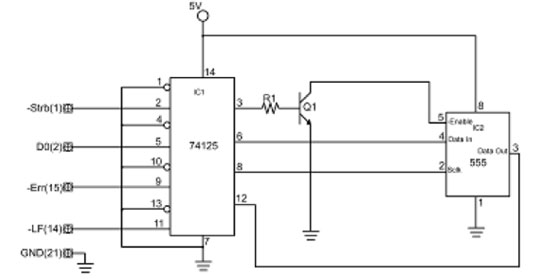
After building a programming circuit from a 74125 hex buffer chip, [Philip] connected his programmer to the parallel port of an ancient PC. For a little retrocomputing cred, he wrote a small app in Forth that pushes commands from the parallel port to the CSS555 chip, greatly increasing the time delay of the chip’s stock configuration.

It’s a neat build, and an awesome introduction to a really cool timer chip. Of course this could be easily replicated with a $2 microcontroller, but that wouldn’t give [Philip] the satisfaction of using a 555.

Introducing The Deconstruction: A Collaborative Experiment

deconstruction

The goal of The Deconstruction is to bring people together (physically and digitally) to share ideas, collaborate, create, problem solve, and have a good time.   The event is open to anyone, anywhere, of any age and skill level.

If you enjoy a bit of good competition and feel like taking on a little bit of a challenge, you should definitely check out The Deconstruction. This event pits a bunch of teams from all over the place against each other in a timed hack-a-thon.  The whole time they are building their project, they’re broadcasting live using their webcams too.

If this brings to mind the Red Bull Creation contest, it is because the root idea is from the same guy [Jason Naumoff], but this is NOT a RedBull thing. When I met with him last year in New York, he clued me in that he was working on something much more open ended and inclusive.  The Deconstruction is that thing. He explained that they’re really hoping to reach out to families, clubs, and high school groups as well as the usual hackerspaces.

Join up, make something cool, have fun.

Shooting Ping Pong Balls At Mach 1.2

Ping%20pong%20gun

Next time you’re in a Nerf gun battle, you better hope you’ve got this absurdly powerful ping pong ball gun. It shoots common celluloid spheres at over 400 meters per second, or Mach 1.2.

This ping pong gun is the work of [Mark French], [Craig Zehrung], and [Jim Stratton] at Purdue University. As you would expect, the gun is powered by compressed air housed in a length of 3 inch schedule 80 PVC pipe. One end of the pressure vessel is sealed with a PVC end cap, while the other is closed off with a doubled up piece of duct tape to contain the pressure.

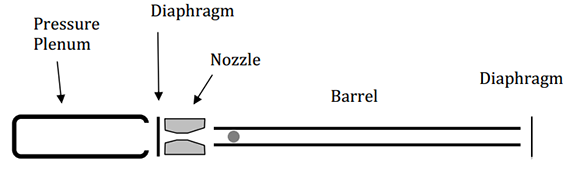
The interesting bit of the build is a de Laval nozzle between the pressure vessel and the barrel. Just like a rocket engine nozzle, this bit of machined PVC compresses the air coming through the burst duct tape seal and allows it to expand again, propelling the muzzle-loaded ping pong ball at supersonic speeds.

The guys have written a report on their gun, you can grab that over on arxiv.

Help Hackaday Buy Our Own 3D Printer UPDATED!

beggars

UPDATE: We’re getting a LulzBot thanks to [Jeff Moe].

ALL DONATIONS ARE BEING REFUNDED. YOU WILL STILL RECEIVE YOUR STICKERS.

We’ve held out for far too long. Hackaday now needs a 3D printer.   We get emails all the time asking why we don’t have a donate button. Well, we’re kind of stubborn and would rather just do with what we have. Unfortunately this hasn’t gotten us very far in the 3d printer department.

We have a few projects in mind that could really utilize a 3d printer, namely building custom game controllers for children with special physical needs.

If you have any interest in helping us get a 3D printer for Hackaday, read on. Otherwise, carry on with your day.

Continue reading “Help Hackaday Buy Our Own 3D Printer UPDATED!”

Telepresence Upgrade With A Minimum Of Effort

telepresence-upgrade-with-very-simple-parts

This telepresence upgrade lets an employee take part in the office from more than four thousand kilometers away. It’s an upgrade of their previous setup which used a laptop on a rotating platform to add a bit of control to the video conferencing experience. But all that original version could do was swivel, this one lets you drive your virtual self around for fifteen hours between battery charges.

The real work is in the base of the robot, as the audio and video are handled by a tablet independently from the locomotion. The team spent about four hundred bucks to throw the thing together. It starts with a hunk of plywood. Two 3A motors were mated with lawnmower wheels for the front of the bot. Dragging under the back of the base are a couple of casters that make it possible to turn without skidding. A motor shield and a WiFi shield for the Arduino make it possible to control the thing over the Internet. They even added some functionality on the client side to use a PlayStation 3 controller. Check out the completed machine in the clip after the break.

Continue reading “Telepresence Upgrade With A Minimum Of Effort”