“Hacking The Xbox” Released For Free In Honor Of [Aaron Swartz]

Hacking the Xbox Cover

[Bunnie], the hardware hacker who first hacked into the original Xbox while at MIT, is releasing his book on the subject for free. The book was originally released in 2003, and delves into both the technical and legal aspects of hacking into the console.

The book is being released along with an open letter from [Bunnie]. He discusses the issues he faced with MIT legal and copyright law when working on the project, and explains that the book is being released to honor [Aaron Swartz]. [Swartz] committed suicide in January following aggressive prosecution by the US government.

The book is a great read on practical applications of hardware hacking. It starts off with simple hacks: installing a blue LED, building a USB adapter for the device’s controller ports, and replacing the power supply. The rest of the book goes over how the security on the device was compromised, and the legal implications of pulling off the hack.

[Bunnie]’s open letter is worth a read, it explains the legal bullying that hackers deal with from a first hand prospective. The book itself is a fantastic primer on hardware hacking, and with this release anyone who hasn’t read it should grab the free PDF.

Makerbot Shows Off 3D Scanner

scan

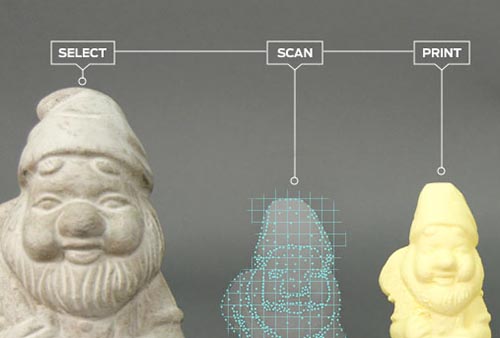
We’ve said our piece over Makerbot and their interpretation of what Open Source means, but the fact remains if you’re sourcing a 3D printer for a high school shop class or a hackerspace, you really can’t do much better than a Makerbot Replicator. Apparently Makerbot is looking to expand their 3D design and fabrication portfolio; they just announced an upcoming 3D scanner at SXSW. It’s called the Makerbot Digitizer, and it takes real, 3D objects and turns them into CAD files.

Since Makerbot and [Bre Pettis] didn’t give out much information about the 3D scanner they’re working on, the best information comes from Techcrunch. The Makerbot Digitizer uses two lasers to scan real objects and turns them into 3D CAD files. The hardware isn’t finalized, and the prototype is made of a few pieces of laser cut plywood. No details are available on how much the Digitizer will cost, when it will be available, or what its resolution is.

Of course 3D scanning of real objects to translate them into CAD files is nothing new for Hackaday readers. We’ve seen our fair share of desktop 3D scanners, including one that was built in a day out of junk. Even the Kickstarter crew has gotten into the action with a few desktop 3D scanners, some of which scan in full color.

SparkFun Takes Their Educational Show On The Road

sparkfun-national-education-tour

They’ve bought an RV and are headed for your state with buckets full of hobby electronic hardware. It’s SparkFun’s National Education tour and if you want them to host a workshop for kids in your area now’s the time to sign up!

It’s no stretch to say that our everyday lives are tightly bound with technology. Chances are every one of the kids in this picture will walk around with an embedded system in their pockets by the time they hit middle school if not earlier (seriously, many of them have the newest generation of high-end smart phones). The sad fact is that nearly 100% will never have any idea how the hardware in those devices functions. And that’s where we think this program really shines.

SparkFun is scheduling 50 stops where $1000 of the cost is subsidized. The team will work with each school/organization to come up with an appropriate workshop for the age of the students and their base knowledge on the topic. Hopefully this will inspire a new generation of hardware hackers who will eventually contribute to using technology to solve world issues. Check out their promo clip after the jump.

We mentioned subsidized visits. The program still costs $1500 and will go up to $2500 after the first 50 stops. But the hardware used in the workshop stays with the kids. And we hope that the $37.50-$125/head price tag will be seen as a worthwhile investment in getting kids interested in more than just entertaining themselves with the social medial offerings running on the hardware.

Continue reading “SparkFun Takes Their Educational Show On The Road”

RPi Printer Server For Your 3D Printer

OctoPrint

Want to run your 3D printer without your laptop attached? Looking to make your hackerspace printer network accessable? OctoPrint aims to make a 3D print server for the Raspberry Pi.

The open source Python project allows you to upload and manage GCODE files on the RPi. You can then select files that you want to print, and get basic statistics before running the printer. Information including temperature can be reported back via the UI, and arbitrary GCODE commands can be run for setup and testing.

Some other nifty features include streaming video to the UI so the print job can be watched remotely. Support for creating time-lapse videos is also available. Adding a wifi dongle and webcam to an RPi turns it into a fully featured print server.

The project uses the Flask web framework to serve the UI, and Tornadio with Socket.io to communicate with the UI asynchronously. You can pull the code from the project’s Github and try it out.

Thanks to [Camerin] for sending this in.

High Contrast Laser Etching

high-contrast-laser-etching

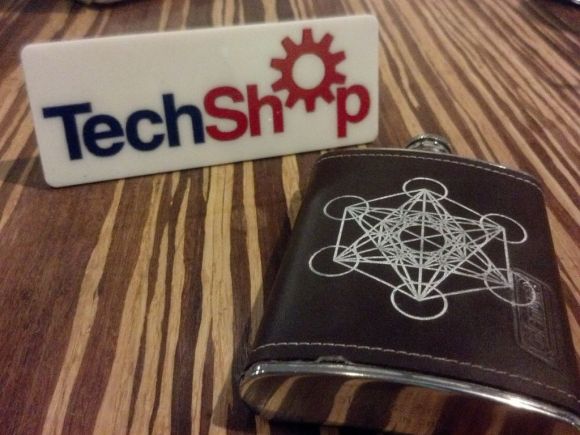
The problem with laser etching dark materials is that the areas burnt away by the intense light don’t really stand out from the rest of the surface. [The 5th Fool] is taking a roundabout way of correcting this by topping his laser engravings with contrasting paint. The technique is still pretty simple and we think it looks great!

Basically he’s etching a layer of painter’s tape which becomes a stencil. But the surface it is masking also gets etched so the paint has an area below to the surface which it can fill in. We figure this will help with durability issues.

After etching the painters tape the design gets a few coatings of a high-contrast paint color and is left to dry. To remove the stencil, duct tape is applied to the entire area. This helps quite a bit in removing the tiny bits of tape from an intricate design.

Laser Etching An IPhone 5

Laser Etched iPhone 5

CrashBangLabs in Regina recently got their hands on a laser cutter. The Full Spectrum cutter was donated by a local company, who were upgrading to a larger machine.

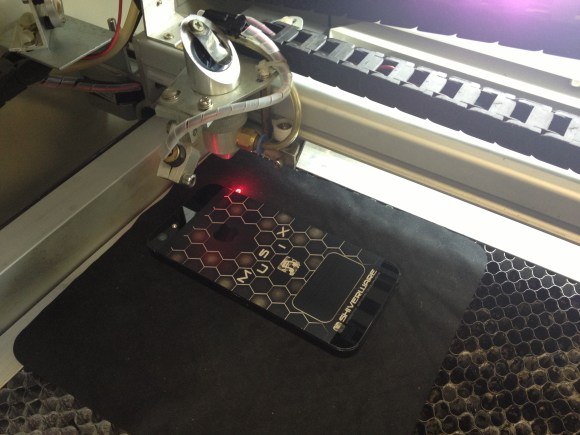
With no laser cutting experience, [Brett] decided that his first project would be laser engraving his iPhone 5. This is a bit of an ambitious first project, since the power and speed would have to be set correctly to get a good contrast level, and you only have one try to get it right. Also, using too much power might have turn the phone into a laser etched brick.

[Brett] used an older aluminium iPod for testing. Once the laser speed and power was dialed in, he loaded up the artwork for the real thing. The cutter did a pretty good job at etching the art, but as the etching started it became clear that an alignment error had occurred. Fortunately [Brett] decided to not interrupt the cutter, and ended up with a good looking phone, with a slight alignment issue.

After the break, check out a time lapse of the laser cutter doing its thing.

Continue reading “Laser Etching An IPhone 5”

Mexican Law Enforcement Seizes A Hacked Together Weed Cannon

marijuanna-cannon

Here’s an interesting hack. It’s a small pick-up truck with a Dope Cannon attached to it. Sure, it looks more like something you’d see in Syria, but this item was actually seized in Mexico where it was being used to fire 30 pound slugs of Marijuana over the border fence with the US. Usually when you fire artillery there isn’t someone on the target range trying to recover the projectile!

The device uses a PVC barrel to guide the pot-pellet as it’s propelled by compressed air. Hey, swap out the drugs for an energy drink and that sounds pretty familiar. Our qualifying entry for the 2012 Red Bull Creation Contest was an energy drink cannon which  used the same setup with a slightly smaller caliber. It makes us wonder if the drug cartel uses little parachutes like we did?

Doesn’t it arouse suspicion to drive something like this around town? You’d think they’d use a box truck or something similar to hide the giant gun.

[Photo Credit: AP via NY Daily News]

[via Reddit]