EcDB Offers A Simple, Intuitive Way To Keep Your Electronic Inventory Organized

ecdb

One of the most important tools for any hacker or maker is organization. You might consider it more of a concept rather than a physical tool, but regardless of how you like to frame it, ensuring your tools and components are (nearly) always where they should be is key. As the odds and ends add up, it can sometimes be hard remembering exactly what you have on hand – that’s where the ecDB comes in handy.

Short for electronics component DataBase, the ecDB was created by [Nils Fredriksson], and offers a clean and intuitive way to keep tabs on what you have in-house. Many of us have used spreadsheets and notebooks to do the same, but ecDB allows you to record much more data than you could with either solution.

This is immediately clear within a moment or two of looking at the site’s interface. Not simply limited to listing part names and quantities, ecDB allows you to record manufacturer info, package type, and pin counts, while also allowing you to attach PDF datasheets and images of your components as well.

We really like system that [Nils] put together, and suggest giving it a spin to see if it will help you keep things organized in your workshop.


Hackaday Links March 8th, 2012

Solder Your Pin headers Straight

straight-header solder

If you’re worried about how to solder your pin headers straight, why not try this simple trick and put them into a breadboard before soldering?

Etiquette for Open Source Projects

soapbox Phillip Torrone

If you use or develop open source projects, it’s worth checking out [Phillip Torrone]’s Unspoken rules of Open Source article. You may not HAVE to do all the things he says, but it’s certainly a good starting point for being ethical with your hacks.

The [GoAmateur] Camera Mount

go-amateur camera mount for bike

If you can’t afford a professional camera mount for your bike, why not make one yourself? As pointed out in the article, normal cameras aren’t really made for this, so do so at your own risk. If this isn’t shoddy enough for you, why not make a mount for your 4 year old dumb-phone (Env2) out of a block of wood?

A 3D Printer BOM

If you’re wondering how much a 3D printer will cost you, or where to source the parts, this Bill of Materials for a Prusa Mendel should help. We would assume this project will be updated as everything is built, so be sure to check back!

MakerBot Assembly Time-Lapse

makerbot time lapse

Along the same lines, if you’re wondering about getting into 3D printing, this time-lapse of the Thing-O-Matic being assembled may give you some insight into what’s involved in getting one functional!

Weekly Roundup 3/3/11

In case you missed them the first time, here are our most popular posts from the past week:

In first place is a post about a video by [Rear Admiral Grace Hopper] where she talks about how to visualize a nanosecond using a piece of copper wire.

Coming in at second is one that we are pretty excited about here at HAD. The Raspberry Pi has finally launched! For those of you who haven’t been following its progress, this is a small (roughly the size of a credit card) Linux computer that costs only $35 for the better model! We can think of all sorts of things that we would like to use them for but alas, even we can’t get our grubby hands on them quite yet since they are already completely sold out.

Next we have a weather station for the virtual weather within Minecraft. This project uses a small LCD and an Arduino to tell you if you need to be wearing your virtual raincoat.

If you have been looking for a way to anodize titanium at home instead of sending out your parts to a service, here is a post for you.

Finally, we finish up with a post that we like a lot. It is about three remote controlled ‘airplanes’ that were flown near the Brooklyn Bridge that look a lot like people when seen from a distance.

Raspberry Pi Launched

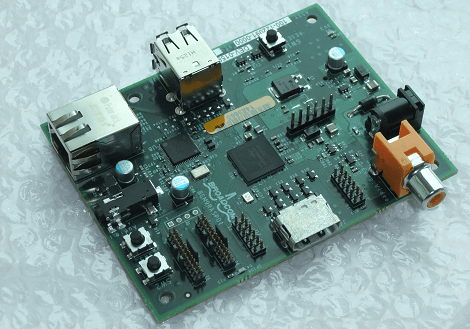
The Raspberry Pi has been launched. When we first heard of this board nearly a year ago, the idea of a $25 computer that displays 1080p video, runs Linux, and has enough ports to the outside world to do some  very interesting stuff, we were cautiously optimistic. Now that the guys behind the Raspberry Pi are getting units out to the masses, we’re a little excited and also thinking about all the cool stuff we’re going to build.

The Raspberry Pi foundation is going with a licensed manufacturing setup with RS Components and Premier Farnell signing up to manufacture and distribute the boards. Right now it’s a strictly one-per-customer situation, but within a month or so you’ll be able to order as many as you would like.

Right now the foundation is focusing on the slightly more expensive ‘B’ model Raspberry Pi that includes Ethernet and USB over the $25 base unit. The ‘A’ model was originally slated to come with 128 MB of RAM, but due to some clever cost saving strategies, the team increased the base RAM to  256 MB.

Right now the only question we have is if an American distributor has signed on to sell this board; we’re sure something awesome will be built with this awesome little board. Commentors pointed out that Newark was selling Raspis for the US market, but they’re out of stock. The best advice may be to wait a few months for production to catch up to demand.

Weekly Roundup 2/25/12


In case you missed them the first time around, Here are out most popular posts from the past week:

In first place is a post about a DIY ski lift that [Darrin] built. Why should you let a strenuous hike back up a snowy hill ruin your day when you can ski down the hill and then ski right back up it again? Way to go [Darrin]! You are our kind of lazy!

Our second-most popular post is a modern twist on the Nixie tube. This device is made from many layers of clear acrylic that have the numbers engraved onto them. The acrylic is edge lit to achieve a Nixie-tube look-alike.

Next up is a post about a clever way to check the accuracy of a watch. [th3badwolf] did this by making a video at one frame per minute and seeing what the second hand did. Under ideal circumstances, the second hand would stay in the same place for the whole video.

Take a look at this one! Did you think that a CNC machine needs to have a very rigid structure to control the cutting bit? This one doesn’t have any. You hold it with your hand!

Finally, we leave you with a repeat from last week. We didn’t post it this week but you guys just kept coming back for more of this post where [Superluminal] and some friends cast their wedding present for an unlucky bride and groom inside of a big sticky sugar cube.

silver-ink-on-glass

DIY Conductive Ink Lets You Freehand Circuits On The Cheap

[Jordan] likes the flexibility that conductive inks offer (dead link, try Internet Archive) when putting together electronic circuits, but says that they are often too expensive to purchase in decent quantities, and that they usually require substrate-damaging temperatures to cure. After reading a UIUC Materials Research Lab article about making conductive ink that anneals at relatively low temperatures, he decided to give it a shot.

[Jordan] started out by picking up various chemicals and lab supplies online, setting up shop at Pumping Station: One. The process is pretty straightforward, and seems like something just about anyone who took high school chemistry can manage. That said, he does note that some of the chemicals, such as Formic Acid, can be quite painful if mishandled.

After just a few minutes of work and about 12 hours waiting time, [Jordan] had himself a decently-sized vial of conductive ink. He tried it out on a few different substrates with varying results, and in the end found that etched glass made the best circuits. He says that there are plenty of experiments to try, so expect even more helpful info from him in the near future.

[via Pumping Station: One]

Automatic Water For Your Pets

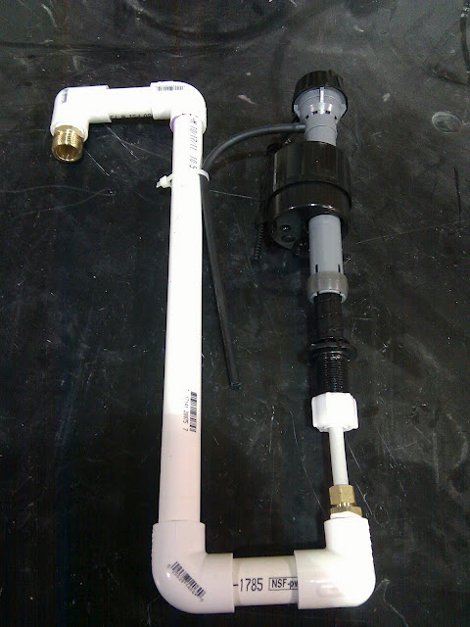
If you have livestock or outdoor pets you know how important it is to keep them watered, but also know that sometimes you are not around when the trough runs dry. [Buddy] solves this inconvenience with a trip to the hardware store and some creativity.

The automatic water filler is made from some PVC pipe, brass fittings, a faucet supply and a toilet float valve. The PVC is arranged into a hook shape, a fitting is put on one end for a standard garden hose. On the other end a bit of adapting is needed to convert the PVC into a faucet supply, where the toilet valve is hooked up. Now whenever your thirsty beasts get the water too low, the float lowers and tops off the watering hole with fresh H20. That sure beats running out there every day to make sure, especially with summer just around the bend.