Video: Analog To Digital Conversion On The ATmega328p

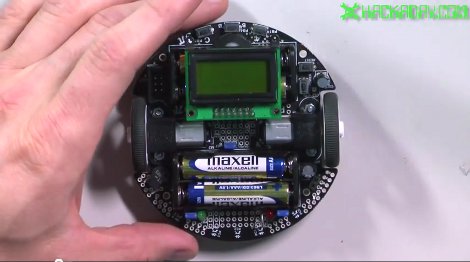
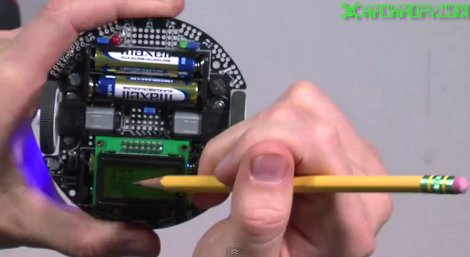
In this week’s video, we continue on where we left off last week with another in our series of videos where we discuss how to program for the ATmega328p processor. This week, [Jack] takes a look at the analog to digital converter and takes us through how to set things up and then how to perform a conversion using the potentiometer on the 3pi as the analog source. Playing with potentiometers isn’t the most interesting thing in the world, but after watching this video, you will be able to do things like take light readings using a cadmium sulfide cell, read the weight applied to a sensor, calculate the temperature from a resistor and a thermistor, or interface with an analog gyroscope.

If you have missed our previous videos, here are some links:
Part 1: Setting up the development environment
Part 2: Basic I/O
Part 3: Pulse Width Modulation

Stay tuned for next week’s* video where we will take a look at how to interface with the 3pi’s line sensors.

Video is after the break…

* HAD is in the process of moving our secret headquarters so next week’s video may come some time later than next week.

Continue reading “Video: Analog To Digital Conversion On The ATmega328p”
Video: PWM On The ATmega328p

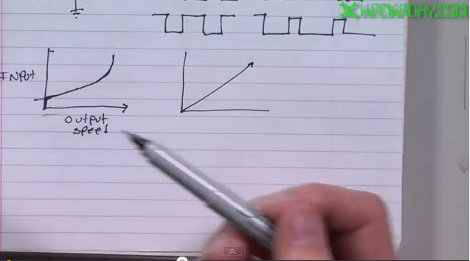
This week we continue on with another video in our series about how to program for the ATmega328p processor using C. The ATmega328p is at the heart of many Arduino boards. If you have been using them but want to add some more horsepower to your projects, this series of videos is for you. In this video, [Jack] talks about various types of pulse width modulation (PWM). You can use PWM to control the speed of a motor, the brightness of a LED, or to generate analog waveforms. [Jack] shows how to set up the processor to do locked anti-phase PWM to drive the wheels of the 3pi robot and then demos a short program that shows the code in action.

If you missed the previous posts in this series and would like to check them out…
Intro and how to set up the development environment : Click Here
Working with I/O pins: Click Here

Video is after the break…
Continue reading “Video: PWM On The ATmega328p”

You Want How Much For A Phone Charger?

People quickly find out that I am a dork, and their next question typically is “why do you own that old as dirt dumb phone?”. Well to be honest, I don’t like phones. After a decade of Palm Pilots and Windows CE devices, I really don’t like touch screens either (fat man fingers and a bad habit of chewing nails does not help). I also do not like that in order to get a fancy PDA with a radio you usually have to sign up for a data plan, or pay for the thing in full.

Now get off my lawn! Seriously though, I really only need my phone to do two things, make phone calls, and send SMS messages. If I had a wishlist the only other things I would like is mass storage for MP3 files, and Bluetooth. Naturally when I started my new day job I found the geek in the department and shortly there after I got asked about my basic LG flip phone.

After a few days of interrogation I jokingly snapped back with “well since you are so worried about it why don’t you give me a better phone!” With a little hinting around and a bribe of a “Swiss Roll” at lunch, I was given an old HTC phone with Windows Mobile 5.

While it is not exactly an iPhone or an Android,  it is much more featured than what I had, and it has a mini SD card slot and Bluetooth! The only catch was, he could not find the charger. We did not know if the thing even worked (he had never seen the thing turned on) , or what condition the battery was in.

As a good little hacker I took it anyway,  join me after the break to see me get it fired up and save a quite a bit of change in the process.

Continue reading “You Want How Much For A Phone Charger?”

On The Life Of [Dennis Ritchie]

Chances are you have already heard of the passing of [Dennis Ritchie]. We admit, we’re among the throngs who knew little of his life, but [Cade Metz] has posted an excellent remembrance of his life which we think is well worth reading.

[Dennis] passed on October 12th at the age of 70. This image shows him receiving the National Medal of Technology awarded to him by [Bill Clinton] in 1998. His legacy lives on in the work that earned him this award as the creator of the C programming language; a side project which he developed to help him achieve the creation of a new system kernel called UNIX. This work, of course, was the precursor that led to universal software packages like OSX, iOS, Linux, and even Windows (which at one point was itself written using the C language).

There has been some Internet fodder regarding media coverage of [Steve Jobs’] death and not of [Dennis’] passing. It’s harder for those lacking experience with programming to comprehend [Dennis’] contributions. We’re glad to have an opportunity to pass on the story of his life and to take a moment to appreciate his accomplishments.

[Thanks Dave]

[Photo Source]

Weekly Roundup 10/15/11

In case you missed them the first time around, here are our most popular posts from the past week.

Our most popular post of the week was one about a rocket that was built by the [Qu8k team] that was their entry for the Carmack Prize, which put up a purse of $10,000 for proof and a nice writeup about a rocket that can launch to at least 100,000 feet. The rocket that we posted about managed to launch to 121,000 feet!

Next, we had a post about another space-related project called KickSat where they are hoping to launch many single-circuit-board satellites into space.

Our third most popular post is about an octocopter built by the German effects company OMStudios to fly a RED Epic camera around and above film shoots because training large birds to do it just wasn’t working.

Next we had a post about how to build your own 23″ Android tablet. Now you can make *everyone* around you jealous of your mad Angry Birds skills.

Surprisingly, our previous hackaday-original post about how to put your logo into a QR code hit the top five list again.

Since we have previously featured the QR code post in our weekly roundup in the past, we’ll break the rules and give you another so that we are featuring five new posts for this week. At number six, we have a post about how to play dubstep live on real instruments.

Video: Learning To Program For The ATmega328p Part I

Many of you are familiar with the Arduino. Many of you hate it…* This post isn’t about the Arduino. It is about the processor that is at the heart of many Arduino boards. If you are in the camp of people who can’t understand why others dislike the Arduino so much, this series is for you. In this series of videos, [Jack] will explore how to program for the ATmega328p processor using C. If you have been programming for the Arduino, you may have had some issues with the speed of your code at points. Programming in C will allow you to wring out nearly the last ounce of processing power that the ATmega processors can provide. It will also let you access the peripherals on the processor directly and to switch between different processors when you need more (or less) capabilities.

In this first video, [Jack] shows you all of the features of the 3pi robot, which he will be using as a fancy development board for the ATmega328p. He then shows you how to get your development environment set up and then walks you through one of the sample programs provided for the 3pi robot.

*Here at Hackaday, we are officially neutral in the ongoing Arduino love/hate war. We don’t care what microcontroller is used in the hacks that we show, only that they are cool.

Video is after the break!
Continue reading “Video: Learning To Program For The ATmega328p Part I”

Announcing Our Next Theme: Halloween Hacks

It seems every year, Hack A Day is a little bit behind the times when it comes to Halloween hacks. Builds like the Mario costumes and the house singing Thriller are great, but it makes a lot more sense for us to post them before Halloween.

To introduce our Halloween theme, we’d like to present [heavyweighthowe]’s Halloween project. It’s a small lighting automation build that syncs a string of lights to the theme of the best Halloween Christmas 2nd best [Tim Burton] movie, The Nightmare Before Christmas. [heavyweighthowe] used Vixen to sequence the lights and an Arduino to interpret the serial commands from Vixen. It’s a nice build that would look great sitting on a porch next to a giant bowl of candy.

If you’ve got a Halloween build you’d like to show off, like a haunted house ride an awesome costume or even a really great Jack-O-Lantern, send it in on the tip line. We’re planning on putting up at least one Halloween post a day, so keep sending in those builds.