FLOSS Weekly Episode 789: You Can’t Eat The Boards

This week Jonathan Bennett and Doc Searls chat with Igor Pecovnik and Ricardo Pardini about Armbian, the Debian-based distro tailor made for single-board computers. There’s more than just Raspberry Pi to talk about, with the crew griping about ancient vendor kernels, the less-than-easy ARM boot process, and more!

Continue reading “FLOSS Weekly Episode 789: You Can’t Eat The Boards”

Paul Allen’s Living Computers Museum And Labs To Be Auctioned

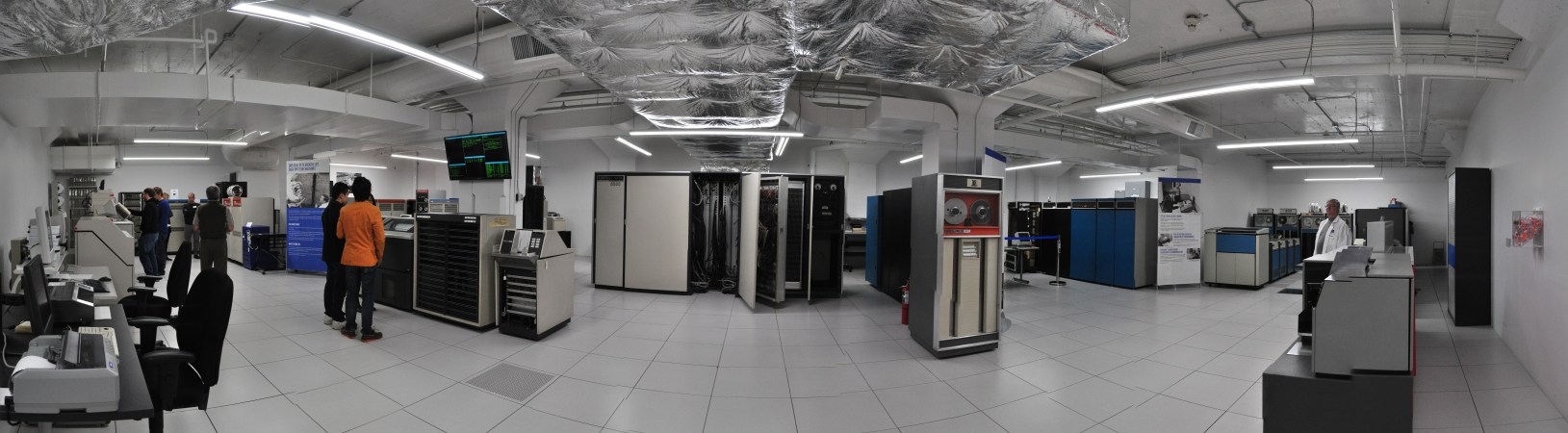
After the Living Computers museum in Seattle closed like so many museums and businesses in 2020 with the pandemic, there were many who feared that it might not open again. Four years later this fear has become reality, as the Living Computers: Museum + Labs (LCM+L, for short) entire inventory is being auctioned off. This occurs only 12 years after the museum and associated educational facilities were opened to the public. Along with Allen’s collection at the LCM+L, other items that he had been collecting until his death in 2018 will also be auctioned at Christie’s, for a grand total of 150 items in the Gen One: Innovations from the Paul G. Allen Collection.

In 2022 Allen’s art collection had seen the auction block, but this time it would seem that the hammer has come for this museum. Unique about LCM+L was that it featured vintage computing systems that visitors could interact with and use much like they would have been used back in the day, rather than being merely static display pieces, hence the ‘living computers’ part. Although other vintage computing museums in the US and elsewhere now also allow for such interactive displays, it’s sad to see the only major vintage computing museum in Washington State vanish.

Hopefully the items being auctioned will find loving homes, ideally at other museums and with collectors who aren’t afraid to keep the educational spirit of LCM+L alive.

Thanks to [adistuder] for the tip.

Top image: A roughly 180° panorama of the “conditioned” room of the Living Computer Museum, Seattle, Washington, USA. Taken in 2014. (Credit: Joe Mabel)

TSMC’s Long Path From Round To Square Silicon Wafers

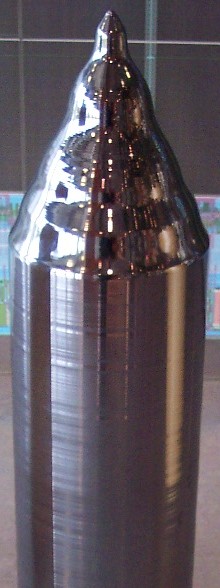
Crystal of Czochralski-grown silicon.

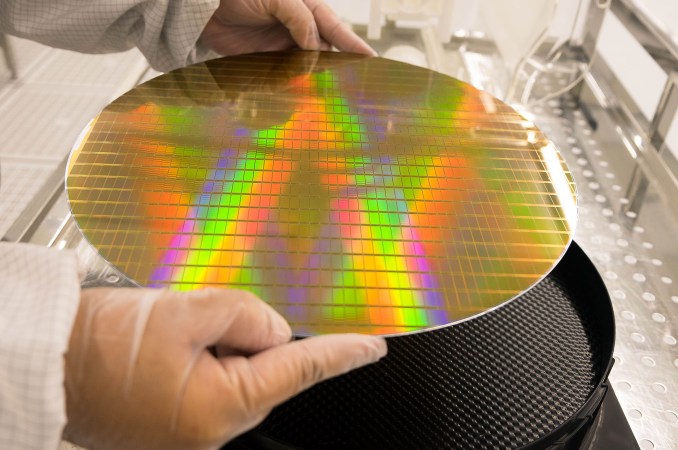
Most of us will probably have seen semiconductor wafers as they trundle their way through a chip factory, and some of us may have wondered about why they are round. This roundness is an obvious problem when one considers that the chip dies themselves are rectangular, meaning that a significant amount of the dies etched into the wafers end up being incomplete and thus as waste, especially with (expensive) large dies. This is not a notion which has escaped the attention of chip manufacturers like TSMC, with this particular manufacturer apparently currently studying a way to make square substrates a reality.

According to the information provided to Nikkei Asia by people with direct knowledge, currently 510 mm x 515 mm substrates are being trialed which would replace the current standard 12″ (300 mm) round wafers. For massive dies such as NVidia’s H200 (814 mm2), this means that approximately three times as many would fit per wafer. As for when this technology will go into production is unknown, but there exists significant incentive in the current market to make it work.

As for why wafers are round, this is because of how these silicon wafers are produced, using the Czochralski method, named after Polish scientist [Jan Czochralski] who invented the method in 1915. This method results in rod-shaped crystals which are then sliced up into the round wafers we all know and love. Going square is thus not inherently impossible, but it will require updating every step of the process and the manufacturing line to work with this different shape.

Nearly 30 Years Of FreeDOS And Looking Ahead To The Future

Blinky, the friendly FreeDOS mascot.

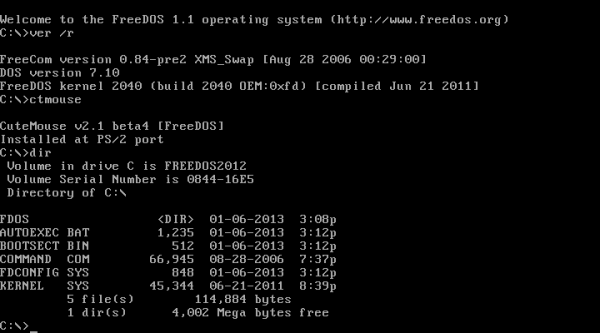
The first version of FreeDOS was released on September 16 of 1994, following Microsoft’s decision to cease development on MS-DOS in favor of Windows. This version 0.01 was still an Alpha release, with 0.1 from 1998 the first Beta and the first stable release (1.0, released on September 3 2006) still a while off. Even so, its main developer [Jim Hall] and the like-minded developers on the FreeDOS team managed to put together a very functional DOS using a shell, kernel and other elements which already partially existed before the FreeDOS (initially PD-DOS, for Public Domain DOS) idea was pitched by [Jim].

Nearly thirty years later, [Jim] reflects on these decades, and the strong uptake of what to many today would seem to be just a version of an antiquated OS. When it comes to embedded and industrial applications, of course, a simple DOS is all you want and need, not to mention for a utility you boot from a USB stick. Within the retro computing community FreeDOS has proven to be a boon as well, allowing for old PCs to use a modern DOS rather than being stuck on a version of MS-DOS from the early 90s.

For FreeDOS’ future, [Jim] is excited to see what other applications people may find for this OS, including as a teaching tool on account of how uncomplicated FreeDOS is. In a world of complicated OSes that no single mortal can comprehend any more, FreeDOS is really quite a breath of fresh air.

This Week In Security: Chat Control, Vulnerability Extortion, And Emoji Malware

Way back in 2020, I actually read the proposed US legislation known as EARN IT, and with some controversy, concluded that much of the criticism of that bill was inaccurate. Well what’s old is new again, except this time it’s the European Union that’s wrestling with how to police online Child Sexual Abuse Material (CSAM). And from what I can tell of reading the actual legislation (pdf), this time it really is that bad.

The legislation lays out two primary goals, both of them problematic. The first is detection, or what some are calling “upload moderation”. The technical details are completely omitted here, simply stating that services “… take reasonable measures to mitigate the risk of their services being misused for such abuse …” The implication here is that providers would do some sort of automated scanning to detect illicit text or visuals, but exactly what constitutes “reasonable measures” is left unspecified.

The second goal is the detection order. It’s worth pointing out that interpersonal communication services are explicitly mentioned as required to implement these goals. From the bill:

Providers of hosting services and providers of interpersonal communications services that have received a detection order shall execute it by installing and operating technologies approved by the Commission to detect the dissemination of known or new child sexual abuse material or the solicitation of children…

This bill is careful not to prohibit end-to-end encryption, nor require that such encryption be backdoored. Instead, it requires that the apps themselves be backdoored, to spy on users before encryption happens. No wonder Meredith Whittaker has promised to pull the Signal app out of the EU if it becomes law. As this scanning is done prior to encryption, it’s technically not breaking end-to-end encryption.

You may wonder why that’s such a big deal. Why is it a non-negotiable for the Signal app to not look for CSAM in messages prior to encryption? For starters, it’s a violation of user trust and an intentional weakening of the security of the Signal system. But maybe most importantly, it puts a mechanism in place that will undoubtedly prove too tempting for future governments. If Signal can be forced into looking for CSAM in the EU, why not anti-government speech in China?

Continue reading “This Week In Security: Chat Control, Vulnerability Extortion, And Emoji Malware”

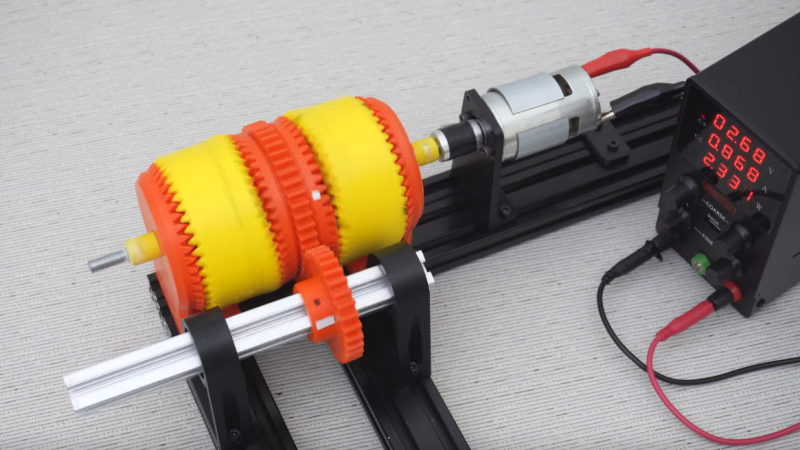
Bent Shaft Isn’t A Bad Thing For This Pericyclic Gearbox

With few exceptions, power transmission is a field where wobbling is a bad thing. We generally want everything running straight and true, with gears and wheels perfectly perpendicular to their shafts, with everything moving smoothly and evenly. That’s not always the case, though, as this pericyclic gearbox demonstrates.

Although most of the components in [Retsetman] model gearboxes seem familiar enough — it’s mostly just a collection of bevel gears, like you’d see inside a differential — it’s their arrangement that makes everything work. More specifically, it’s the shaft upon which the bevel gears ride, which has a section that is tilted relative to the axis of the shaft. It’s just a couple of degrees, but that small bit of inclination, called nutation, makes the ring gear riding on it wobble as the shaft rotates, allowing it to mesh with one or more ring gears that are perpendicular to the shaft. This engages a few teeth at a time, transferring torque from one gear to another. It’s easier to visualize than it is to explain, so check out the video below.

Gearboxes like these have a lot of interesting properties, with the main one being gear ratio. [Retsetman] achieved a 400:1 ratio with just 3D printed parts, which of course impose their own limitations. But he was still able to apply some pretty serious torque. The arrangement is not without its drawbacks, of course, with the wobbling bits naturally causing unwelcome vibrations. That can be mitigated to some degree using multiple rotatins elements that offset each other, but that only seems to reduce vibration, not eliminate it.

[Retsetman] is no stranger to interesting gearboxes, of course, with his toothless magnetic gearboxes coming to mind. And this isn’t the only time we’ve seen gearboxes go all wobbly, either.

Continue reading “Bent Shaft Isn’t A Bad Thing For This Pericyclic Gearbox”

PCB Design Review: Switching Regulator Edition

This article was prompted by a friend of mine asking for help on a board with an ESP32 heart. The board outputs 2.1 V instead of 3.3 V, and it doesn’t seem like incorrectly calculated feedback resistors are to blame – let’s take a look at the layout. Then, let’s also take a look at a recently sent in design review entry, based on an IC that looks perfect for all your portable Raspberry Pi needs!

What Could Have Gone Wrong?

Here’s the board in all its two-layer glory. This is the kind of board you can use to drive 5 V or 12 V Neopixel strips with a firmware like WLED – exactly the kind of gadget you’ll want to use for LED strip experiments! 3.3 V power is provided by a Texas Instruments TPS54308 IC, and it’s the one misfiring, so let’s take a look.

Continue reading “PCB Design Review: Switching Regulator Edition”