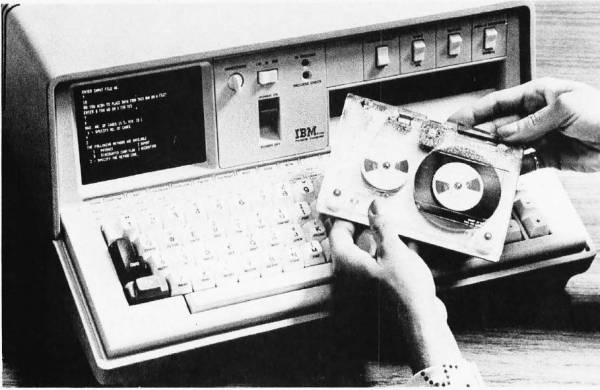
The IBM 5100, image from December 1975 issue of BYTE.

Bringing APL To The Masses: The History Of The IBM 5100

The 1970s was a somewhat awkward phase for the computer industry — as hulking, room-sized mainframes became ever smaller and the concept of home and portable computers more capable than a basic calculator began to gain traction. Amidst all of this, two interpreted programming languages saw themselves being used the most: BASIC and APL, with the latter being IBM’s programming language of choice for its mainframes. The advantages of being able to run APL on a single-user, portable system, eventually led to the IBM 5100. Its story is succinctly summarized by [Bradford Morgan White] in a recent article.
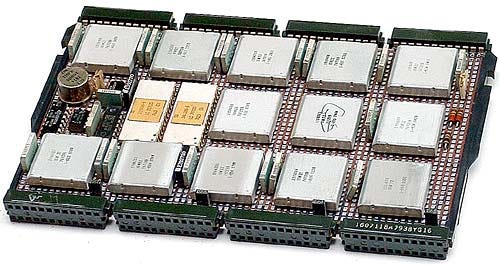
The IBM PALM processor.

Although probably not well-known to the average computer use, APL (A Programming Language) is a multi-dimensional array-based language that uses a range of special graphic symbols that are often imprinted on the keyboard for ease of entry.

It excels at concisely describing complex functions, such as the example provided on the APL Wikipedia entry for picking 6 pseudo-random, non-repeating integers between 1 and 40 and sorting them in ascending order:

x[x6?40]

Part of what made it possible to bring the power of APL processing to a portable system like the IBM 5100 was the IBM PALM processor, which implemented an emulator in microcode to allow e.g. running System/360 APL code on a 5100, as well as BASIC.

Despite [Bradford]’s claim that the 5100 was not a commercial success, it’s important to remember the target market. With a price tag of tens of thousands of (inflation-adjusted 2023) dollars, it bridged the gap between a multi-user mainframe with APL and far less capable single-user systems that generally only managed BASIC. This is reflected in that the Commodore SuperPET supported APL, and the 5100 was followed by the 5110 and 5120 systems, and that today you can download GNU APL which implements the ISO/IEC 13751:2001 (APL2) standard.

We’ve previously looked at the Canadian-made MCM/70, another portable APL machine that embodied the cyberdeck aesthetic before William Gibson even gave it a name.

Top image: The IBM 5100, image from December 1975 issue of BYTE.

Thanks to [Stephen Walters] for the tip.
Storage Media Forgotten

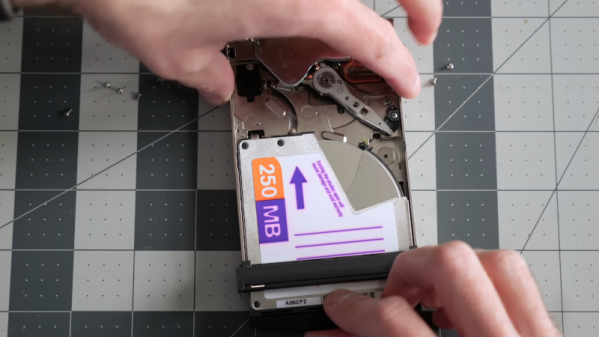
These days, cheap removable storage is no problem. USB sticks are virtually free at moderate capacity and not unreasonable, even at relatively large sizes. They are rugged, work across platforms, and don’t require any exotic interfaces. But this hasn’t always been the case.  In the 1990s, people wanted to store too much data for floppies, but weren’t willing to shell out for removable hard drives or tapes. Many companies identified this opportunity with, perhaps, the most successful being Iomega with the Zip drive. But there were others, including the Avatar Shark that [This Does Not Compute] remembers in a video you can see below.

Haven’t heard of the Shark? We had not either, but reviewers seemed to like it. The drive would fit in your pocket if you had a fairly large pocket. The 250 MB cartridge was smaller (but thicker) than a 3.5-inch floppy. It performed ok and connected to the parallel port which was common in those days.

Continue reading “Storage Media Forgotten”

Remembering Ed Roberts, The Home Computer Pioneer You Should Have Heard Of But Probably Haven’t

We’re pretty familiar with such names as Steve Wozniak, Bill Gates, Jack Tramiel, Nolan Bushnell, and the other movers and shakers of the 1970s home computer world. But there’s one person who towered among them for a few years before cashing out and leaving the computer business to pursue the life he’d always wanted. [Gareth Edwards] for Every has a fascinating profile of Ed Roberts, the man who arguably started the home computer boom but is now an obscure figure.

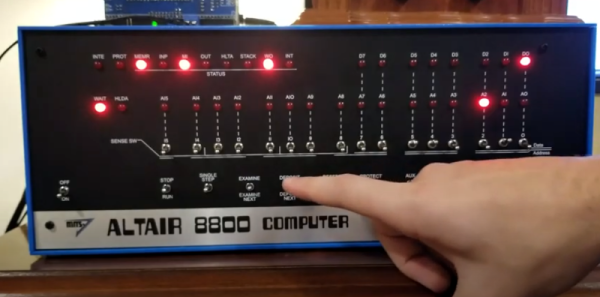
Even if you’ve never heard of Ed Roberts, you’ve likely heard of the product his company brought to market. The MITS Altair 8800 was the first computer to be sold as a home computer rather than for business or scientific use, and though its toggle switch interface now seems extremely quaint, its influence on every microcomputer that followed has been immense.

As followers of the retrocomputing scene, we know about the Altair, but perhaps more interesting is the story of MITS. Formed by a group of US Air Force veterans to produce rocket telemetry equipment, it pivoted to calculators, and as that market imploded in the early 1970s, the computer was a big gamble to save it from bankruptcy. It’s one that paid off, and as someone used to seeing technological cycles of boom and bust, Ed cashed out at the peak of the first wave. He followed his long-held ambition of becoming a doctor, and when, in 2010, he was near the end of his life, the hospital caring for him was shocked to find itself being visited by Bill Gates. It’s an article about a fascinating individual well worth reading.

The Altair, meanwhile, is a project that appears quite often here at Hackaday. Here’s a recreation of one as original as possible. The Mark 8 came out a little earlier but without complete kits or assembled units, so it didn’t get the traction — or the imitators — that the Altair did.

Mind Control… No, Not Like That

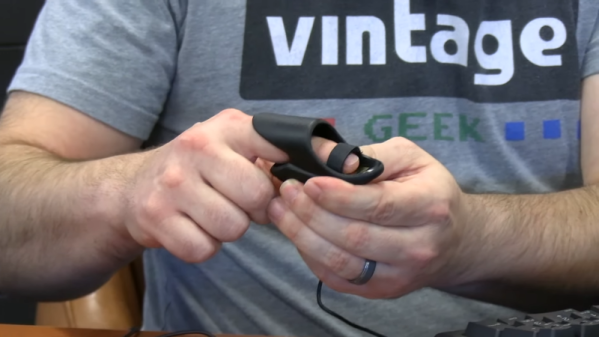
[Vintage Geek] found an interesting device from 1996 called “MindDrive” which claims you can control your computer with your brain. Oddly, though, it doesn’t connect to your head. Instead, it has a little finger sensor that looks like a pulse-ox sensor. Did it work? The video below will show you what it can and can’t do.

The company claims the device is the result of seven years of research. We suspect it is little more than a galvanometer, like a kid’s toy lie detector. There is a gold sensor and a Velcro strap. It is hard to imagine that it was feasible that “thinking left” would cause a change in your finger that the device can interpret.

Continue reading “Mind Control… No, Not Like That”

Calculation Before We Went Digital

We have to like [Nicola Marras]. First, he wrote a great mini-book about analog computers. Then he translated it into English. Finally, he opened with a picture of Mr. Spock using an E6-B flight slide rule. What’s not to like? We suggest you settle in when you want to read it — there are almost 60 pages of text, photos, and old ads for things like slide rules and adding machines.

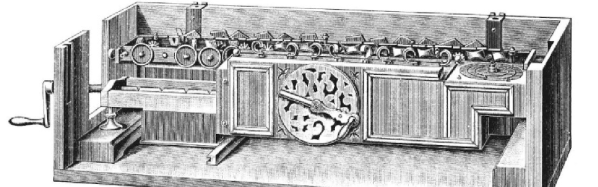
There is a lot of research here. We couldn’t think of anything missed. There’s a Pascalina, Ishango’s bone, a Babylonian spreadsheet, an abacus, and even Quipu. Toward the end, he gets to nomographs, adding machines, and the early calculators.

Continue reading “Calculation Before We Went Digital”

The Laptop Every British Kid Would Have Wanted For Christmas 1983

How can we convey to a world in which a 64-bit laptop can be a near-throwaway item, just how amazing a miniature laptop version of the 1980s Sinclair ZX Spectrum could have been? perhaps we don’t need to, because here in 2023 there’s a real one for all middle-aged geeks who had the original to drool over.

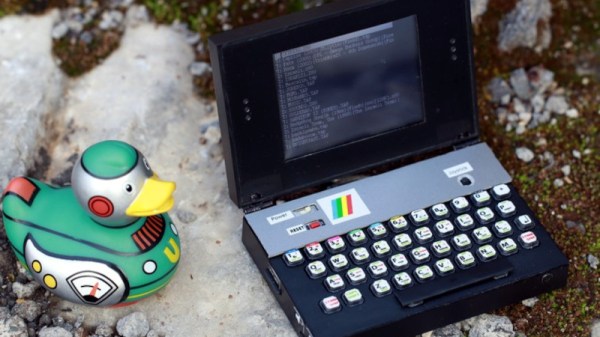
8-bit home computers were super-exciting for the kids of the day, but they were in no way portable and relied on a TV, frequently the family model in the living room. It’s safe to say that a portable version of one of those home computers, not in an Osborne-style luggable case but in a clamshell palmtop, would have been mind-blowing, so four decades later we’re fascinated by [Airrr17]’s portable Sinclair ZX Spectrum.

At its heart is a dev board using one of the STM32F4 series microcontrollers, and running the Spectrum as an emulator. Alongside that is an LCD, and perhaps what is physically the best part of this, a Spectrum keyboard complete with BASIC keyword decals, made with large-button tactile switches that have we think, printed paper on top. Add in a small lithium-polymer cell and associated electronics in a cute little palmtop case, and it’s about as good a portable Sinclair as we could have imagined. All the details can be found in a GitHub repository, and as if that weren’t enough there’s an assembly video we’ve placed below the break.

Continue reading “The Laptop Every British Kid Would Have Wanted For Christmas 1983”

Forget The Altair! Remember The Mark-8!

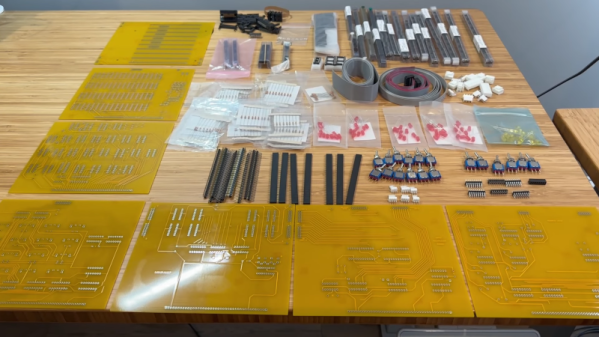
Calling any one computer the first hobby computer is fraught with peril. Most people think the MITS Altair 8800, first featured in Popular Electronics back in January 1975, was the first. Some might argue that others were first, but there is no doubt that the Altair started the hobby computer revolution from a practical standpoint. However, there was another computer that almost took the crown. It, too, appeared in a magazine — Radio and Electronics. But it was in the July 1974 issue. That computer was the Mark 8, and [Artem Kalinchuk] is building a replica that you can see started in the video below. This isn’t some Arduino work-alike. He has a pile of parts and some almost authentic-looking PCBs.

The Mark 8 used the 8008, not the 8080, so it was less powerful. [Artem] has been building a replica Altair, too. Check out his YouTube channel if you are interested in those.

Continue reading “Forget The Altair! Remember The Mark-8!”