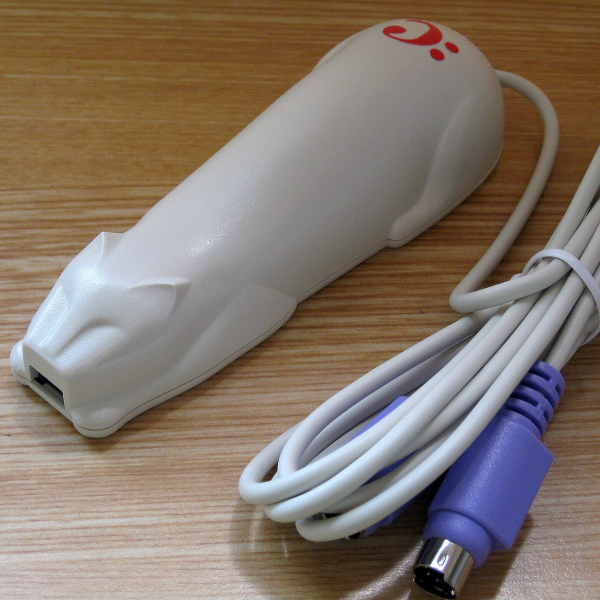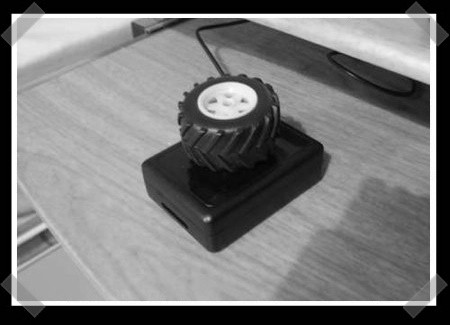
[whatsisface] sent in his scratch built clone of a Griffin PowerMate. The PowerMate… is just a big knob, so it’s easy to see why more than one person has attempted this. [whatsisface] was inspired by a bit-tech post that did nearly the same thing, only they used the head out of a VCR for the knob. All the other components, like the optical encoder, are salvaged from a mouse, which we talked about in our scavenging How-To. He used a RC car tire for the actual knob. While we’re sure it works great in dirt, we’d probably go with the weight and inertia of the VCR head instead. Have a look at the video below to see the knob being used with the Volumouse software.
mouse209 Articles
How-To: Scavenge A Mouse For Parts
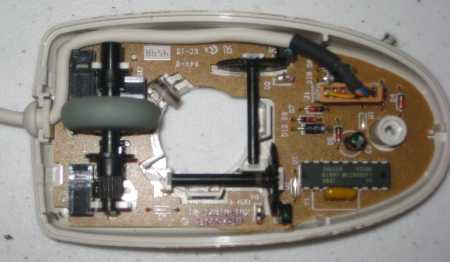
Chris Kiick posted about swarm robotics earlier in the week and today publishes his first Hack-A-Day How-To.
Old computer mice are being abandoned in droves. They’re tossed out because of dirt, obsolescence, or for being entirely too beige. Anyone who has a computer usually has more than one mouse and you can get them for pennies, if not free just for asking. Fortunately for the discriminating (read: cheap) hacker, these little widgets are chock-full of project parts. Today’s How-To will dissect a computer mouse, extract the useful parts, and give some ideas about how to use them.
Silence Your Mouse: No Clicky.
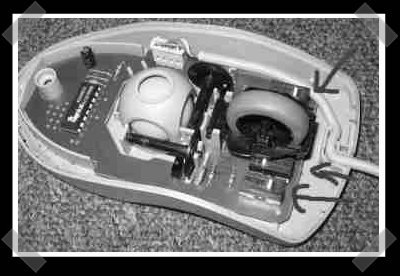
[PaulJ] sent in this older, but excellent little hack to silence your mouse. Don’t like the click that your mouse makes? If your mouse has the right kind of switch inside, it can be quieted down with a quick soldering job. Just remove it, turn the upper half around and re-assemble.
Wireless Keyboards Easily Cracked
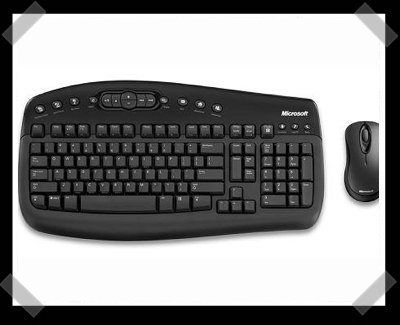
We first covered breaking the commodity 27MHz radios used in wireless keyboards, mice, and presenters when [Luis Miras] gave a talk at Black Hat. Since then, the people at Dreamlab have managed to crack the encryption on Microsoft’s Wireless Optical Desktop 1000 and 2000 products (and possibly more). Analyzing the protocol they found out that meta keys like shift and ALT are transmitted in cleartext. The “encryption” used on each regular keystroke involves XORing the key against a random one byte value determined during the initial sync with the receiver. So, if you sniff the handshake, you can decrypt the keystrokes. You really don’t have to though; there are only 256 possible encryption keys. Using a dictionary file you can check all possible keys and determine the correct one after only receiving 20-50 keystrokes. Their demo video shows them sniffing keystrokes from three different keyboards at the same time. Someone could potentially build a wireless keylogger that picks up every keystrokes from every keyboard in an office. You can read more about the attack in the whitepaper(pdf).
[via Midnight Research Labs]
Black Hat 2007 Other Wireless
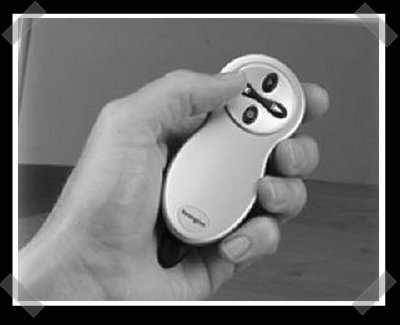
Luis Miras presented “Other Wireless: New ways of being Pwned”. Instead of common con topics like Bluetooth or WiFi, this dealt with the cheap radios used in wireless keyboards, mice, and things like the wireless remote pictured above. These RX/TX pairs are found in 27MHz, 900MHz, and 2.4GHz versions. The devices all use the same main components: a microcontroller, an EEPROM for storing the serial number, and the transmitter. The dongle is nearly the same only with a receiver.
Optical Mouse Based Scanner
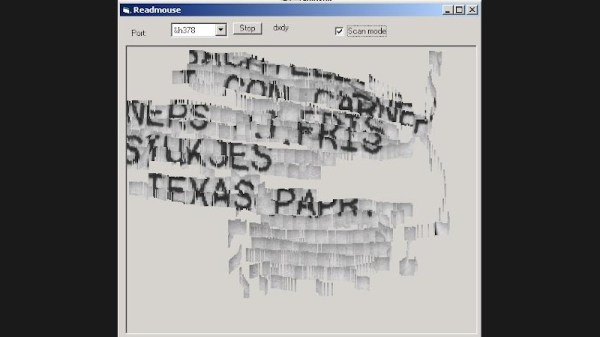
Ever wonder what your desk surface looks like up close? No. No one has. Not even [Sprite_tm], but upon disassembling his optical mouse and discovering its 18×18 CCD he decided to put it to use (well, a different use). The optical chip outputs serial information to the USB chip in the mouse. [Sprite_tm] wired the optical chip to a parallel port and wrote a simple program to interpret the data. Not really useful, but it does generate some interesting pictures. Program provided, natch.